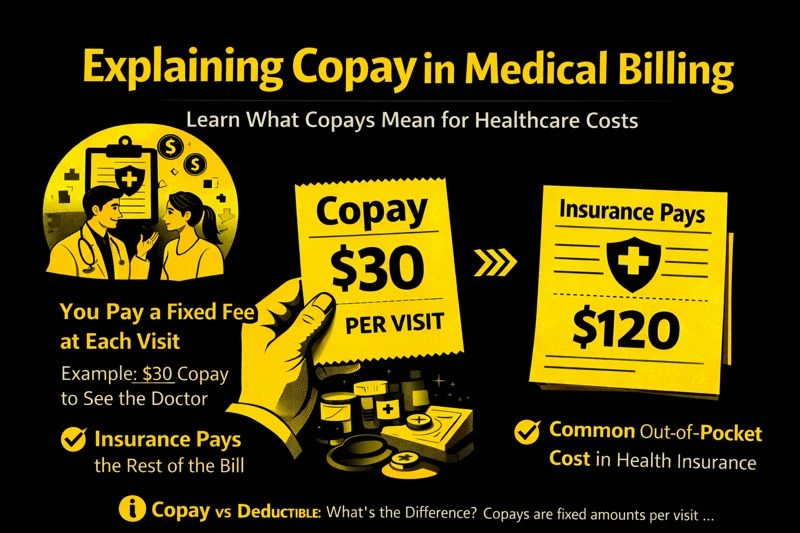
Copay in medical billing refers to a fixed amount of money a patient pays for a healthcare service at the time they receive care. The insurance company pays the remaining portion of the medical bill based on the patient’s health insurance plan. Copay is one of the most common and important terms used in medical billing and health insurance.
Patients usually encounter a copay when visiting a doctor, seeing a specialist, going to urgent care, visiting the emergency room, or purchasing prescription medications. Understanding copay in medical billing helps patients avoid confusion and helps healthcare providers manage payments more efficiently.
Table of Contents
ToggleCopay Meaning in Simple Terms

The copay meaning is straightforward. It is the patient’s share of the medical cost for a specific service. Insurance plans decide this amount in advance and clearly mention it in the policy documents and insurance card.
For example, if a patient has a thirty-dollar copay for a primary care visit, the patient pays thirty dollars regardless of whether the total cost of the visit is one hundred dollars or three hundred dollars. The insurance company covers the remaining amount according to the plan rules.
Copay is designed to make healthcare costs more predictable for patients.
Also Read: What Is ICN Number In Medical Billing?
How Copay Works in Medical Billing
Copay in medical billing follows a simple and consistent process. When a patient schedules or arrives for an appointment, the healthcare provider verifies the patient’s insurance coverage. Once verified, the front desk staff identifies the copay amount required for that visit.
The patient pays the copay either before or after the service. After the visit, the provider submits a claim to the insurance company. The insurance company processes the claim and pays its portion of the bill. Since the copay was already collected, the remaining balance is reduced or eliminated.
This system allows providers to receive partial payment immediately and reduces unpaid balances.
According to Healthcare.gov, a copay is a fixed amount a patient pays for a covered healthcare service, while the insurance company pays the remaining cost.
Copay in Health Insurance Plans
Copay in health insurance varies depending on the type of plan. Some plans have low copays but higher monthly premiums. Other plans may have higher copays with lower monthly premiums.
Insurance plans often set different copay amounts for different services. A routine doctor visit usually has a lower copay, while specialist visits and emergency services have higher copays. Prescription drugs also have copays that depend on whether the medication is generic or brand name.
Patients should always review their health insurance plan to understand their copay responsibilities.
Common Copay Examples in Medical Billing
Copay amounts differ based on services and insurance plans. Primary care visits often have the lowest copay. Specialist visits usually cost more. Emergency room visits often have the highest copay because of the level of care involved.
Prescription drugs also involve copays. Generic medications usually have a lower copay, while brand name drugs have a higher copay. These amounts remain fixed and do not change with the total cost of the medication.
Understanding these examples helps patients prepare for medical expenses.
Where Copay Appears in Medical Billing Documents
You can find copay information in several medical billing and insurance documents. The insurance card often lists copay amounts for office visits and prescriptions. The explanation of benefits also shows how much copay was applied to a claim.
Patient statements and billing summaries include copay amounts as part of the payment history. Medical billing systems record copay payments during payment posting to ensure accurate account balances.
Correct documentation of copay is essential to avoid billing errors.
Copay vs Deductible Explained Clearly
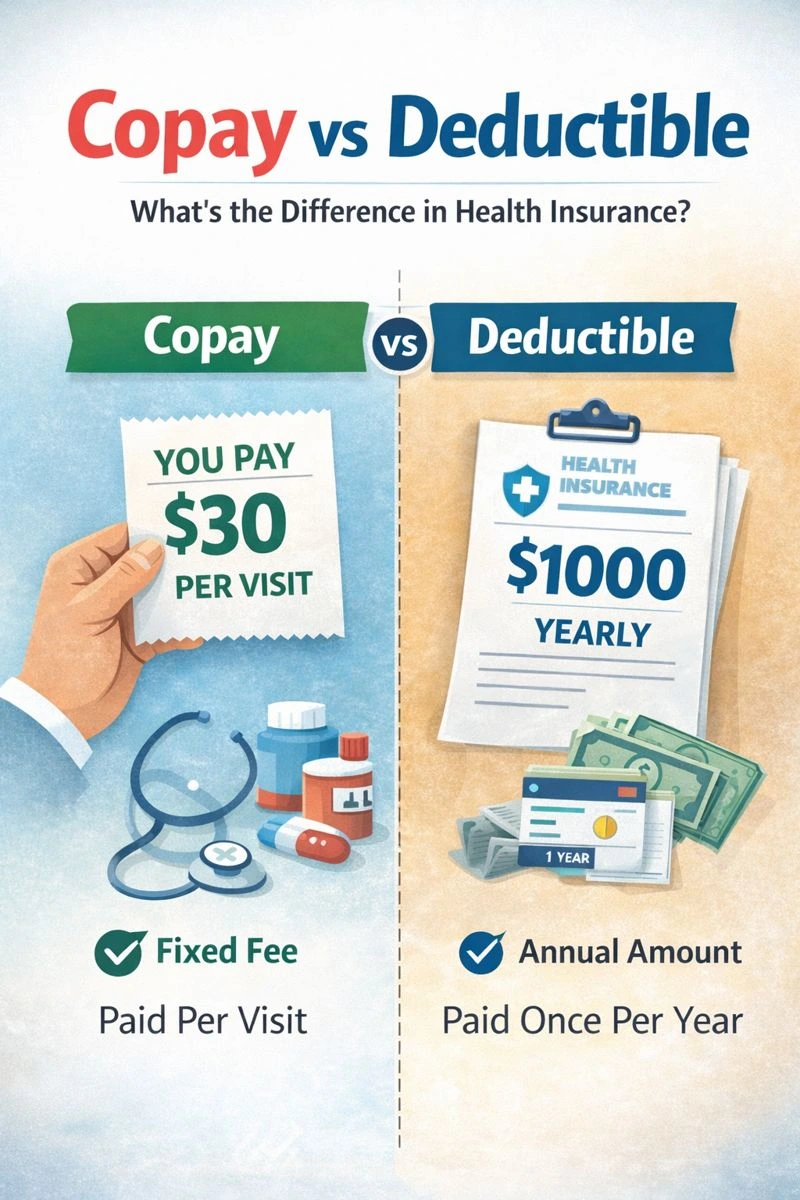
Many patients confuse copay vs deductible, but they serve different purposes. Copay is a fixed amount paid for each medical service. Deductible is the total amount a patient must pay out of pocket in a year before insurance begins paying for most services.
Some insurance plans require patients to meet their deductible first. Others allow copay services even before the deductible is met. The exact rule depends on the insurance policy.
Understanding the difference between copay and deductible helps patients manage healthcare costs better.
Does Copay Count Toward Deductible?
In most cases, copay does not count toward the deductible. However, copay usually counts toward the out of pocket maximum. Once a patient reaches this maximum, insurance covers most remaining costs for the year.
Insurance policies vary, so patients should check their plan details to confirm how copay is applied.
Why Copay Is Important in Medical Billing
Copay in medical billing plays an important role in the healthcare system. It encourages shared responsibility between patients and insurance companies. Copay also helps reduce unnecessary visits by making patients aware of service costs.
For healthcare providers, collecting copay improves cash flow and reduces unpaid balances. It also lowers the need for follow up billing and collections.
Accurate copay collection supports smooth billing operations.
What Happens If Copay Is Not Collected?
If a provider does not collect copay at the time of service, it can create problems later. Patients may delay payment or forget to pay entirely. This leads to higher accounts receivable and more follow up work.
Some insurance companies require providers to collect copay as part of their contract. Failure to do so may lead to compliance issues during audits.
That is why most clinics collect copay during check in.
Is Copay the Same for All Visits?
Copay amounts are not the same for every visit. Routine office visits usually have a lower copay. Specialist visits, urgent care, and emergency services often have higher copays.
Copay amounts may also change if a patient visits an out of network provider. Out of network services usually involve higher costs.
Patients should always confirm copay amounts before receiving care.
Copay for Preventive Services
Many insurance plans do not require copay for preventive services. These services may include annual physical exams, vaccinations, and screenings.
Preventive care benefits depend on the insurance plan and local regulations. Patients should verify coverage details to avoid unexpected charges.
Copay and Medical Billing Errors
Errors in copay collection can cause billing problems. Charging the wrong copay amount may result in patient complaints or insurance adjustments.
Billing staff must verify insurance details carefully and enter copay payments accurately. Regular training helps reduce errors and improve billing accuracy.
FAQ
What is copay in medical billing?
Copay in medical billing is a fixed amount a patient pays for a healthcare service while insurance covers the rest.
What does copay mean on a medical bill?
Copay on a medical bill shows the amount the patient paid at the time of service.
Is copay paid before or after treatment?
Most providers collect copay before treatment, but some collect it after the visit.
Does copay apply to every medical visit?
Most insurance plans require copay for each visit unless the plan states otherwise.
Can copay be refunded?
Copay may be refunded if the visit is canceled or billed incorrectly.
Is copay required for preventive care?
Many insurance plans do not require copay for preventive services, but rules vary.
Copay in medical billing is a basic but essential part of healthcare payments. It helps patients understand their financial responsibility and helps providers manage billing efficiently. Knowing the copay meaning and how it works allows patients to plan expenses and avoid surprises.