
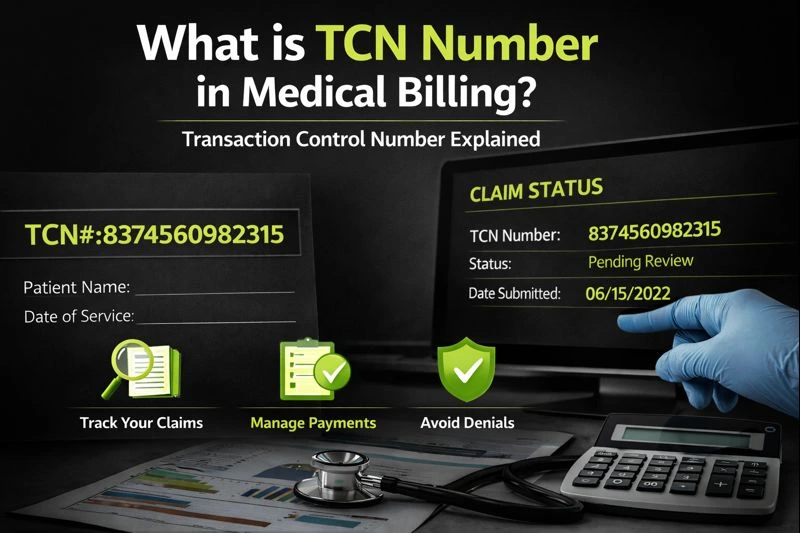
A TCN number in medical billing is a unique number that insurance systems use to track a medical claim. TCN stands for transaction control number. It allows payers and providers to follow a claim from submission to final payment. Each claim receives a TCN when the insurance system accepts it.
This number works like a digital fingerprint. No two claims share the same identifier. That makes it easy to search, organize, and update claims inside large insurance databases.
Understanding the tcn number in medical billing helps clinics prevent delays and protect revenue.
Table of Contents
ToggleWhat does a TCN number actually do
A TCN acts as a control tool inside payer systems. Insurance companies process thousands of claims every hour. They cannot rely only on patient names or service dates. The system needs a unique reference number.
Billers use it to:
- Check claim progress
- Identify pending claims
- Match payments with services
- Locate rejected claims
- Track corrected submissions
The transaction control number keeps the entire claim life cycle organized. According to the Centers for Medicare and Medicaid Services, electronic claim tracking systems rely on standardized identifiers to manage claim processing. Without it, claims could easily disappear inside complex databases.
Example of how a TCN number works
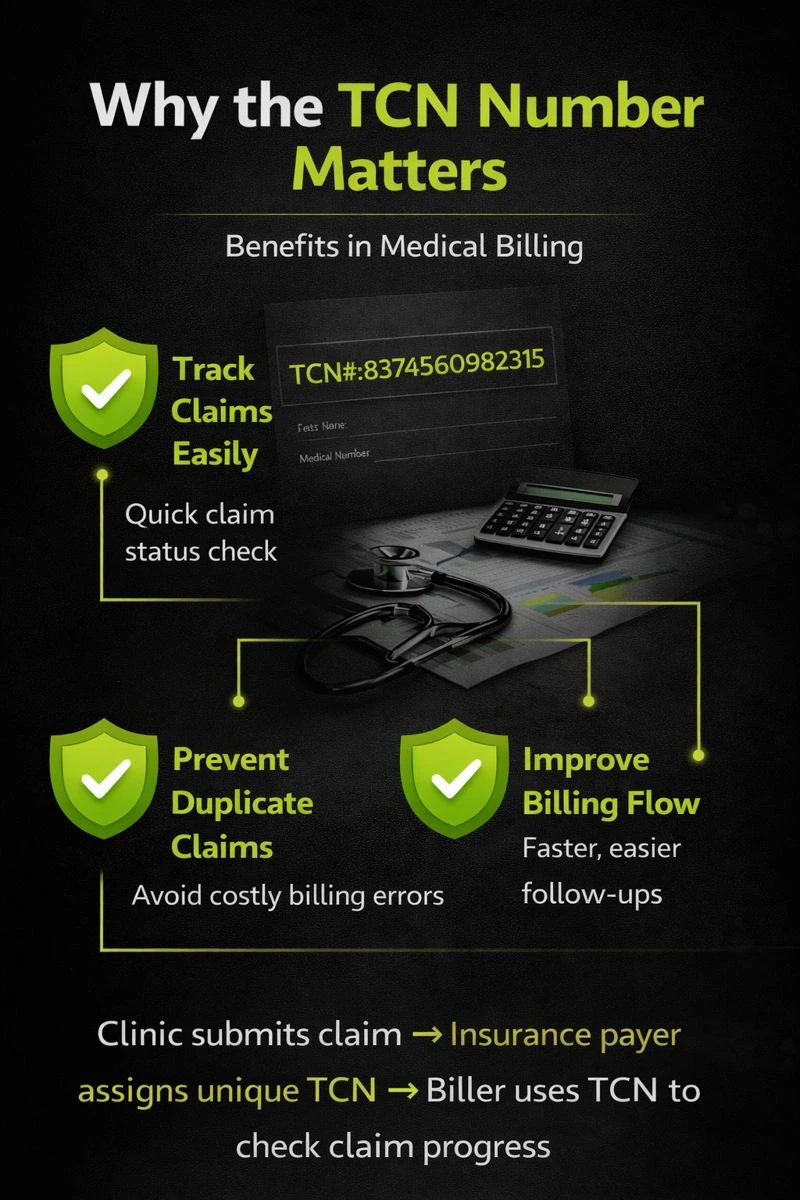
Imagine a clinic submits a claim for a patient visit. The clearinghouse forwards the claim to the payer. Once accepted, the payer assigns a TCN.
Days later the biller checks the claim status. The payer portal asks for the number. The biller enters it and instantly sees the current stage.
The claim may show pending review, approved, or denied. If corrections are required, the system links the update to the original record using the same number.
This structure supports reliable medical billing claim tracking and reduces confusion.
Where you can find the TCN number
Billers can locate the number in several reporting tools. Its position depends on the payer platform.
You may find it on:
- Electronic remittance advice
- Claim status portals
- Clearinghouse dashboards
- Insurance payment notices
- Internal payer reports
Some systems label it clearly. Others display it under reference numbers. Training staff to recognize it prevents billing mistakes and saves time.
Why the TCN number matters in daily billing work
New billers sometimes ignore this number. That habit creates avoidable delays. The tcn claim number acts as a shortcut for almost every claim follow up action.
It allows staff to:
- Communicate faster with payers
- Avoid duplicate submissions
- Match payments accurately
- Organize claim history
- Support audits and appeals
When billing teams rely on guesswork instead of exact identifiers, mistakes multiply. The TCN removes uncertainty.
Clinics that use it properly often experience smoother cash flow and fewer rejected claims.
TCN compared to other claim numbers
A single claim can contain many identifiers. Each serves a separate role.
The TCN belongs to the insurance processing system. It is payer generated. Provider systems may assign their own internal claim numbers. Clearinghouses may attach additional reference codes.
These numbers are not interchangeable. Mixing them creates confusion during appeals and claim corrections.
Knowing which number belongs to which system protects billing accuracy.
How TCN improves communication with insurance companies
Insurance support teams depend on exact data. When a biller calls a payer, giving the correct number speeds up assistance.
Instead of searching by patient name or service date, the representative enters the identifier and pulls the claim instantly.
This reduces hold times and prevents misunderstandings. It also creates a professional image for the clinic.
Understanding what is tcn helps billing teams speak the same language as payers.
Common mistakes related to TCN number in Medical Billing
Even experienced billing staff can misuse this number. Most errors happen because teams fail to document it properly.
Common problems include:
- Resubmitting claims without checking the original number
- Recording the wrong reference in follow up notes
- Losing track of corrected claims
- Matching payments incorrectly
- Contacting payers without the identifier
These mistakes slow down reimbursement. They also increase stress for billing teams.
A simple habit of recording the number after submission solves many of these issues.
Best practices for managing TCN numbers
Smart billing teams treat the TCN as part of the permanent claim record. They integrate it into daily workflow.
Helpful habits include:
- Saving it in claim notes immediately
- Adding it to follow up spreadsheets
- Matching it with payment reports
- Using it during appeal letters
- Teaching new staff how to read it
These small actions create strong billing discipline. They reduce lost claims and improve organization.
Even small clinics can adopt this system without expensive software.
Real world scenario from a billing office
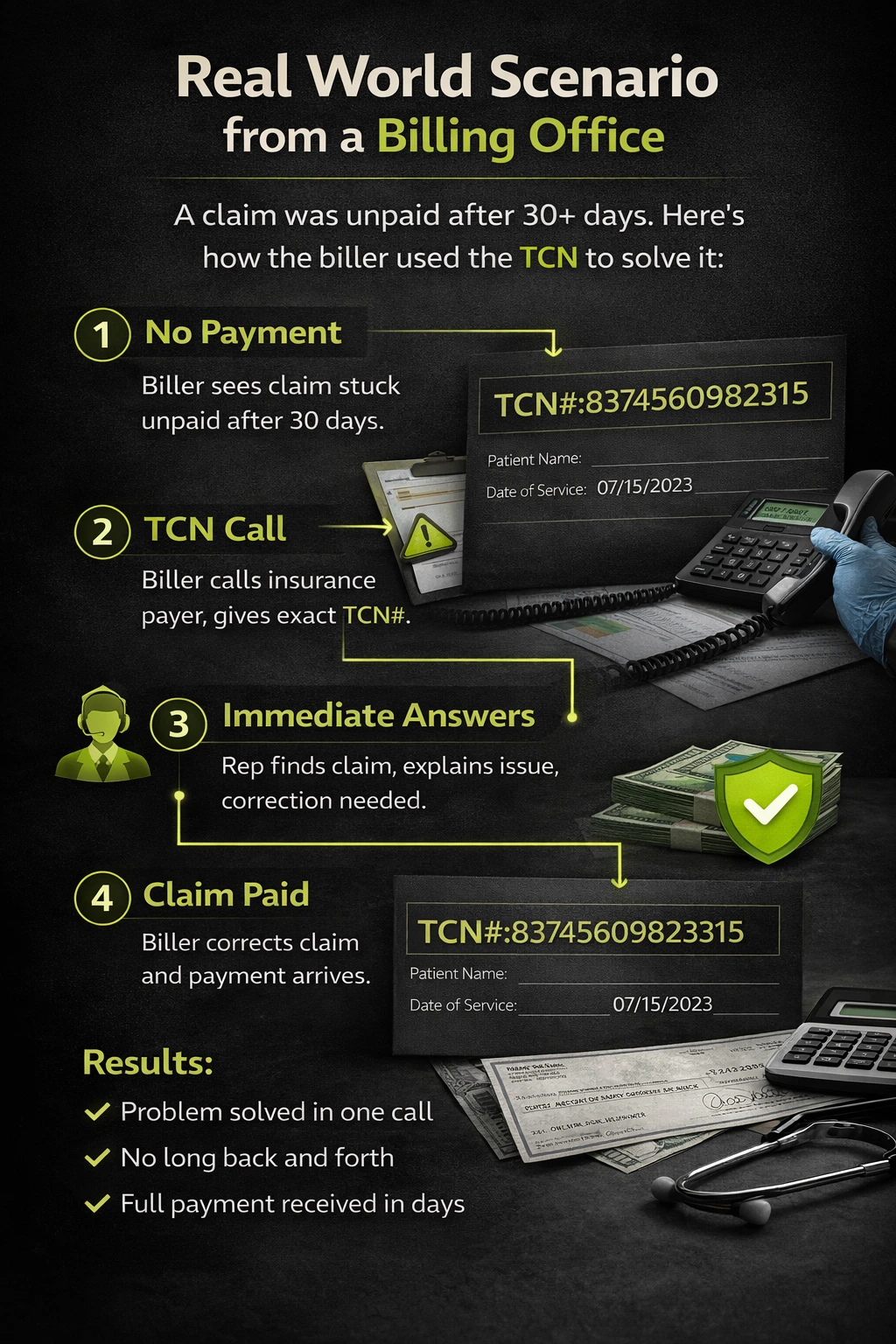
Consider a busy outpatient clinic handling hundreds of claims each week. A claim shows no payment after thirty days. The biller contacts the payer.
Instead of describing the patient visit, the biller provides the TCN. The payer finds the claim instantly and explains the delay.
The claim needed a minor correction. The biller updates it using the same reference. Payment arrives within days.
Without the number, this process might take hours of searching.
This example shows how a simple identifier protects clinic revenue.
How TCN supports audits and appeals
During audits, insurance companies review past claims carefully. Accurate records become essential.
The TCN connects every claim action. It shows submission history, corrections, and payment details. This trace protects providers during disputes.
Appeals also depend on precise documentation. Including the correct number in appeal letters prevents delays.
Strong record keeping creates stronger financial security.
FAQ
Is a TCN the same as a claim number
No. A claim may contain several identifiers. The TCN is payer specific and controls internal processing.
Does every insurance company use TCN
Most large systems use a version of it. Names may vary but the purpose remains the same.
Can a TCN change
It usually stays fixed. Some corrected claims may receive a new number depending on payer rules.
Do patients see the TCN
Patients rarely see it. It exists mainly for communication between providers and insurers.
Summary
A TCN number in medical billing is a unique identifier assigned by insurance systems. It tracks claims from submission to payment and helps billing teams stay organized.
Clinics that understand and record this number reduce errors, speed up follow ups, and protect revenue. It improves communication with payers and supports audits and appeals.
Learning to use it correctly is a simple step that leads to smoother billing operations.