
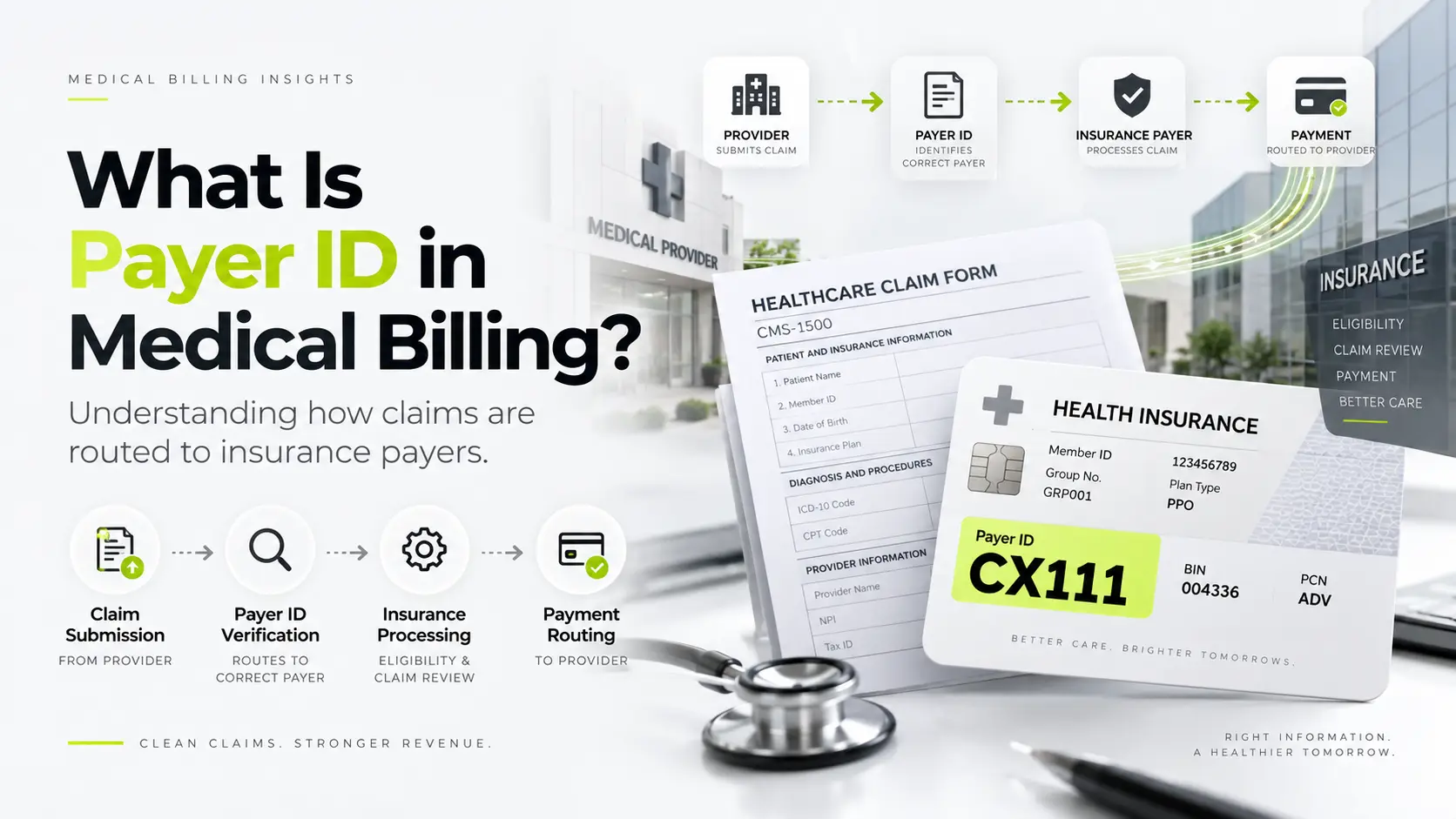
A payer ID in medical billing is a code that tells a billing system or clearinghouse which insurance payer should receive an electronic claim. It works like a routing address. When a practice sends a claim, the payer ID directs that claim to the correct insurance company and the correct claims processing system.
This code may contain numbers, letters, or both. Its length depends on the payer and the clearinghouse. A payer may also use more than one ID for different plans, regions, claim types, or electronic transactions. That is why staff should never choose a code only because the insurance company name looks familiar.
A wrong payer ID can send a clean claim to the wrong destination. The clearinghouse may reject it, the payer may not find it, or the practice may lose time while staff track the missing submission. Understanding payer IDs helps a practice protect timely filing, reduce rework, and receive payment sooner.
Table of Contents
ToggleWhat Is Payer ID in Medical Billing?
The simple answer to what is payer ID in medical billing is that it identifies the insurance destination for an electronic transaction. The code does not identify the patient or the provider. It identifies the payer system that should receive and process the claim.
For example, a provider may treat a patient who carries a plan from a large national insurer. The practice management system creates the claim, and the clearinghouse reads the payer ID. It then sends the claim through the route linked to that ID. The payer receives the file and begins its review.
The payer name on an insurance card and the electronic payer ID are not always enough on their own. Some plans use a separate claims administrator, network, or regional office. Staff must compare the card, payer portal, clearinghouse directory, and provider manual before they submit the claim.
How an Insurance Payer ID Routes a Claim
An insurance payer ID connects the claim to the payer that is responsible for processing it. After staff enter patient, provider, diagnosis, procedure, and charge details, the billing system adds the selected payer code to the electronic claim file. The clearinghouse uses that code to choose the receiving payer.
The clearinghouse first checks the file for basic data and format problems. If the claim passes, it sends the transaction to the destination tied to the insurance payer ID. Using the correct payer ID in medical billing helps the payer receive the file and begin claim adjudication.
This route may look simple, but one insurance company can operate many products. Commercial plans, Medicare Advantage plans, Medicaid plans, workers compensation programs, and third party administrators may have different routes. Selecting the plan specific code matters more than selecting a familiar company name.
What Is a Healthcare Payer Identifier Used For?
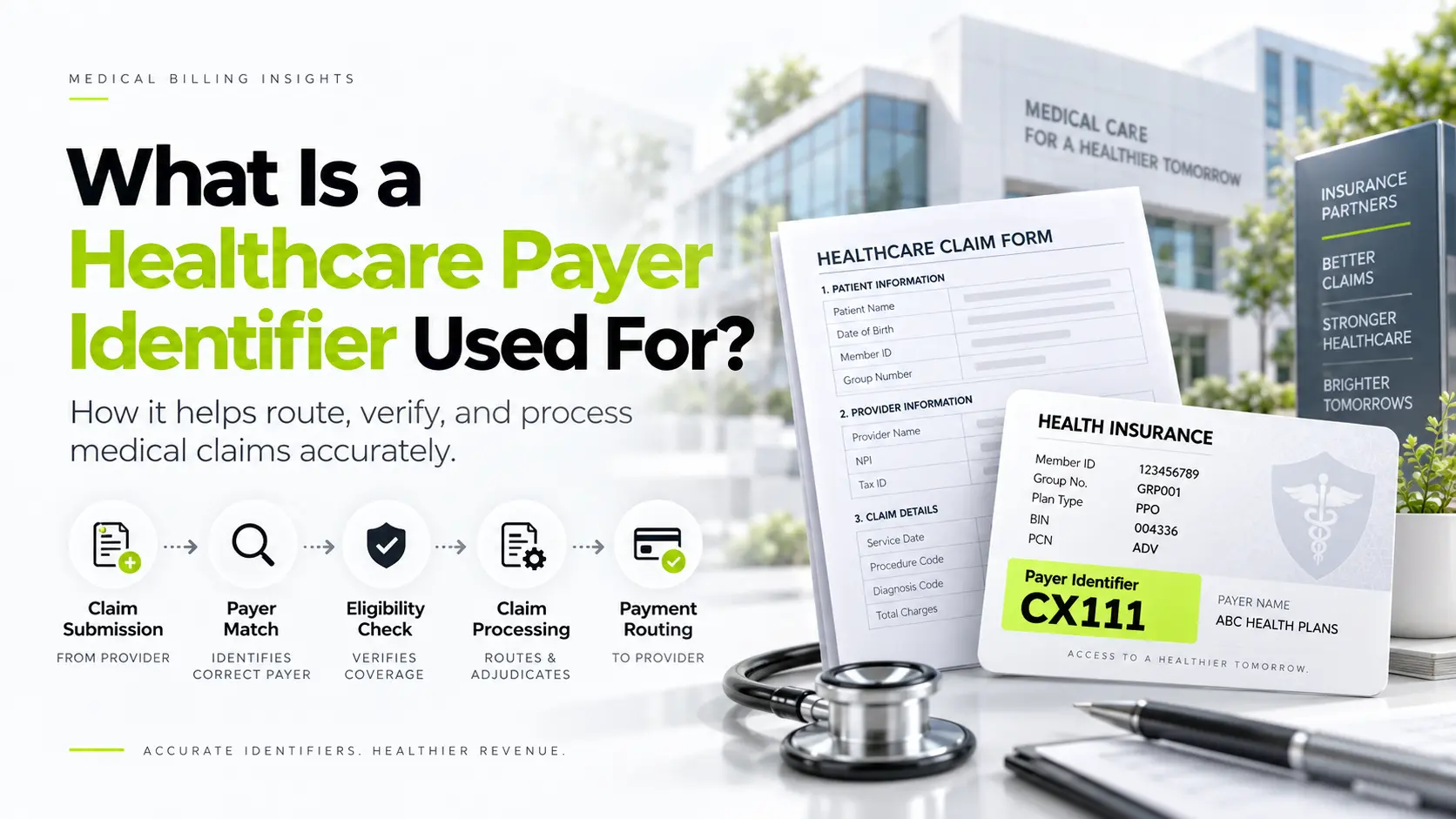
A healthcare payer identifier helps systems exchange billing information without relying only on long payer names. It supports faster sorting and lowers the chance that a claim will reach an unrelated insurer. Billing software may use the identifier for claims, eligibility checks, claim status requests, or remittance files.
The same payer may not use one universal code for every transaction. A healthcare payer identifier shown for professional claims may differ from the route for dental claims, institutional claims, eligibility, or electronic remittance advice. Always confirm the transaction type before saving the ID in the patient account.
Where to Find a Payer ID Lookup
A reliable payer ID lookup usually starts inside the clearinghouse portal because that directory shows the routes supported by that clearinghouse. Search with the complete payer name, state, plan type, and address shown on the insurance card. Read any notes attached to the result before choosing it.
You can also check the payer provider portal, electronic data interchange guide, provider manual, or payer support line. Some insurance cards print an electronic claims code, but many do not. When sources disagree, ask the clearinghouse or payer to confirm the correct route for the exact plan and claim type.
Do not copy a code from an old claim without checking it. Payers can change administrators, routes, or clearinghouse connections. A payer ID lookup should form part of account setup and routine payer maintenance, especially after a merger, plan change, or repeated routing rejection.
Payer ID and Electronic Claims Submission
During electronic claims submission, the billing system creates a standard claim transaction and sends it to a clearinghouse or directly to a payer. The payer ID tells the receiving network where the transaction belongs. CMS explains that Medicare electronic claims move from the provider system to the Medicare Administrative Contractor for processing.
Practices can review the official CMS electronic health care claims guidance for the basic Medicare submission process. For commercial insurance, follow the payer and clearinghouse instructions because their enrollment and routing steps can differ.
A correct payer ID does not guarantee payment. The claim must still include valid patient data, active coverage, correct provider details, supported codes, and required authorization. However, a payer ID in medical billing must be correct before electronic claims submission can move forward through the right route.
Payer ID Checklist Before Submission
Before sending a claim, staff should confirm a few basic details. This short check takes less time than correcting a batch of rejected claims after submission. It also helps protect the timely filing window when a patient has more than one insurance plan.
- Match the payer name and claims address on the insurance card
- Confirm the plan type and patient coverage date
- Use the clearinghouse directory for the correct transaction
- Check whether electronic enrollment is required
- Confirm primary and secondary payer order
- Save proof of claim acceptance after submission
A practice can connect this review with its insurance eligibility verification process. When staff verify the plan and electronic route together, they can correct problems before the claim leaves the billing system.
Payer ID Versus Other Medical Billing Numbers
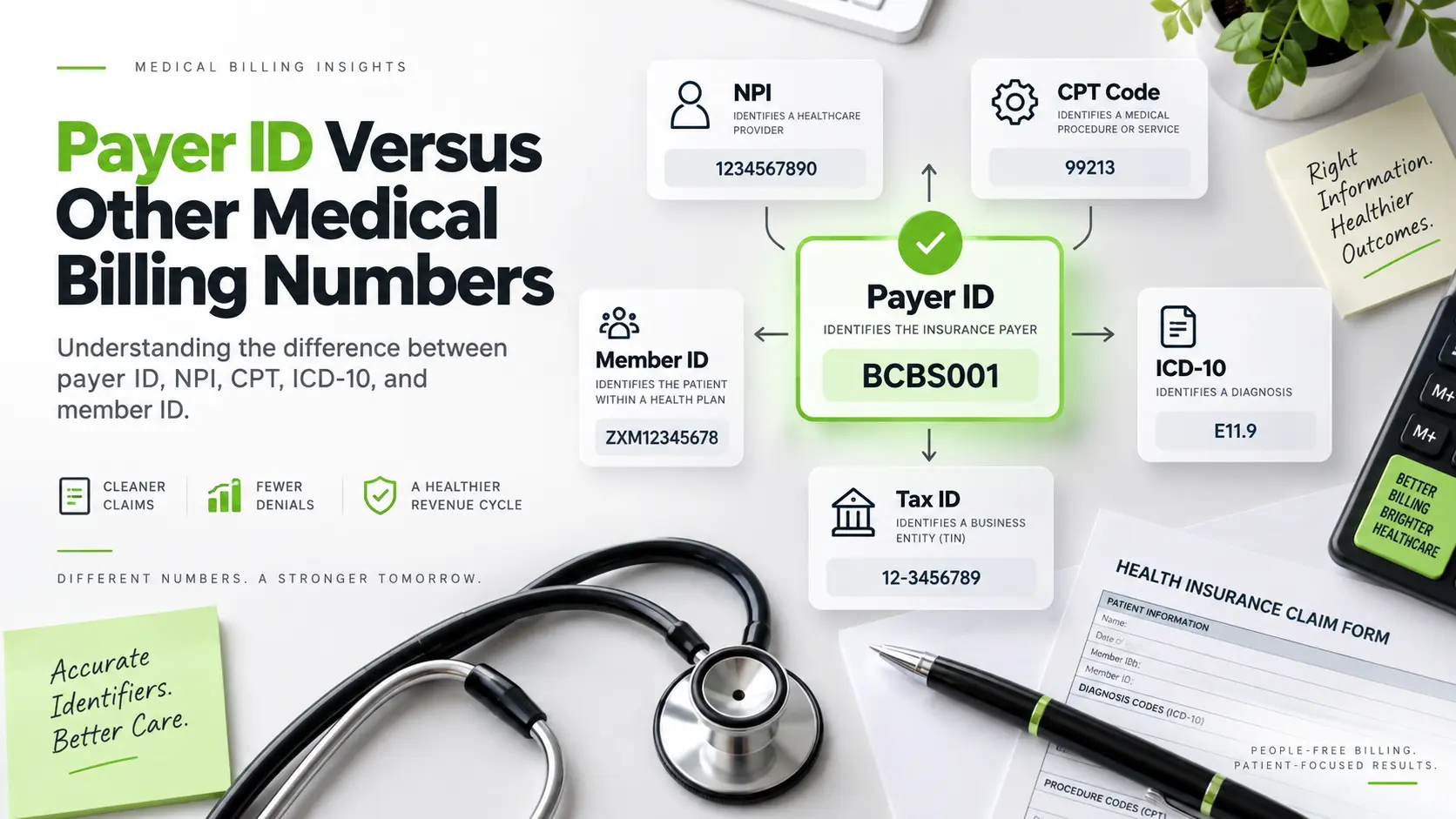
Medical billing uses several identification numbers, and each one has a different job. Confusing them can lead to claim edits, rejections, or poor follow up. The payer ID identifies the claim destination, while the numbers below identify other parties or records.
Payer ID Versus NPI
The National Provider Identifier identifies a healthcare provider or organization in standard transactions. A payer ID identifies the insurance receiver. In a normal electronic claim, the file may contain both values because the payer needs to know who provided the service and where the claim should go.
Payer ID Versus Member ID
The member ID identifies the patient or subscriber under an insurance plan. Staff copy it from the insurance card and verify it with the payer. The payer code routes the claim, while the member number helps the payer locate the correct benefit record after it receives the claim.
Payer ID Versus Group Number
A group number often connects coverage to an employer or benefit group. It does not replace the payer route. Some individual plans may not show a group number at all, but an electronic claim still needs the correct destination code.
Payer ID Versus ICN or TCN
An ICN or TCN usually identifies a claim after the payer or processing system receives it. The payer ID helps send the claim to that system first. Learn more about the ICN number in medical billing and the TCN number in medical billing in our related guides.
Common Payer ID Errors and Their Results
The most common error happens when staff select the parent insurance company instead of the patient plan. Another problem occurs when the system keeps an old route after the payer changes its administrator. A payer ID in medical billing can also be wrong when staff choose the wrong state or claim type from duplicate directory results.
A routing error may produce a clearinghouse rejection, payer rejection, missing claim, or enrollment message. Staff may also receive no useful response if the claim went to an unrelated route. These problems can delay cash flow even when every clinical and coding detail is correct.
Never assume that a rejected routing attempt stops the timely filing clock for the payer. Keep the submission report, rejection report, correction date, and acceptance report. If the deadline is close, contact the payer and follow its instructions for proof of timely filing.
How to Fix a Wrong Payer ID
Start by reading the full clearinghouse rejection message. Confirm the patient plan, date of service, payer name, claims address, and transaction type. Then compare the saved code with the current clearinghouse directory and the payer provider portal.
If you find the wrong ID, update the payer record carefully. Review whether the change should apply only to one patient, one plan, or every account linked to that payer entry. Test the new route with one claim when possible before releasing a large batch.
After resubmission, check both clearinghouse acceptance and payer acknowledgment. A sent status only proves that the billing system created the file. It does not prove that the correct payer accepted the claim. Strong follow up can prevent a routing problem from becoming a late claim denial.
How Clearinghouses Manage Payer IDs
Clearinghouses maintain payer lists that connect codes to supported receivers and transaction types. They may also show whether a payer accepts professional, institutional, dental, eligibility, status, or remittance transactions. Some routes require enrollment before the payer will accept a provider file.
Because directories can differ, a code that works through one clearinghouse may not work through another. When a practice changes its billing software or clearinghouse, staff should review every active payer connection instead of importing old values without testing them.
How Medical Billing Help Prevents Routing Errors
Medical Billing Help can review each payer ID in medical billing, patient insurance data, clearinghouse reports, and rejected claim patterns. Our medical billing services support clean claim submission and organized follow up from the first route check through payment posting.
When routing mistakes create unpaid claims, our denial management services can help teams review the response, correct the cause, resubmit when appropriate, and track the claim. The goal is to solve the current problem and reduce repeat errors.
Correct Payer Routing Supports Faster Payment
A payer ID in medical billing may look like a small field, but it controls the first direction of an electronic claim. The right code helps the claim reach the correct payer system, while the wrong code can create rejection, delay, and extra work.
Build a simple process for payer setup, verification, testing, and routine updates. Train staff to check the plan instead of relying only on the company name. When the route, eligibility, provider data, and claim details are correct, the practice gives each claim a stronger start.
Need Help With Payer Setup and Clean Claims?
Our billing team can review payer routes, insurance details, clearinghouse responses, and rejected claims to help your practice submit cleaner claims and protect timely filing.
FAQs
What is a payer ID in medical billing?
A payer ID is a code used to route an electronic healthcare claim or another billing transaction to the correct insurance payer system.
Where can I find the payer ID for an insurance company?
Check your clearinghouse payer directory, the payer provider portal, the electronic data interchange guide, or payer support. Confirm the plan, state, and transaction type before using the code.
Is a payer ID the same as a member ID?
No. The payer ID identifies the insurance destination. The member ID identifies the patient or subscriber covered by the insurance plan.
Can one insurance company have more than one payer ID?
Yes. A company may use different IDs for plans, regions, administrators, claim types, or transactions. Always choose the code for the exact patient plan and transaction.
What happens if I submit a claim with the wrong payer ID?
The clearinghouse or payer may reject the claim, route it incorrectly, or fail to locate it. Correct the payer record, resubmit the claim, and confirm payer acceptance while watching the timely filing limit.