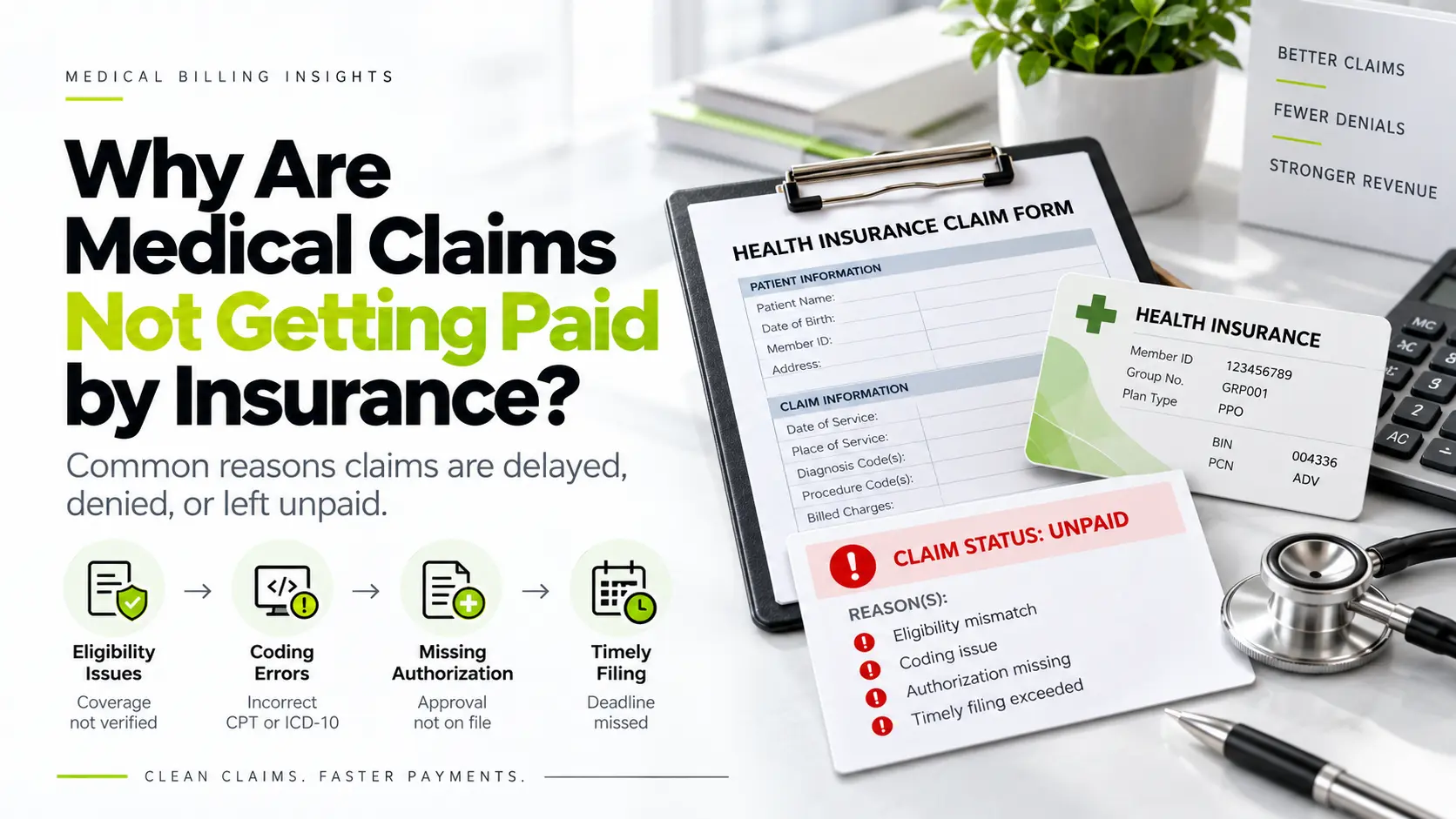
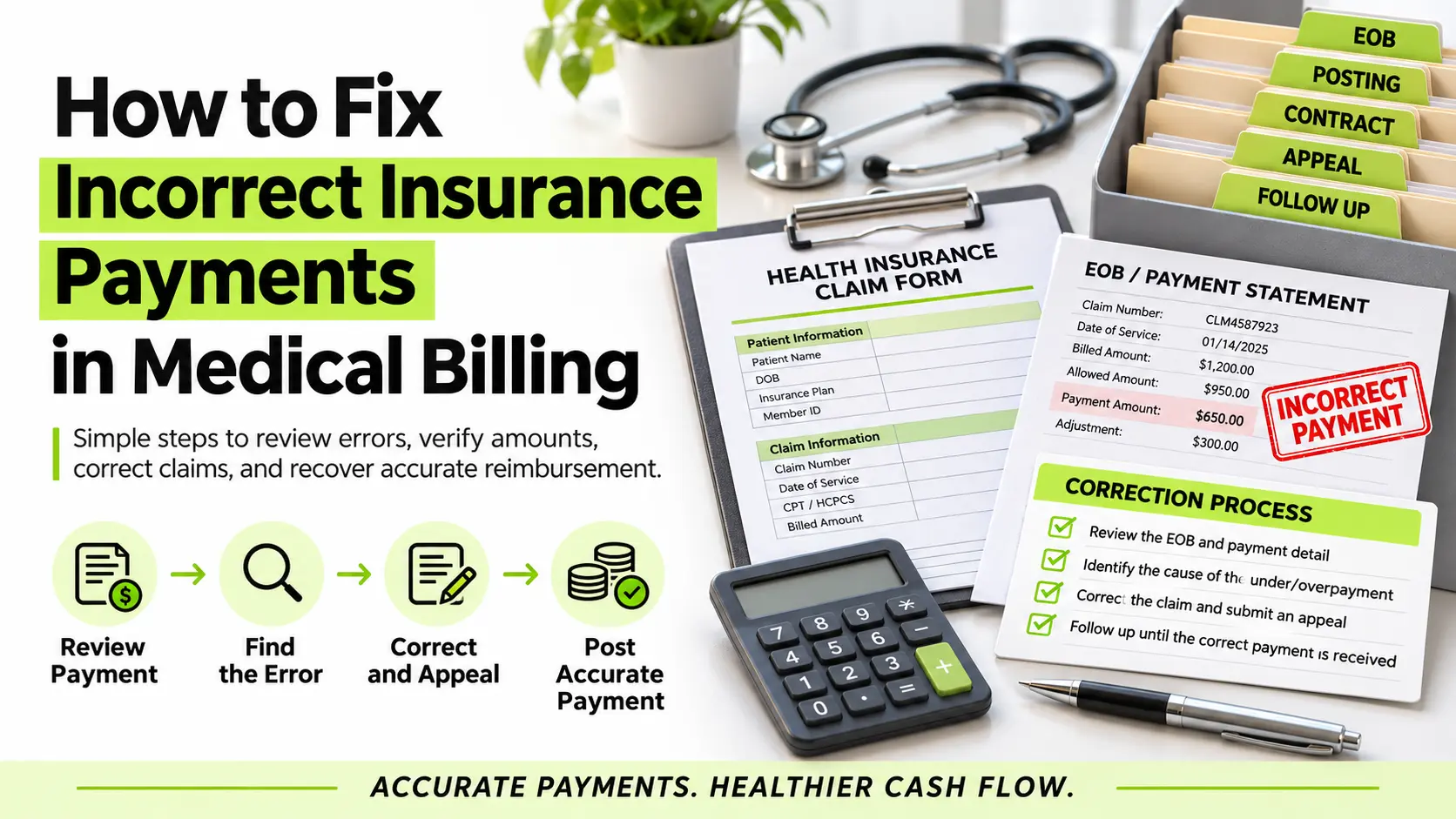
Incorrect insurance payments can leave a practice collecting less than it earned, carrying unexplained credits, or sending patients inaccurate bills. The solution starts with identifying the actual discrepancy.
This guide explains how to compare reimbursement with the applicable agreement, review the remittance, correct the ledger, and request payer action when necessary. A consistent process helps billing teams resolve problems without creating duplicate claims, unsupported adjustments, or a second payment mistake.
Table of Contents
ToggleWhat Counts as Incorrect Insurance Payments?
Incorrect insurance payments include reimbursement that does not match the applicable payment rules or money applied to the wrong account. Examples include an incorrect allowed amount, duplicate payment, missed service line, or posting mistake.
Read the complete remittance rather than comparing the payment with the original charge. Deductibles, coinsurance, contractual adjustments, and other valid reductions can explain a difference. A practice may bill $300 while its agreement allows $200.
The remittance explains claim decisions and adjustments through standardized codes and related information. Review the official CMS payment and remittance guidance for an overview. Use those explanations alongside the claim, contract, deposits, and account history to understand what happened.
How to Identify and Recover Insurance Underpayments
Investigate insurance underpayments by calculating the amount the payer should have paid for the actual service. Use the applicable contract or fee schedule, effective date, provider arrangement, units, and modifiers. Do not compare every payment with a generic rate or a fee schedule from another plan.
For example, assume a covered service has a $200 allowed amount and the patient owes $40 coinsurance. With no other adjustments or coverage involved, the expected insurer payment is $160. If it pays $140, staff should investigate the $20 difference before deciding whether reimbursement was incorrect.
Check whether the discrepancy reflects a legitimate rule. Multiple procedure reductions, bundling, benefit limits, or other adjustments may affect reimbursement when applicable. Confirm the reason and supporting policy.
Review each service line because a claim can receive partial payment while another line remains unresolved. Match procedure codes, units, modifiers, and adjustment messages.
When evidence supports insurance underpayments, prepare a focused payment review request. Explain the expected amount, actual amount, difference, and basis for the calculation. Keep the supporting contract reference and remittance together. Our denial management services help practices review disputed payment decisions and eligible recovery opportunities.
How to Investigate Insurance Overpayments
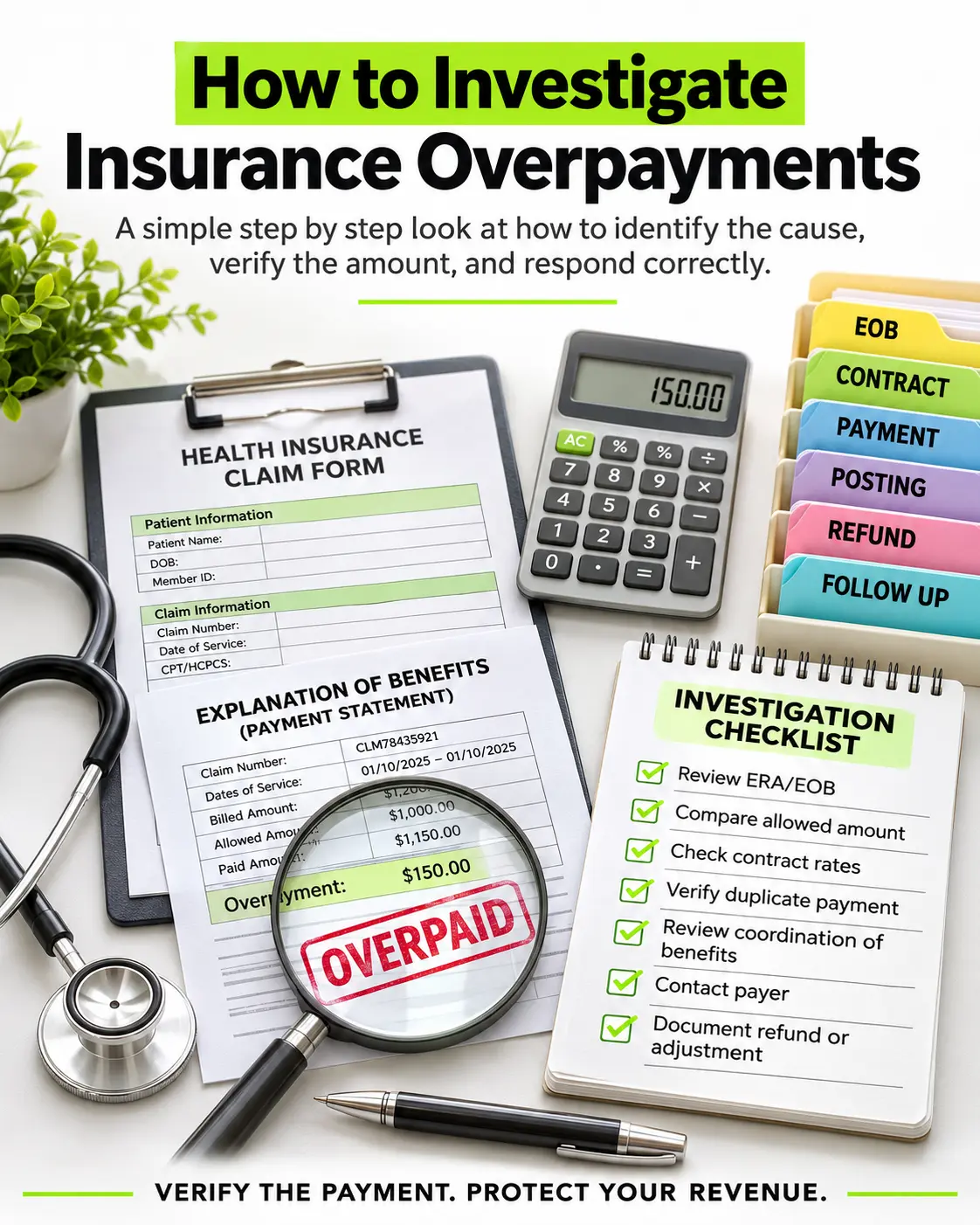
Insurance overpayments require prompt investigation. A duplicate deposit, payment for the wrong provider, or incorrect reimbursement can produce a genuine excess. However, an unapplied credit may reflect a posting issue rather than extra money. Confirm the payment source and final claim history before deciding what the practice owes back.
Compare the original payment with any corrected remittance, reversal, recoupment, or refund already processed. A payer may have recovered the amount through an offset against a later payment. Returning the same money separately could create a second loss unless staff reconcile the earlier recovery.
If you confirm insurance overpayments, follow the applicable reporting and return requirements, payer instructions, and internal approval process. Requirements and deadlines depend on the program and circumstances. Escalate the finding promptly to the responsible person instead of leaving the credit unresolved or assuming every payer follows the same rule.
A payer refund request also deserves verification. Match the notice with the claim and determine why the payer seeks repayment. If the practice disagrees, check the permitted dispute process and deadline. Document the review without treating every demand as correct or ignoring it because the account previously appeared closed.
Keep a clear record of any approved refund, offset, or other resolution. Record the amount, reason, claim reference, recipient, and transaction date.
How to Correct Payment Posting Errors
Payment posting errors can make a correct insurance payment look wrong. Staff may apply funds to another patient, miss a service line, enter the wrong adjustment, or post an electronic remittance twice. Check the source transaction before contacting the insurer or changing the claim.
Match the payment trace or check number with the remittance and deposit. Then compare each claim allocation with the ledger. One deposit may cover many claims, so the bank total alone cannot explain an individual account balance.
Correct payment posting errors through the billing system’s approved reversal or adjustment workflow. Preserve the original transaction and document the correction. Avoid deleting entries without a trace or entering an unexplained adjustment simply to make the account balance appear correct.
Review automatic posting rules when the same error appears repeatedly. A mapping problem may assign an adjustment to patient responsibility or apply a payment incorrectly. Test the correction on the affected workflow and review related accounts rather than assuming the error concerns only one claim.
Our payment posting and reconciliation services support review of payments, adjustments, and unresolved balances. Accurate posting helps the practice distinguish missing revenue from money it already received and prevents staff from spending time pursuing the same payment again.
Why Insurance Payment Reconciliation Matters
Insurance payment reconciliation connects the payer’s payment information with deposited funds and account entries. It provides a clearer view than any one record alone. A paid status does not prove the funds arrived, while a bank deposit does not show whether staff allocated every claim correctly.
Separate claim payments from provider level adjustments when reconciling a batch. A recoupment or another offset can change the deposit without changing the payment assigned to each current claim.
Review missing remittances, unmatched deposits, unapplied cash, and unexplained credits in a visible work queue. Assign an owner and next action date.
Include secondary insurance in the review when applicable. A primary payer’s decision may leave a balance for another plan to consider. Do not assume that every amount remaining after primary payment belongs to the patient or represents an error by the first insurer.
Use insurance payment reconciliation after a payer reprocesses a claim, not only after the first payment. Compare the original and revised decisions, reversals, additional funds, and existing patient collections. This final check shows whether the correction actually resolved the discrepancy or created a new balance.
Your Insurance Payment Correction Checklist
- Match the payment, remittance, and account
- Calculate expected reimbursement using the applicable agreement
- Separate payer errors from posting mistakes
- Follow the appropriate review, correction, or refund process
- Reconcile the final result before closing the task
Match the payment to the claim
Match the payment to the correct patient, provider, claim, and service date. Confirm the payment identifier and review the latest remittance. Similar patient names or repeated visit amounts can hide allocation mistakes.
Verify the expected reimbursement
Verify expected reimbursement using the correct agreement and applicable payment rules. Calculate the insurer’s share after valid adjustments and patient cost sharing. Record the calculation clearly so another reviewer can reproduce it. The difference between billed charges and payment is not the same as recoverable revenue.
Choose the correct resolution process
Choose the resolution process that matches the cause. An inaccurate submission may require a corrected claim. A disputed allowed amount may need payment reconsideration. An internal posting issue needs a ledger correction, while a verified overpayment needs the applicable reporting and return process.
Confirm the final account balance
Confirm the final balance after the correction. Review additional payer funds, offsets, patient payments, secondary coverage, and adjustments. Close the task only when the account history explains the result. A submitted request or a payer promise of reprocessing is a progress update, not a completed resolution.
How to Request a Payer Payment Review
Start a payer payment review with a concise explanation. Identify the claim, service date, actual reimbursement, expected reimbursement, and reason for the difference. Include relevant records through the payer’s accepted channel.
Follow the payer’s required process and deadline for payment disputes, reconsiderations, or corrected claims. Do not assume that sending a message suspends another filing limit. Save confirmation and reference numbers, then schedule a follow up to check receipt and the review outcome.
If the payer does not resolve a supported discrepancy, use the next available escalation route under the agreement and applicable rules. Retain the calculation, prior responses, and requested action. Escalation should explain the unresolved issue rather than repeat the same submission without new context.
Protect Patient Balances During Payment Corrections
Do not transfer a disputed insurance balance to the patient simply because the payer paid less than expected. Review the agreement, remittance, benefit rules, and applicable billing protections. Some amounts belong to the provider as contractual adjustments, while others require further insurance review.
When a corrected payer decision changes patient responsibility, reconcile previous collections before sending another statement. For example, a patient may have paid an amount that the revised decision now assigns elsewhere. Investigate the credit and handle any refund or other permitted resolution under applicable requirements.
Explain verified changes in simple language. Show the service, insurance payment, adjustments, previous patient payments, and remaining amount. Insurance eligibility verification services can support earlier benefit checks, but the practice still needs final account reconciliation before treating an estimate as the amount due.
How Medical Billing Help Supports Payment Accuracy
Also Read: Common Medical Billing Denial Codes and How to Improve First Pass Claim Acceptance Rate. These guides explain related issues that may require a claim correction or denial review rather than a posting adjustment.
Medical Billing Help supports practices with payment review, claim follow up, reconciliation, and disputed reimbursement investigation. Our medical billing services help teams identify where a discrepancy began and organize the work needed to reach a supported outcome.
If incorrect insurance payments affect several accounts, start with a targeted review by payer, procedure, or adjustment reason. A pattern can reveal an outdated rate, repeated posting rule, or incomplete dispute workflow.
Contact our team to discuss the payment issues affecting your practice and the support available. A useful review should distinguish recoverable differences, valid adjustments, internal corrections, and confirmed excess payments.
How to Prevent Repeated Payment Mistakes
Prevent repeated errors by maintaining current payer agreements and fee schedules. Record effective dates and review changes before using an old rate for a new service. A reliable reference helps staff identify genuine discrepancies without repeatedly investigating payments that follow the contract.
Use clear posting procedures and review exceptions regularly. Track who can approve adjustments, refunds, and reversals. When a recurring issue appears, update the process and explain the change to the team. Fixing the source is more useful than correcting the same error account by account.
Measure outcomes with care. Track resolved discrepancies, additional funds actually received, corrected allocations, and completed refunds separately. Moving money between ledger categories does not automatically create recovered revenue. Accurate reporting helps practice owners understand whether billing work improved collections or corrected their records.
Make Every Payment Explainable
To fix incorrect insurance payments, verify the source records, calculate the expected result, and choose the appropriate correction. Follow through until deposits, remittances, and account entries agree. A clear review process protects practice revenue while helping patients receive accurate statements and keeping unexplained balances under control.
Need Help With Incorrect Payments?
Our team helps practices review payment discrepancies, reconcile accounts, and follow up on disputed reimbursement.
FAQs
How do I identify incorrect insurance payments?
Compare the latest remittance, applicable contract, deposited funds, and ledger entries. Check valid adjustments and patient cost sharing before calculating the discrepancy. A payment below the billed charge alone does not prove an error.
What should I do when insurance underpays a claim?
Verify the expected insurer payment and the reason for the reduction. If evidence supports a discrepancy, follow the payer payment review process with a clear calculation. Use a corrected claim when the original submission contains an error.
Should I return an insurance overpayment immediately?
Investigate promptly and follow the applicable reporting and return requirements once the facts support an excess payment. Check for offsets or refunds already processed so the practice does not repay the same amount twice.
Can payment posting errors look like payer underpayments?
Yes. A missing allocation, duplicate posting, or incorrect adjustment can make a correct payment appear wrong. Reconcile the remittance and deposit with the account before asking the payer for additional funds.
Can I bill the patient for an insurance payment discrepancy?
Not automatically. Review the contract, payer response, benefit rules, additional coverage, and applicable protections. Resolve unsupported transfers and reconcile previous payments before requesting a verified patient balance.