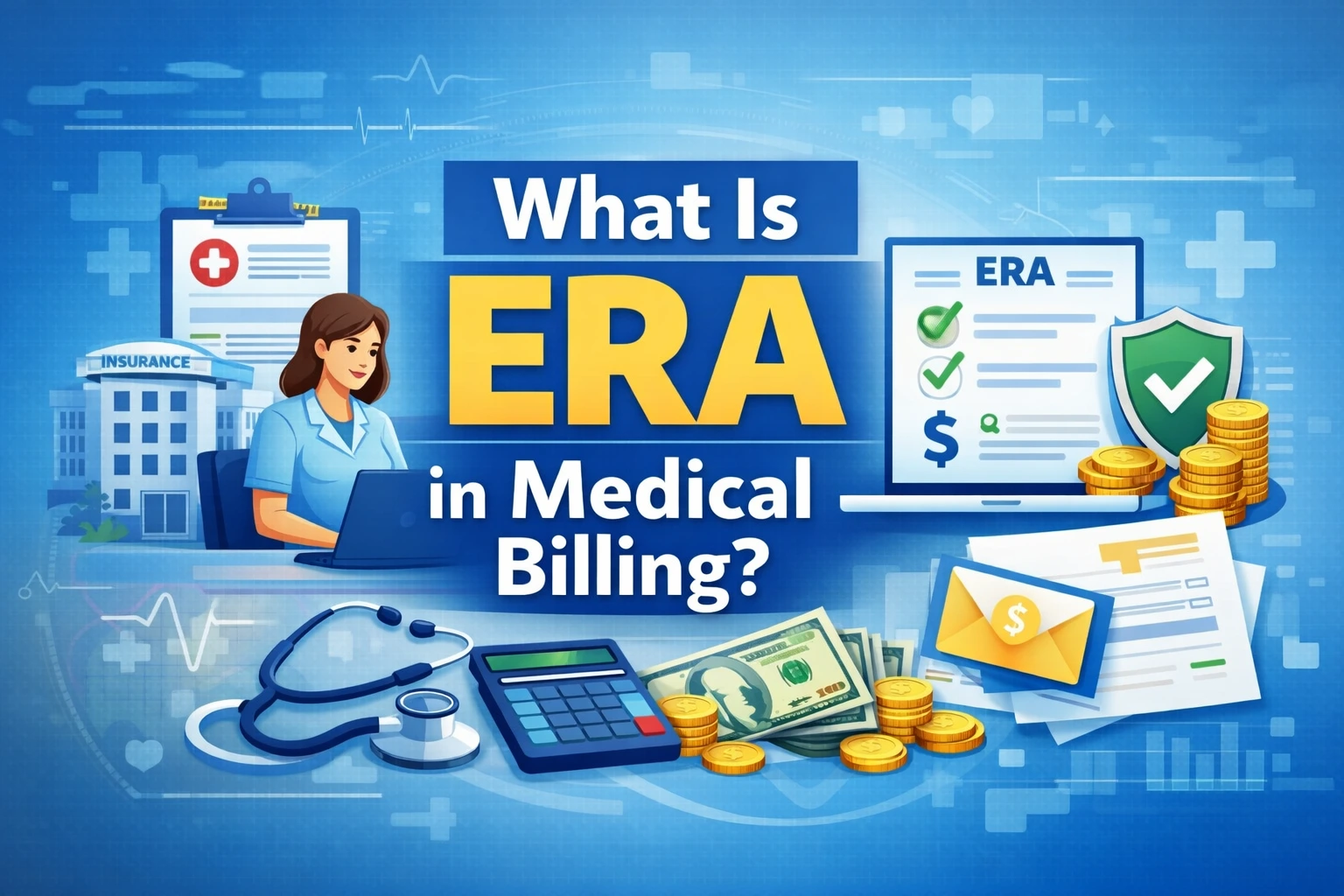
Medical billing is an important part of healthcare. It connects doctors clinics and insurance companies. When this process works well providers get paid on time and patients receive clear bills. One term that many people hear but do not fully understand is ERA. Beginners often ask what is ERA in medical billing and why it matters so much.
ERA plays a quiet but powerful role in modern billing systems. It helps offices understand how insurance companies handle claims and payments. Without ERA billing teams would spend more time guessing fixing errors and waiting for information. With ERA everything becomes clearer faster and easier to manage.
This guide explains what is ERA in medical billing in simple words. It walks you through how it works why it is important and how it helps medical offices every day.
Table of Contents
ToggleUnderstanding ERA in Simple Language
To understand what is ERA in medical billing think of it as a digital explanation of a payment. When a provider sends a claim to an insurance company the payer reviews it. After the review the payer creates a report that explains what they paid and why. That report is ERA.
In the past insurance companies sent paper reports by mail. These reports took weeks to arrive. Staff had to read each page carefully and type numbers into the system. This process was slow and full of mistakes. ERA replaced paper with digital files and changed the way billing works.
ERA arrives faster and contains organized data. It shows payment results clearly and helps offices move forward without delay.
Why ERA Was Introduced
Healthcare billing became more complex over time. More claims more rules and more patients meant more paperwork. Paper based systems could not keep up with growing demand. Delays caused frustration for providers and patients.
ERA was introduced to solve these problems. It allowed insurance companies to send payment details electronically. This saved time reduced errors and improved communication between payers and providers.
Today ERA is a standard part of billing operations. Offices that do not use it often fall behind.
How ERA Works From Start to Finish
To fully understand what is ERA in medical billing it helps to look at the full process.
First a provider submits a claim for services given to a patient. The insurance company receives the claim and reviews it based on coverage rules. After processing the claim the payer decides how much to pay.
Next the payer sends the ERA file to the provider. This file enters the billing system and matches with the original claim. The system posts the payment details or allows staff to review them.
This entire process happens electronically. What once took weeks now takes days or even hours.
What Information ERA Contains
ERA provides detailed and useful information. It includes patient name claim number and service dates. It shows the amount billed and the amount approved by the payer.
ERA also explains adjustments. These may include reductions based on contract rules. If a service was denied ERA shows the reason clearly.
One important feature of ERA is clarity. Staff do not have to guess why a payment changed. Everything appears in one organized file.
ERA and Electronic Remittance Advice
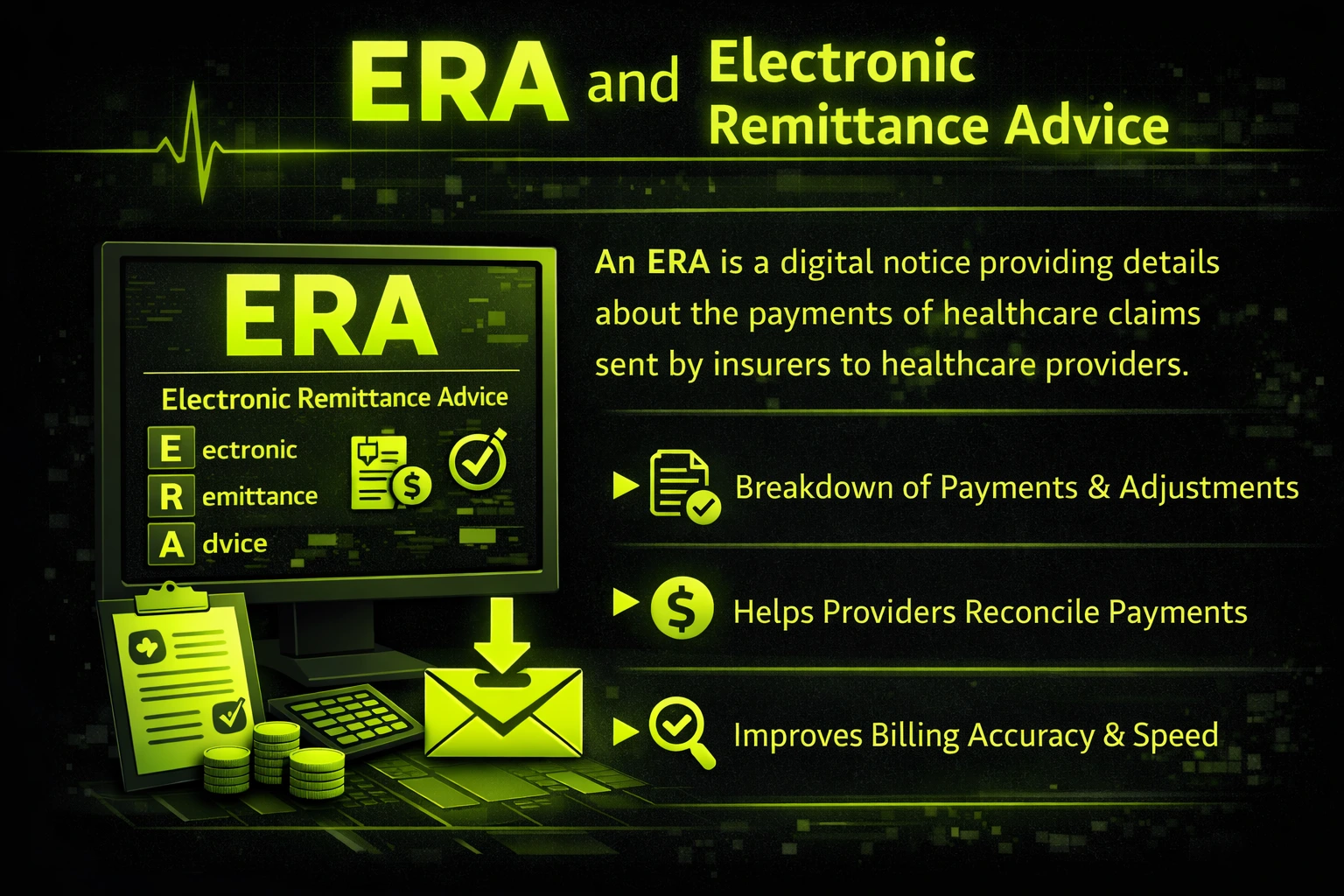
ERA is often called electronic remittance advice. This name describes its purpose well. It is a digital explanation of payment decisions made by insurance companies. For official guidance and standards, providers can also review ERA information from CMS, which explains how electronic payment reports work in medical billing.
Using electronic remittance advice helps offices keep records clean and organized. Digital files are easier to store search and review compared to paper reports.
This digital shift supports faster billing and better control over financial data.
How ERA Improves Daily Billing Work
Billing teams manage many tasks each day. They submit claims review payments correct errors and follow up on unpaid balances. ERA helps with all these tasks.
Instead of manually entering payment data staff can rely on ERA files. The system reads the data and applies it correctly in most cases. Staff only focus on exceptions.
This saves hours of work each week and reduces stress for billing teams.
ERA and Accuracy in Billing
Accuracy matters in medical billing. A small error can delay payment or cause patient confusion. ERA improves accuracy by reducing manual entry.
Digital data lowers the chance of typing mistakes. It also ensures consistency between claims and payments. When records match offices avoid disputes and rework.
Better accuracy leads to better trust with patients and payers.
ERA and Insurance Payment Posting
One major benefit of ERA is how it supports insurance payment posting. Posting payments manually takes time and focus. ERA automates much of this process.
When the system receives ERA it matches payments with claims automatically. Staff review the results instead of entering numbers. This speeds up posting and reduces backlog.
Faster posting means faster insight into account status and revenue.
ERA and Patient Billing Clarity
Patients want clear bills. They want to know what insurance paid and what they owe. ERA helps offices provide this clarity.
ERA shows patient responsibility amounts clearly. This allows offices to bill patients correctly the first time. Clear bills reduce confusion and improve payment rates.
When patients trust billing accuracy they are more likely to pay on time.
ERA in the Medical Billing Process
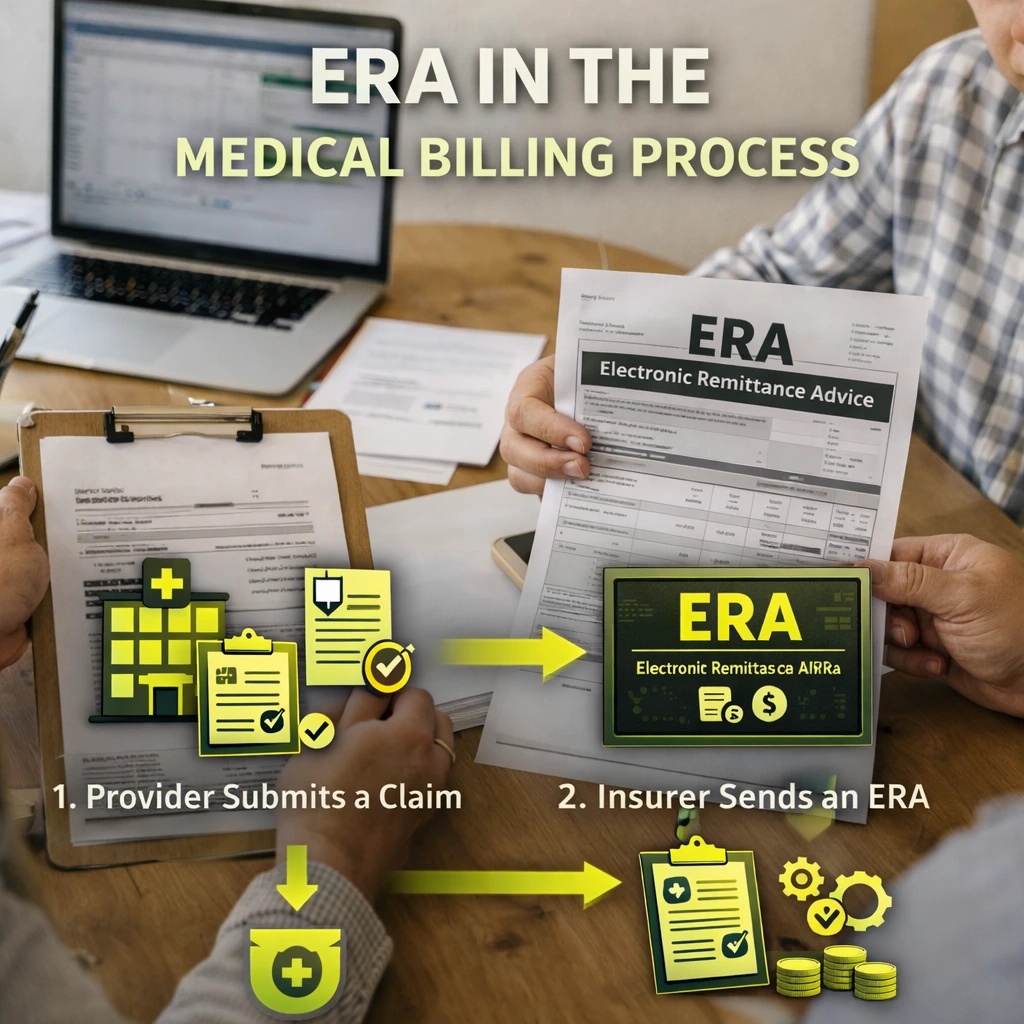
The medical billing process includes many steps from registration to payment collection. ERA connects these steps smoothly.
After claim submission ERA provides the missing link between service and payment. It explains outcomes and guides next actions.
Without ERA billing teams would struggle to manage volume and complexity. With ERA the process stays organized and predictable.
ERA and the Healthcare Revenue Cycle
ERA plays an important role in the healthcare revenue cycle. It supports steady cash flow and financial stability.
By providing fast and clear payment data ERA allows offices to identify unpaid claims quickly. Teams can follow up before revenue is lost.
Over time ERA helps improve claim quality and payer relationships.
Challenges With ERA and How Offices Handle Them
Sometimes ERA files do not post correctly. This usually happens due to setup issues or enrollment problems. These challenges are common and easy to fix.
Offices review payer enrollment status and software settings. Staff training also helps reduce confusion.
Once setup issues are resolved ERA works smoothly with minimal effort.
ERA Enrollment Explained Simply
To receive ERA providers must enroll with insurance companies. This step allows payers to send files electronically.
Enrollment usually involves completing forms and confirming details. Approval does not take long.
After enrollment ERA files begin arriving automatically and require little maintenance.
ERA and Data Security
Healthcare data must stay secure. ERA systems follow strict rules to protect patient information.
Billing software uses secure channels to receive and store ERA files. Access controls ensure only authorized staff can view data.
This keeps patient information safe and builds trust.
Why ERA Is Essential Today
Understanding what is ERA in medical billing shows why it is no longer optional. Modern billing depends on speed accuracy and clarity.
ERA delivers all three. It saves time improves accuracy and supports better communication. Offices that use ERA work smarter and faster.
Those that rely on paper often fall behind.
How ERA Helps Small and Large Practices
Both small clinics and large hospitals benefit from ERA. Small practices save time and reduce staffing needs. Large organizations manage high volumes with ease.
ERA scales with practice size. It adapts to different workflows and systems.
This flexibility makes ERA valuable across healthcare settings.
The Long Term Impact of ERA
Over time ERA changes how offices operate. Billing teams become more proactive. Errors decrease. Cash flow improves.
Offices spend less time fixing mistakes and more time improving service. Patients receive clearer bills and better communication.
ERA supports growth and stability.
FAQ
What is ERA in medical billing used for
ERA is used to show how an insurance company processed a claim. It explains payment details, adjustments, and patient responsibility in a clear digital format.
How does ERA help medical billing teams
ERA helps billing teams save time by reducing manual work. It allows faster payment posting and helps staff quickly review claim results.
Is ERA the same as an insurance payment
No, ERA is not the payment itself. ERA is the report that explains how the payment was calculated and applied to each claim.
Do all insurance companies send ERA
Most insurance companies offer ERA, but providers must enroll to receive it. Once enrolled, ERA files are sent automatically.
Can small clinics use ERA
Yes, small clinics can use ERA. It helps them manage payments easily, reduce errors, and improve daily billing tasks.
What happens if an ERA shows a denied claim
If an ERA shows a denial, the billing team reviews the reason, fixes the issue, and resubmits the claim if needed.
Final Thoughts
You now have a clear understanding of what is ERA in medical billing and why it matters. ERA transforms payment explanations from slow paper reports into fast digital files.
It saves time reduces errors improves cash flow and supports patient trust. It strengthens billing operations and helps offices focus on care instead of paperwork.
For any healthcare provider who wants efficiency and accuracy ERA is essential.