
Claim denials continue to create stress for medical practices of all sizes. Each denied claim adds more work slows payment and interrupts the revenue cycle.
In an industry where insurance rules shift often and operating costs keep rising preventing denials is one of the most important steps a practice can take.
Most denials come from fixable issues that appear again and again. When a practice understands these reasons it becomes easier to protect revenue improve cash flow and reduce the daily pressure on staff.
This guide takes you through the most common causes of claim denials and explains how to avoid them with simple clear steps.
Table of Contents
ToggleMissing Or Incorrect Patient Information
One of the top reasons for claim denials is missing or incorrect patient information.
Something as small as a wrong birth date outdated address or missing insurance ID number is enough for an insurer to reject a claim. These mistakes usually happen during check in when staff are moving quickly or relying on old records.
The best way to prevent this is to verify all patient details at every visit even if the patient has been coming to the practice for years. When front desk staff follow a set process for collecting data they reduce simple errors that lead to denials. Consistent verification also helps patients understand their coverage which improves trust and reduces billing confusion.
Eligibility And Coverage Problems
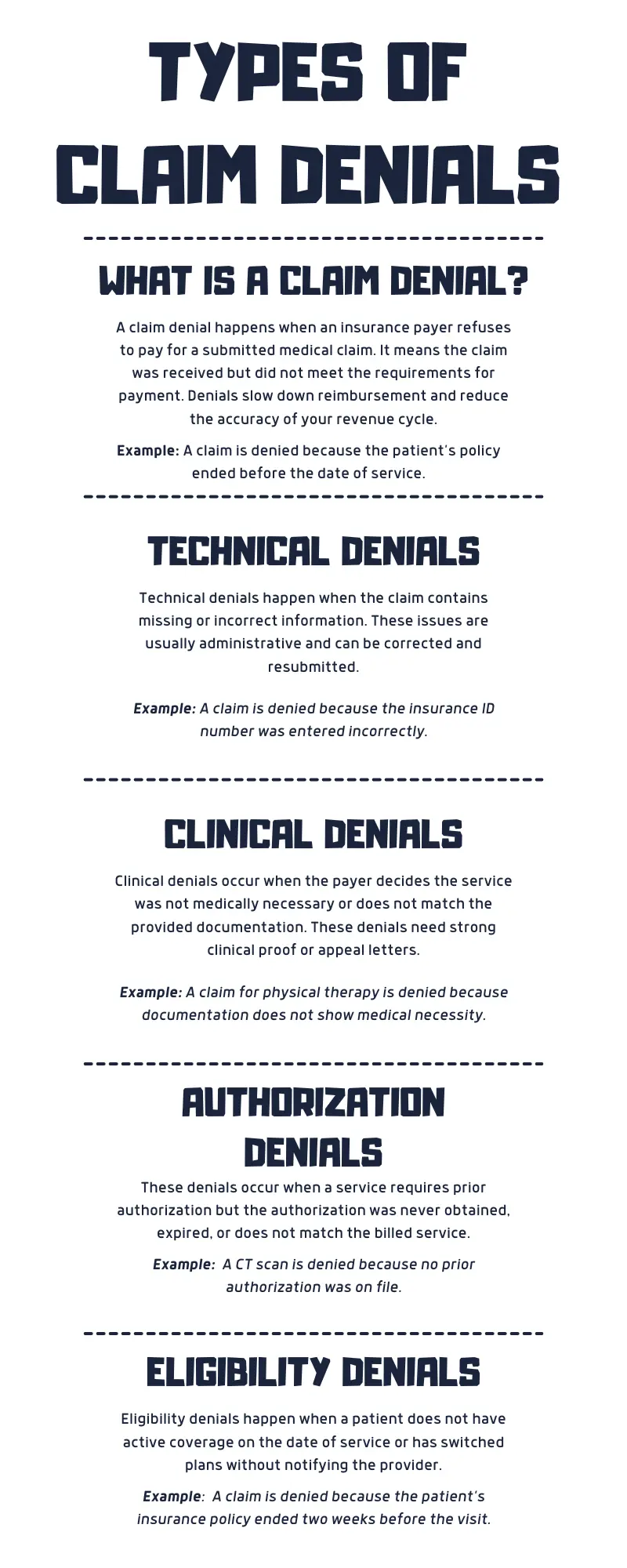
Eligibility problems are another leading cause of insurance denials.
Many claims fail because a patient no longer has active coverage or recently switched plans without notifying the provider. When eligibility is not checked before the visit the claim is set up for failure from the start.
Reliable eligibility verification protects the practice from unpaid claims and supports a smoother revenue cycle. Some practices still depend on manual checks but this increases the chance of mistakes. Automated tools or professional verification services make the process faster and more accurate.
Clear up front verification also helps patients understand their financial responsibility early. To learn how expert verification strengthens your revenue cycle visit our Eligibility Verification Services page.
Medical Billing And Coding Errors
Coding mistakes continue to be one of the most common causes of claim denials.
A claim may be rejected when the billing code does not match the documentation or when the wrong code is selected. Coding rules can be hard to keep up with because they change often and each payer has different guidelines. Even skilled teams make mistakes when documentation is unclear or incomplete.
The best way to prevent coding related denials is to maintain strong communication between providers and coders. When documentation is clean and detailed coders can select accurate codes with confidence. Many practices also schedule regular reviews of charts to catch errors before claims go out.
Accurate coding reduces medical billing errors protects providers from audits and leads to cleaner claims.
Authorization Not Obtained Or Expired
Many insurers require prior authorization for certain procedures tests or treatments. If the authorization is missing expired or obtained after the service date the claim will almost always be denied.
Authorization delays are frustrating because rules vary from one payer to another and approval timelines can be slow. A strong authorization process includes clear tracking systems regular status checks and open communication with patients and insurance reps. When a team stays ahead of authorization requirements claims move through the system faster and patients receive care without unnecessary disruption.
Incomplete Or Inaccurate Documentation
Documentation plays a major role in claim approval. Insurance companies rely on provider notes to confirm that the service was medically necessary and performed as billed.
When documentation is vague incomplete or inconsistent the insurer may deny the claim even if the service was valid. Providers can avoid this by making sure each note explains the reason for the visit describes symptoms clearly lists the diagnosis and connects the treatment to the patient’s condition.
When documentation is strong the billing team has what they need to support the claim and insurers have less reason to reject it.
Good documentation is a simple habit that protects practices from preventable denials.
Duplicate Claims Submitted By Mistake
Duplicate claims happen more often than many practices realize. A duplicate claim is created when the same service is billed twice even if by accident.
Sometimes the system shows a claim as unsent when it is already pending or a team member may resubmit a claim without noticing that it is already in progress. This leads to automatic denial and adds more time to the billing cycle.
Strong claim tracking habits and reliable billing software help prevent duplicate claims. Routine audits also give staff the chance to catch these issues before they reach the payer.
Wrong Or Misused Modifiers
Modifiers give insurers more detail about a service. They explain special circumstances such as repeated services or procedures done on different body areas.
When modifiers are missing incorrect or unnecessary the insurer may misunderstand the claim and deny it. Modifiers must be used with care because they impact how the claim is processed. Regular training and clear coding guidelines help teams choose the right modifiers and avoid insurance denials.
When modifiers are correct the claim has a much better chance of being approved on the first submission.
Claims Submitted After Timely Filing Limits
Timely filing limits are deadlines set by each insurer for claim submission. If a claim is sent after the deadline the insurer may deny it even when the claim is accurate.
Staff shortages system delays and incomplete documentation often lead to missed deadlines. To avoid this practices should track deadlines for each payer and review claim status daily.
Strong workflows protect the practice from preventable losses and keep payment schedules predictable.
Coordination Of Benefits Issues
Coordination of benefits matters when a patient has more than one insurance plan. If the wrong insurer is billed first or if the practice is unaware of the secondary coverage the claim may be denied.
Many denials happen simply because the patient did not mention new coverage or dropped a previous plan. Staff can avoid this by asking patients about secondary insurance at every appointment and confirming which plan is primary.
With correct information on file claims move through the process smoothly and payments arrive on time.
Lack Of Clear Medical Necessity
One of the most frequent reasons claims are denied is lack of medical necessity. Insurers evaluate whether a service was required based on the diagnosis and documentation.
If the notes do not justify the procedure or if the diagnosis does not support the service the insurer may deny payment. Providers can reduce this risk by writing clear and detailed notes that explain why the service was needed. When the medical story is well connected the claim becomes stronger and insurers have fewer reasons to deny it.
Understanding payer expectations also helps providers align documentation with approval requirements.
How To Reduce Claim Denials In Your Practice?
Reducing claim denials starts with strong workflows and reliable processes. Clean patient data accurate eligibility checks precise coding proper authorization and timely submission all protect the revenue cycle.
Many practices choose to work with professional billing partners who manage these steps daily and monitor claim quality from start to finish. This approach helps providers focus on patient care while billing experts handle the complex side of insurance.
You can explore helpful guidelines at cms.gov which offers trusted information on coverage rules and billing standards.
Closing thoughts
When practices understand the true causes of denials they can act early and prevent them before they interrupt cash flow.
Claim denials do not have to be constant challenges. With clear documentation strong verification accurate coding and the right support your practice can bring in more clean claims and maintain a healthier revenue cycle all year long.