
Seeing a denied insurance claim can feel stressful and confusing. You may wonder what went wrong and whether you must pay the full bill. If you are asking why did my insurance deny my medical claim, you are not alone.
Insurance claim denials are common in the United States. The good news is this. Many denials happen for simple reasons, and many can be fixed.
This guide explains the most common reasons insurance denies claims and the steps you can take to protect yourself.
Table of Contents
ToggleCommon reasons insurance denies medical claims
Insurance companies use strict rules to process claims. Even small issues can cause problems.
Your insurance does not cover the service
Some plans do not cover every test, visit, or treatment. Insurance may deny the claim if the service is excluded or limited under your policy.
Always check your benefits before getting care when possible.
The provider made a billing error
Billing mistakes are one of the most common causes of claim denials. A wrong code, missing detail, or data entry error can lead to rejection.
Many denials happen due to medical billing errors, and providers can often correct and resubmit them.
Your deductible is not met yet
If you have not met your yearly deductible, insurance may deny payment. This often happens early in the year.
In this case, the denial does not mean the service is invalid. It means you may need to pay until the deductible is met.
The claim was filed late
Insurance plans set strict deadlines for claim filing. If the provider submits the claim too late, insurance may deny it.
Late filing denials may still be appealed in some cases.
You used an out of network provider
Many insurance plans only pay full benefits for in network care. Claims may be denied or reduced when you receive services from out of network providers.
Emergency services are often treated differently under federal rules.
Prior approval was not received
Some services require approval before treatment. If approval was not obtained, insurance may deny the claim.
This is common for imaging tests, surgeries, and specialty care.
What should you do after your insurance denies a medical claim?
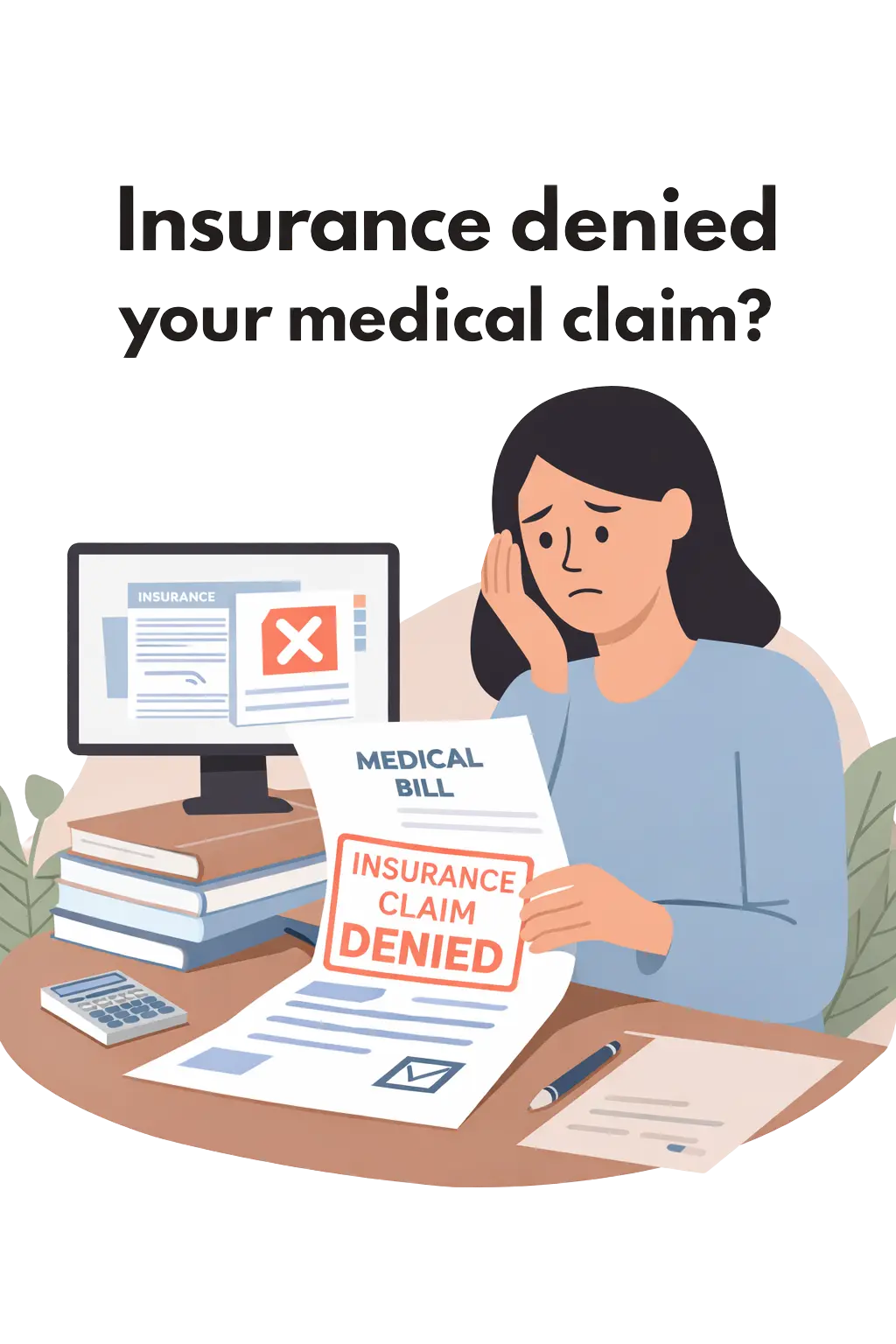
Do not panic. Take action step by step.
Read the denial letter carefully
The denial letter explains why the claim was denied. It includes codes and instructions. This information tells you what went wrong.
Review your insurance benefits
Compare the denial reason with your policy details. Understanding your explanation of benefits can help you spot mistakes.
Contact the provider billing office
Ask the billing office to review the claim. Many issues can be fixed by correcting errors and resubmitting the claim.
If needed, ask for help with medical billing help.
File an appeal if the denial seems wrong
If you believe the denial is incorrect, you have the right to appeal. Insurance companies must review appeals when submitted on time.
You can also learn more about how health insurance appeals work by reviewing guidance from official US health insurance resources.
Does a denied claim mean you must pay the bill?
No. A denied claim does not always mean you owe the full amount.
You may be able to:
- Correct billing errors
- Appeal the denial
- Request payment plans or discounts
Taking action early can prevent the bill from going to collections.
How to reduce insurance claim denials in the future
You can lower the risk of denied claims by:
- Checking coverage before care
- Staying in network
- Asking if approval is needed
- Keeping records of bills and letters
Knowing your rights helps you avoid surprises.
Why did my insurance deny my medical claim even though I have coverage?
Insurance plans have rules and limits. Claims may be denied due to coverage restrictions, billing errors, missing approval, or deductibles.
Understanding EOBs helps you catch these issues early. You can learn more in our article about medical billing errors.
What are the most common reasons insurance denies claims?
The most common reasons include:
- Non-covered services
- Billing mistakes
- Late filing
- Network Care
- Missing prior approval
What should I do if my medical claim is denied?
Read the denial letter, contact the provider billing office, and file an appeal if needed. Many denials can be resolved.
Does a denied insurance claim mean I have to pay?
Not always. You may fix the issue, appeal the denial, or negotiate payment options.
How long do I have to appeal a denied medical claim?
Most insurance plans allow appeals within 30 to 180 days. The deadline is listed in your denial notice.
Final thoughts
If you are asking why did my insurance deny my medical claim, remember this. Most denials happen for fixable reasons. You have rights, and you have options.
Understanding the cause of the denial puts you in control and helps you avoid unnecessary costs.