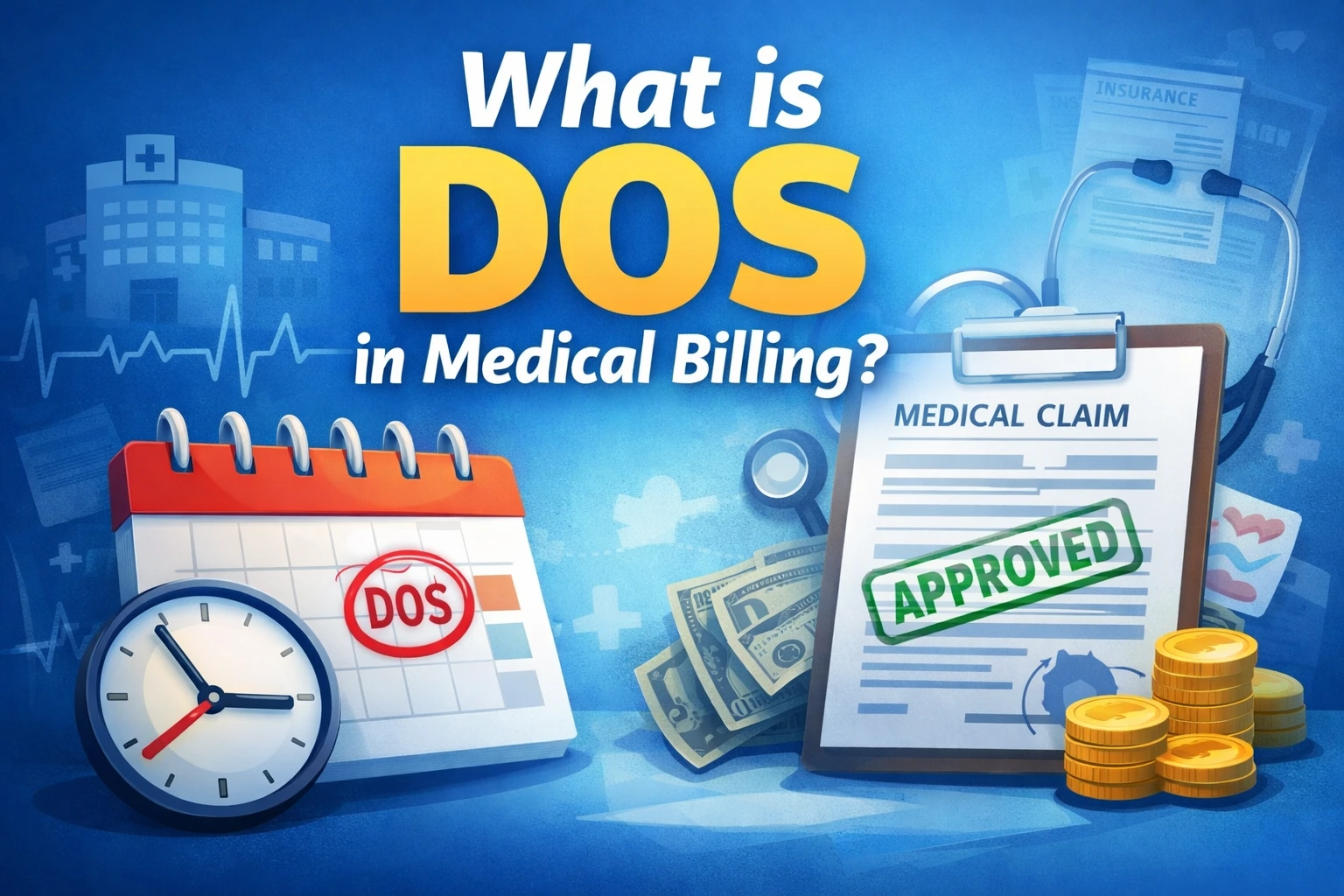
What is DOS in medical billing? It is one of the first things every new biller learns. DOS stands for date of service. It is the exact day when a patient receives medical care. That care may be a doctor visit, lab test, surgery, or therapy session.
DOS in medical billing sounds simple, but it carries big importance. Every medical claim depends on this single date. Insurance companies look at the DOS before they review anything else.
The DOS in medical billing is not about paperwork. It is about the real day care happened. If the date is wrong, the claim can be denied. Even a small typing mistake can delay payment.
Understanding this term helps billing teams avoid errors. It also keeps patient records clean and trustworthy.
Table of Contents
ToggleWhy the Date of Service is So Important
The date of service in medical billing acts like a time stamp. It proves when treatment took place. Insurance companies use this date to confirm coverage.
Insurance policies only work during active periods. If the DOS falls outside the coverage window, the insurer may reject the claim. This is why accuracy is critical.
When people ask what is DOS in medical billing, they often do not realize it affects money flow. Clinics depend on timely payments. A wrong DOS can freeze revenue because staff must fix and resend claims.
The DOS also controls deadlines. Many insurers require claims to be submitted within a certain number of days after the service. Missing that window can mean lost payment.
How DOS Works in the Billing Process
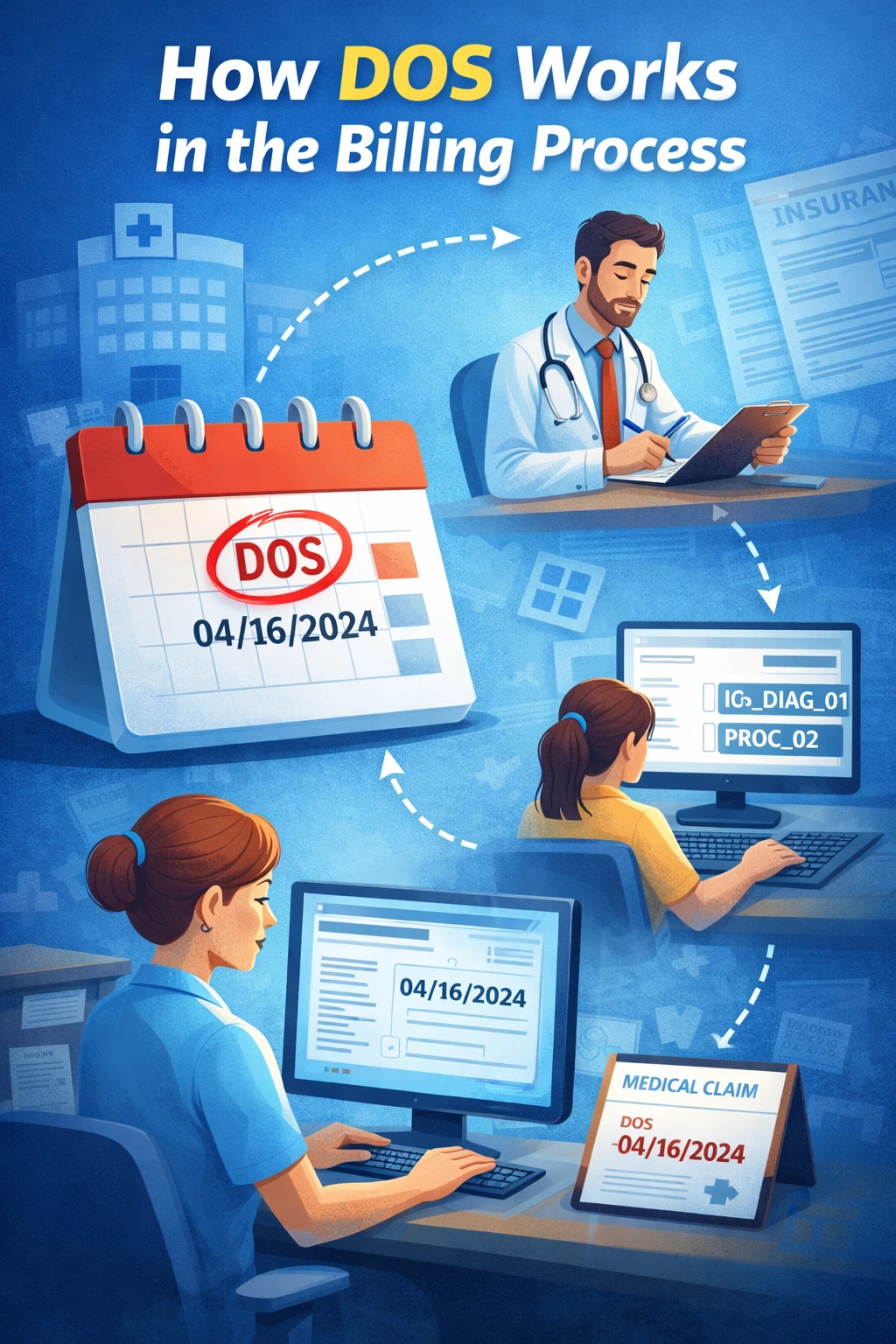
DOS in healthcare billing connects every step of the revenue cycle. The process starts when a patient arrives. Front desk staff register the visit and record the date.
Providers give care and write clinical notes. Coders assign medical codes based on the treatment. Billing staff prepare the claim using the same DOS.
Medical billing DOS explained from a workflow angle shows teamwork. Every department must use the exact same date. If one section uses a different date, confusion begins.
Insurance systems read dates strictly. They do not assume or correct mistakes. The claim must match the records perfectly.
Common Errors with DOS in Medical Billing
Many beginners misunderstand what is DOS in medical billing. Some think it means the billing date. Others believe it is the day the claim was submitted. Both ideas are wrong.
DOS only refers to the day care happened. Mixing this up creates claim denials.
A common error is typing the wrong year. Another mistake is entering the follow up visit date instead of the original service date. These errors may look small, but they can trigger audits.
The DOS meaning in medical billing reminds staff to slow down and double check. Accuracy saves time later.
How DOS Affects Insurance Claims
The date of service in medical billing controls how insurers read a claim. It tells them whether the patient had active coverage. It also shows if the service matches policy rules.
Some treatments require prior approval. Insurers check if that approval was valid on the DOS. If the dates do not match, the claim fails.
It helps to study real claim forms. The DOS field stands out because it guides the entire review process.
Clean dates lead to clean claims. Clean claims get paid faster.
DOS and Patient Records
DOS in healthcare billing does more than support payment. It also protects patient history. Doctors review past visits before giving new care.
Each visit carries its own DOS. These dates create a timeline of health events. Accurate timelines help providers make better decisions.
Medical billing DOS explained in a patient care context shows that billing and treatment are linked. Good documentation improves both finance and care quality.
DOS and Compliance Rules
Healthcare laws demand accurate records. A false date can look like fraud even when it is an accident. That is why training programs repeat what is DOS in medical billing again and again.
Auditors often review claims by comparing clinical notes with the DOS. If the dates do not match, clinics may face penalties.
The DOS meaning in medical billing supports legal safety. Honest and correct records protect everyone involved.
Compliance is not optional. It is part of daily billing life.
Technology and DOS Accuracy
Modern clinics use digital systems to reduce mistakes. Electronic health record software stamps the visit date automatically. This lowers human error.
Still, staff must verify each entry. Technology helps, but attention keeps the system strong.
The date of service in medical billing must match provider notes. A quick review before submission prevents denial.
When people master what is DOS in medical billing, they develop a habit of checking dates every time.
DOS in Hospitals and Multi Day Care
Hospitals add another layer of complexity. Patients may stay for several days. Each day can include multiple services.
DOS in healthcare billing must separate these services correctly. Surgeries, lab work, and consultations may each carry their own DOS entry.
Medical billing DOS explained in hospital settings shows how detailed records become. Insurance companies read every line carefully.
Clear dates keep hospital billing organized and defendable.
Financial Impact of a Correct DOS

A correct DOS supports healthy cash flow. Clinics depend on steady income. Denied claims slow down operations.
When billing teams understand what is DOS in medical billing, they reduce rework. Less rework means faster payment.
The DOS meaning in medical billing connects directly to financial stability. Small accuracy habits build long term success.
Patients also benefit. Correct statements prevent confusion and build trust.
DOS and Follow Up Care
The date of service in medical billing also guides treatment schedules. Some therapies require waiting periods before the next session.
Providers use the DOS to plan safe follow up visits. It ensures that care follows medical guidelines.
DOS in healthcare billing therefore supports both finance and safety. It bridges administration and treatment.
Medical billing DOS explained from this view shows its dual purpose. It protects money and health at the same time.
Training New Medical Billers
Training always starts with basics. Instructors stress what is DOS in medical billing because it is a foundation skill.
Students practice matching notes with dates. They learn to read charts carefully. Repetition builds confidence.
The DOS meaning in medical billing becomes second nature over time. Experienced billers spot date errors instantly.
Strong foundations create strong careers.
The Bigger Picture of DOS
The date of service in medical billing may look like a small box on a form. In reality, it carries the weight of the entire claim.
Eligibility, coding, compliance, and payment all connect to this one field. A clean DOS supports a clean system.
DOS in healthcare billing reminds us that healthcare runs on precision. Every detail matters.
Conclusion: Why DOS Matters Every Day
So what is DOS in medical billing in the end. It is the anchor of every medical claim. It proves when care took place and protects both provider and patient.
A correct DOS speeds payment. It prevents denial. It supports audits and builds trust.
The DOS meaning in medical billing teaches a simple lesson. Accuracy is power. Clinics that respect dates run smoother systems.
The date of service in medical billing may seem small, but it controls the entire billing journey. When staff understand it deeply, they reduce stress and improve results.
That is why mastering what is DOS in medical billing is essential for every healthcare office. It is the heartbeat of clean claims and stable revenue.
FAQ
What is DOS in medical billing in simple words?
DOS in medical billing means the date of service. It is the exact day a patient receives medical care. This date goes on every insurance claim. It tells the insurer when treatment happened. If this date is wrong, the claim can be denied or delayed.
What does DOS meaning in medical billing stand for?
DOS meaning in medical billing stands for date of service. It is not the billing date or payment date. It only refers to the day care was provided. Clinics must record this date carefully to avoid claim errors.
Why is the date of service in medical billing important?
The date of service in medical billing is important because insurance coverage depends on it. Insurers check if the patient had active coverage on that day. They also use it to enforce claim deadlines. A wrong date can cause denial or lost payment.
How does DOS in healthcare billing affect insurance claims?
DOS in healthcare billing controls how a claim is reviewed. Insurance companies read the DOS first. They match it with patient eligibility and treatment rules. If the DOS does not match records, the claim may fail.
Can a claim be rejected because of the wrong DOS?
Yes, a claim can be rejected if the DOS is wrong. Even a small typing mistake can trigger denial. Practice shows that accurate dates help claims move faster and get paid sooner.
Is DOS the same as the billing date?
No, DOS is not the billing date. DOS in medical billing refers only to the day the patient received care. The billing date is when the claim was created or sent. These two dates are different and must not be mixed up.
How do clinics make sure DOS is correct?
Clinics use electronic systems to record visits automatically. Staff also double check provider notes. DOS teaches teams to review dates before sending a claim. Careful checks prevent costly mistakes.
Does DOS matter for patient medical history?
Yes, the date of service in medical billing also supports patient records. Doctors use DOS to track visit history. Accurate timelines help providers give better care and plan follow up visits safely.