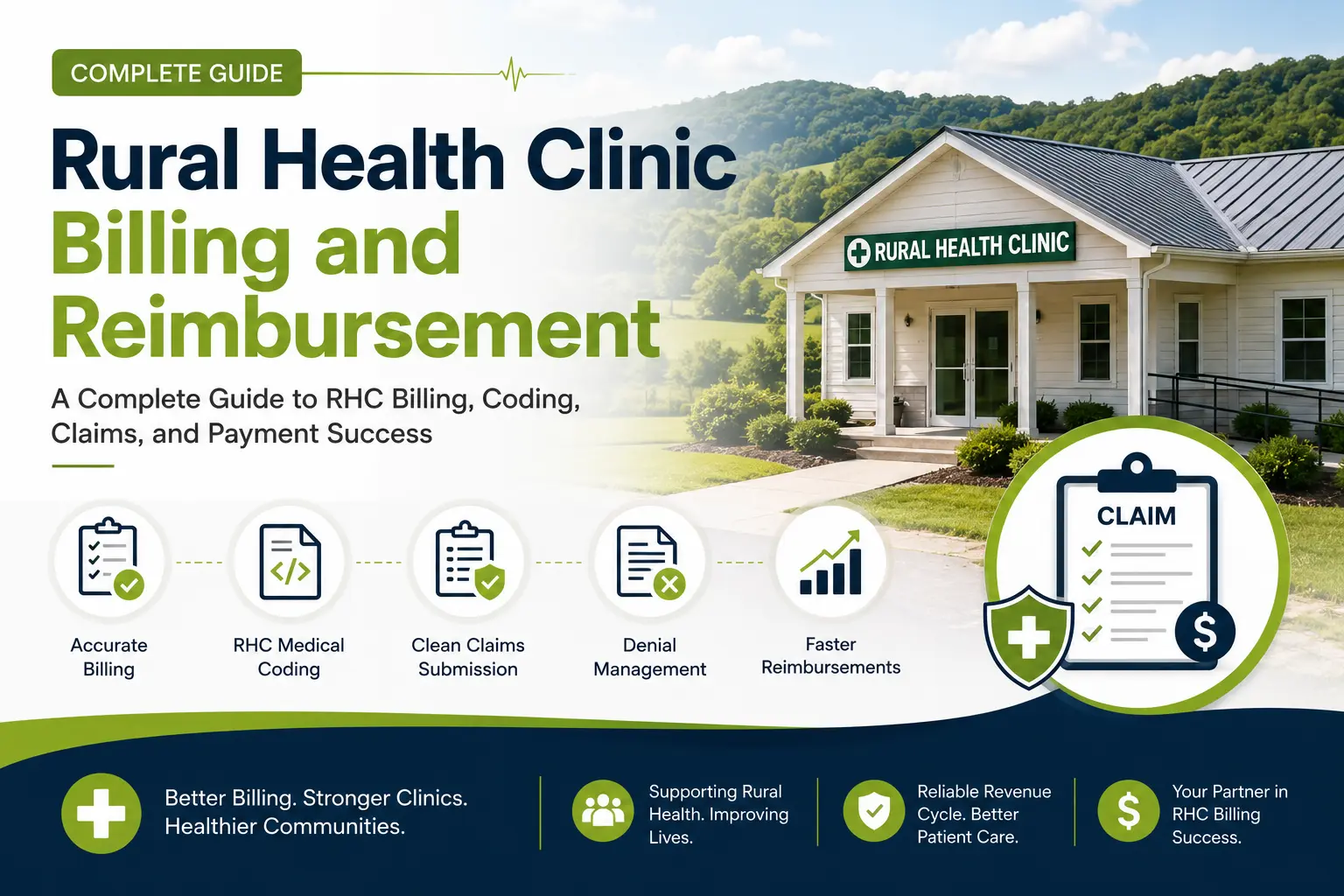
A rural health clinic plays an important role in giving patients access to medical care in areas where health services may be limited. Many patients in rural communities depend on these clinics for primary care, preventive care, mental health support, and other needed services.
While the main goal of a clinic is to provide quality patient care, the billing side of the practice also needs close attention. A clinic can provide excellent care and still face serious cash flow problems when claims go out late, payments remain unpaid, or billing errors lead to denials.
Rural health clinic billing works differently from billing for a regular physician office. Medicare follows special rules for covered visits, payments, cost reports, and claim submission. Medicaid and private insurance companies may also follow different rules.
Because of these differences, the billing team needs a clear process from patient registration to final payment. Correct patient information, active insurance coverage, clear documentation, correct coding, clean claims, payment posting, denial follow up, and A/R management all play a part.
This guide explains how rural health clinic billing and reimbursement work. It also covers the common problems that can delay payments and the steps clinics can take to improve their revenue cycle.
Table of Contents
ToggleWhat Is a Rural Health Clinic?
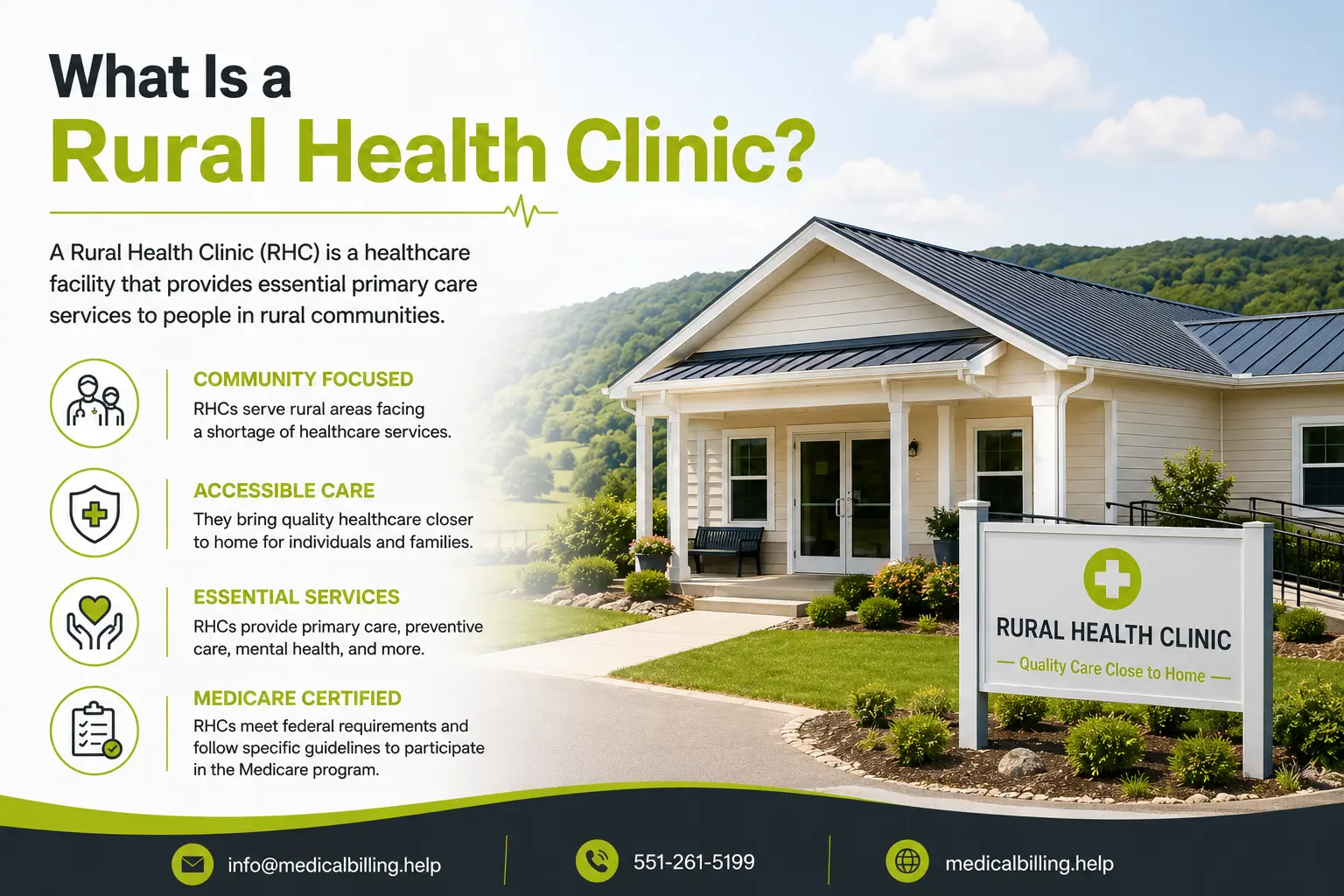
A rural health clinic is a health care facility that meets federal requirements and serves an approved rural area.
These clinics help improve access to care in communities where patients may have fewer health care options. A patient may need to travel a long distance to see a doctor, visit a hospital, or receive other medical services. Rural clinics help reduce this problem by bringing needed care closer to the community.
A clinic must meet certain rules before it can receive RHC status. These rules may include requirements related to location, staffing, services, and clinic operations.
A clinic may operate as an independent facility or as part of a hospital or larger health system. Some clinics are linked to critical access hospitals.
The type of clinic can affect how payment rules apply.
This is why the billing team should understand the clinic structure before it starts submitting claims. A billing process that works for one type of provider may not work the same way for an RHC.
Why Rural Health Clinic Billing Is Different
A regular medical practice often bills each covered service separately. The insurance company then reviews the reported codes and pays based on its payment rules.
A rural health clinic may follow a different process for Medicare.
Medicare generally pays for qualified RHC visits through an All Inclusive Rate. This means the clinic may receive a bundled payment for a covered visit.
The payment method changes the way the clinic should review claims.
The billing team needs to know whether the encounter meets the rules for an RHC visit. It also needs to understand which services are part of the main visit and which services may follow another payment method.
The clinic cannot treat every payer the same way.
Medicare may follow one set of rules. Medicaid may follow another. A private insurance company may have its own claim rules, payment method, contract terms, and authorization needs.
The billing team should always check the payer before submitting a claim.
Using the same billing method for every insurance plan can lead to denials, payment delays, and incorrect patient balances.
How Medicare Payment Works
One of the most important parts of RHC billing is the All Inclusive Rate.
Medicare generally uses this payment method for qualified RHC visits.
The clinic reports the visit based on the services provided and the rules that apply. Medicare then processes the claim under the RHC payment method.
The payment may include several services related to the qualifying visit.
This does not mean the clinic can ignore coding or documentation.
The medical record still needs to show why the patient needed care, what the provider did, and what happened during the visit.
The claim must also contain the correct information.
The billing team should never assume that a bundled payment removes the need for accurate billing. A claim can still get denied when information is missing, the visit does not meet the rules, or the codes do not match the medical record.
Payment limits and other rules may change over time. Clinics should review current guidance from the Centers for Medicare and Medicaid Services when checking new payment updates.
A clinic should not use old payment information when planning its revenue or reviewing expected payments.
Understanding the All Inclusive Rate
The All Inclusive Rate is often called the AIR.
This payment method is one of the main differences between RHC billing and normal physician billing.
In simple terms, Medicare pays for the covered visit under a bundled method. The amount may include several services linked to the same visit.
The clinic still needs to document and code the encounter correctly.
The medical record should support the service reported on the claim.
The provider should clearly explain the reason for the visit, the care given, and the treatment plan.
The billing team should review any record that looks incomplete before sending the claim.
A weak record can lead to a denial or a request for more information.
Holding a claim for a short time to fix a problem is often better than sending it with missing information and waiting weeks for a denial.
What Counts as a Qualifying RHC Visit?
Not every service automatically becomes a payable RHC visit.
The patient usually needs to receive a covered service from an approved RHC provider.
The visit should meet the payer rules for medical need and covered care.
The medical record plays an important role.
The note should clearly show why the patient came to the clinic.
It should explain the patient problem, the provider review, the care given, and the next step.
The billing team should not guess what happened during the visit.
When the note does not support the claim, the payer may deny payment.
The clinic may then need to send more records or file an appeal.
This takes time and delays revenue.
A better process starts with complete documentation.
Providers should finish records on time, and the billing team should review unclear notes before claim submission.
Same Day Visits and Payment
Same day visits can create billing problems when the team does not understand the payer rules.
In many cases, more than one visit with an RHC provider on the same day may count as one visit for payment.
However, some situations may allow more than one payable visit.
For example, a patient may return later because of a new medical problem that happened after the first visit.
A patient may also receive a medical service and a mental health service on the same day in a situation where the payer allows separate payment.
The billing team should review the full patient record before submitting more than one visit for the same date.
The team should not create a second visit only because the patient spoke with more than one staff member or received more than one service.
The documentation should clearly support the reason for each reported encounter.
Good claim review can prevent denials and reduce the need for appeals.
The Role of rural health programs
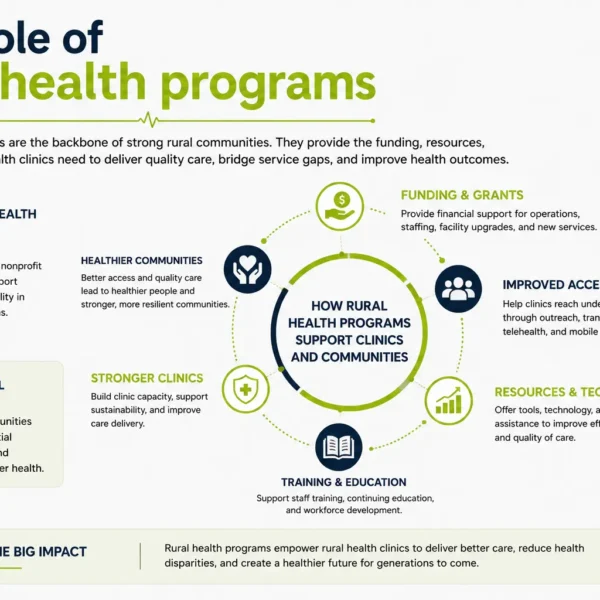
Many clinics work with different sources of support.
These may include insurance payments, public funding, grants, community support, and other health programs.
Each source of payment may follow its own rules.
A grant funded service may not follow the same process as a normal insurance claim.
A Medicare patient may follow one billing method, while a Medicaid patient may follow another.
The clinic should keep clear records for each source of payment.
This helps prevent duplicate billing, missed claims, and incorrect patient charges.
The billing team should also speak with clinic leaders when the clinic adds a new service, new provider, or new payment program.
Early planning can prevent major billing problems.
It is much easier to build the correct process before a new service starts than to fix unpaid claims later.
Rural Clinic Insurance Billing
The insurance billing process starts before the patient sees the provider.
The front office should collect the correct patient name, date of birth, address, phone number, and insurance details.
The clinic should verify active coverage before the visit whenever possible.
Insurance verification should answer more than one question.
The clinic needs to know whether the plan is active.
It also needs to know whether the clinic takes part in the plan, whether the service needs approval, and what amount the patient may need to pay.
Correct information at the start helps create a clean claim later.
A wrong member number can cause a rejection.
An inactive plan can lead to a denial.
A missed authorization can leave the clinic with a service that the payer refuses to cover.
The billing team should confirm important insurance details before claim submission.
After the clinic sends the claim, the team should continue tracking it.
Submitting the claim is not the end of the billing process.
The team still needs to check whether the payer accepted the claim, denied it, paid it, or requested more information.
Need Help With Rural Health Clinic Billing?
Get expert support with RHC billing, coding, claim follow up, denials, and A/R management.
The Importance of RHC Medical Coding
Correct coding tells the payer what happened during the patient visit.
The coding team should review the provider note before selecting diagnosis and service codes.
The codes should match the medical record.
The team should never choose a code only because it may pay more.
It should also avoid using a less correct code just to finish the claim quickly.
The medical record should support every code.
The coder should review the reason for the visit, the provider findings, the care given, and the treatment plan.
RHC claims may also require specific claim details based on the payer and type of service.
Using old code information can create denials.
Missing claim details can stop payment.
A wrong code can send the claim through the wrong payment process.
Regular coding reviews can help the clinic find problems before they affect a large number of claims.
How to Build a Clean Claim Process
A clean claim starts with correct information.
The clinic should confirm patient details and insurance coverage before the visit.
The provider should complete the medical record on time.
The coding team should review the documentation and choose the correct codes.
The billing team should then check the full claim before submission.
Each part of the process connects to the next.
When the front office enters the wrong insurance information, the billing team may receive a rejection.
When the provider leaves the note incomplete, the coder may not have enough information.
When the coder chooses the wrong code, the payer may deny the claim.
A good clinic creates a clear process and makes sure each team member understands their role.
The billing team should also review rejected claims quickly.
A rejected claim may not have entered the full payment process.
When the team corrects the problem quickly, it can prevent the claim from sitting unpaid for weeks.
Fast action helps protect cash flow.
Why Eligibility Verification Matters
Eligibility verification can prevent many avoidable billing problems.
The clinic should confirm that the patient insurance is active.
It should also review important plan details.
Patients can change insurance plans without telling the clinic.
A patient may have used one plan during the last visit and a different plan today.
The front office should not rely only on old information stored in the system.
A strong verification process can stop the clinic from sending claims to the wrong payer.
It can also help the clinic explain possible patient costs before care.
Clear communication can reduce confusion after the insurance company processes the claim.
Good eligibility checks also help the clinic find services that need prior approval.
When the clinic misses an authorization rule, the payer may deny the claim.
In some cases, the clinic may not be able to recover the payment.
A few minutes of checking before the visit can save hours of work later.
Documentation and Payment
Good documentation supports good billing.
The provider note should explain why the patient needed care.
It should show what the provider reviewed, what care the patient received, and what plan the provider gave.
The note should also give the coder enough information to select accurate codes.
Short or unclear records can create problems.
The billing team may need to hold the claim and ask the provider for more information.
This may delay the claim for a short time, but it can prevent a longer delay caused by a denial.
Clinics should track records that stay incomplete for too long.
Regular delays may show that the clinic needs a better process.
The goal is not to blame providers.
The goal is to help the clinic get paid correctly for the care it gives.
Simple record templates, staff training, and regular reviews can improve the quality of documentation.
Cost Reports and Payment Review
Cost reporting is an important part of the RHC payment process.
Clinics that receive Medicare payment under the RHC system may have annual cost report duties.
The exact reporting method can depend on the type of clinic.
An independent clinic may follow a different process from a clinic that operates as part of a hospital.
The cost report gives Medicare information about clinic operations and costs.
The clinic needs accurate financial records throughout the year.
It should not wait until the reporting deadline to fix missing information.
Billing records, payment records, visit counts, and cost information should remain organized.
The billing and accounting teams should also work together.
When billing records and financial records do not match, the clinic may face extra work later.
Good records make reporting easier and help leaders understand the true cost of providing care.
Common Billing Problems
Many billing problems start with small mistakes.
The patient may have inactive insurance.
The claim may contain the wrong payer information.
The provider may not complete the note.
A code may not match the service.
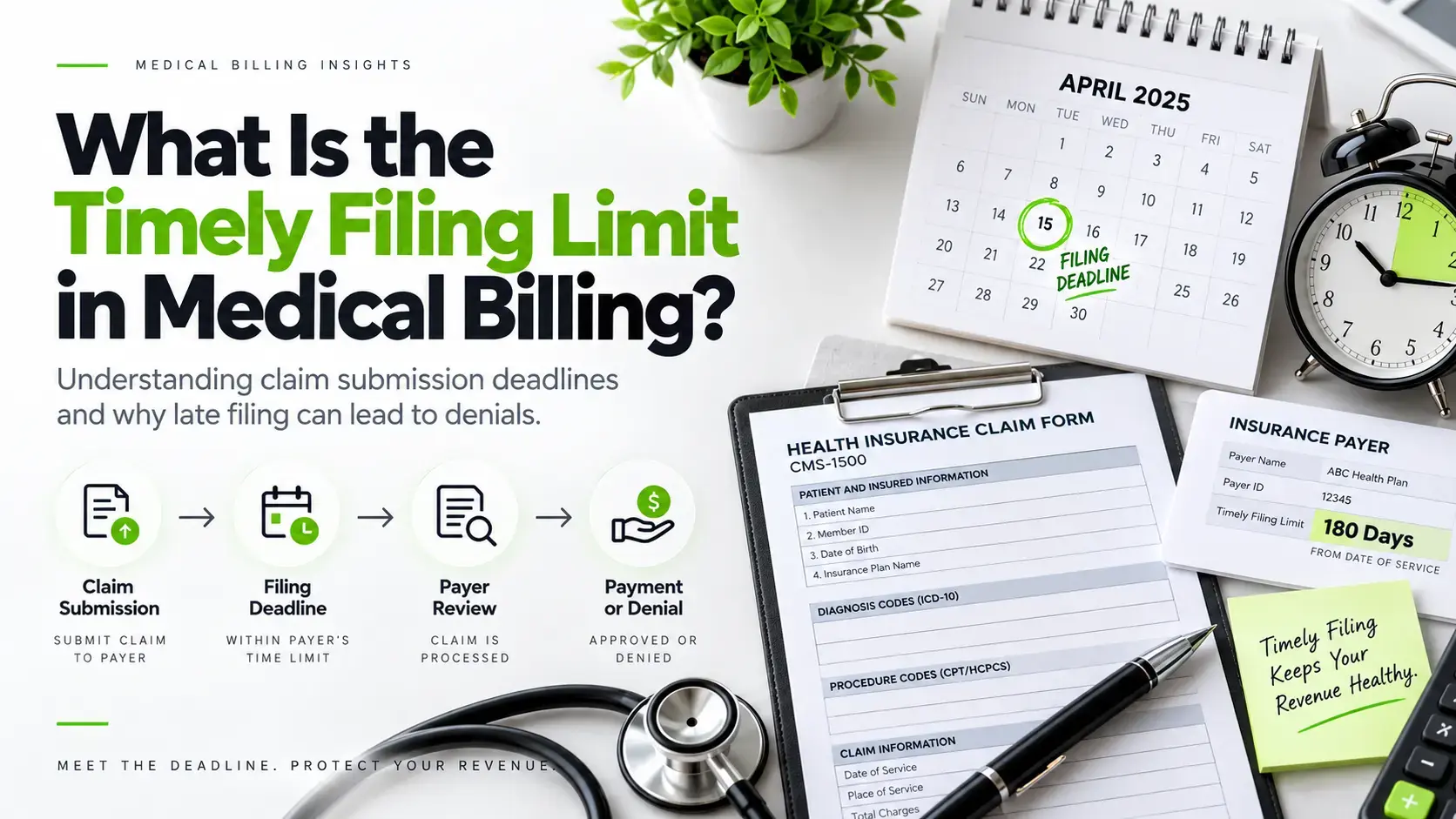
The clinic may miss a filing deadline.
Each of these problems can delay payment.
Another common issue happens when staff use the same billing process for every payer.
Medicare, Medicaid, Medicare Advantage plans, and private insurance companies may process the same service differently.
The team should always check the correct payer rule.
Clinics can also lose money when they do not review payments closely.
A paid claim is not always a correctly paid claim.
The billing team should compare the payment with the expected amount.
When the payer pays less than expected, the team should find out why.
Small underpayments can become a large loss when they happen across many claims.
Denial Management for RHC Claims
A denied claim should never sit in a work queue without action.
The billing team should review the denial reason and decide what the claim needs.
Some claims need a correction.
Others need medical records, an appeal, proof of authorization, or more information from the patient.
The clinic should track denial reasons.
This helps leaders find repeated problems.
A high number of eligibility denials may point to a problem at the front desk.
Coding denials may show that the team needs more training.
Filing limit denials may show that claims are not getting enough attention.
A strong denial process does more than recover one payment.
It finds the cause of the problem and helps stop the same issue from happening again.
This can lower future denials and improve cash flow.
Managing A/R and Unpaid Claims
Accounts receivable shows money that the clinic has billed but has not yet collected.
A growing A/R balance can be a warning sign.
The clinic should review unpaid claims by age, payer, amount, and reason for delay.
New claims need regular checks.
Older claims need faster action because filing and appeal deadlines may apply.
The billing team should not only focus on large balances.
Many small unpaid claims can also create a major revenue loss.
Every unpaid claim should have a clear next step.
The team should know why the claim has not paid, what action it needs, who will take that action, and when someone will check the claim again.
Without a clear process, claims can stay open until the clinic can no longer recover the money.
Strong A/R follow up can make a major difference in rural health clinic reimbursement.
Patient Payments and Clear Communication
Patient billing is another important part of the revenue cycle.
The clinic should explain possible patient costs as clearly as possible.
The billing team should review the final payer response before asking the patient to pay a balance that depends on insurance processing.
Patient statements should be easy to understand.
Patients should know what they owe, why they owe it, and how they can pay.
Confusing bills can lead to phone calls, complaints, and slower collections.
The clinic should also post patient payments quickly.
Correct payment posting prevents the clinic from sending a bill for money the patient already paid.
A clear patient billing process supports revenue and helps build trust.
Why Billing Reports Matter
Clinic leaders need clear reports to understand financial performance.
They should know how many claims the clinic submits, how many claims pay without problems, how many get denied, and how much money remains unpaid.
They should also review A/R based on age and payer.
Reports help the clinic find problems early.
A rise in denials may show a new payer problem.
A drop in collections may point to claim delays.
A growing old A/R balance may show that the billing team needs more support.
The clinic should not wait for a serious cash flow problem before checking the numbers.
Regular reports help leaders make better decisions.
When a Clinic May Need Billing Support
Some clinics manage billing with an internal team.
Others use outside billing support.
The right choice depends on the size of the clinic, staff skills, claim volume, payer mix, and current billing results.
A clinic may need help when denials keep increasing.
It may also need help when A/R becomes older, claims go out late, or staff spend too much time on insurance follow up.
A clinic may also need extra support when it adds new providers or services.
Outside billing support should not remove the clinic from the process.
A good billing partner should provide clear reports and explain what is happening with claims, denials, and payments.
The clinic should always understand its own revenue cycle.
How MedicalBilling.Help Can Support Your Clinic
Managing the revenue cycle takes time, payer knowledge, and regular follow up.
MedicalBilling.Help supports health care organizations with medical billing, coding, denial management, A/R follow up, payment posting, eligibility verification, and other revenue cycle services.
Our goal is to help clinics create a smoother billing process and spend less time chasing unpaid claims.
A strong process starts before claim submission and continues until the clinic receives the correct payment.
Our team can review the revenue cycle to find delays, repeated denials, unpaid claims, and other problems that may affect cash flow.
Better billing gives clinic leaders more control over revenue and more time to focus on patient care.
Building a Stronger Revenue Cycle for Your Rural Health Clinic
A rural health clinic provides needed care to communities that may have limited access to health services.
That important work needs a healthy revenue cycle.
Correct patient information, clear documentation, accurate coding, clean claims, payment review, denial management, and A/R follow up all play an important role.
RHC billing can feel difficult because the payment rules are different from standard physician billing.
However, a clear process can make the work easier.
The clinic should know the payer rules, review its billing data, act quickly on unpaid claims, and fix repeated problems.
When every part of the revenue cycle works together, the clinic can reduce delays, improve collections, and protect the financial strength it needs to keep serving its community.
FAQ
What is a rural health clinic?
A rural health clinic is a health care facility that meets federal requirements and serves an approved rural area. These clinics help improve access to care in communities where patients may have fewer medical services nearby.
How does Medicare pay an RHC?
Medicare generally pays qualifying visits through an All Inclusive Rate. This is a bundled payment method. The exact payment rules can depend on the type of clinic and current Medicare guidance.
Does every patient visit qualify for RHC payment?
No. The visit must meet the payer rules for a covered RHC encounter. The medical record should clearly support the service, the reason for the visit, and the care the provider gave.
Can an RHC bill more than one visit on the same day?
In many cases, multiple visits on the same day may count as one visit. Some situations may allow separate payment. The billing team should review the payer rules and medical record before submitting the claim.
Why do RHC claims get denied?
Common reasons include inactive insurance, wrong patient details, missing authorization, incomplete records, coding errors, incorrect payer information, and missed filing deadlines.
Why is A/R management important?
A/R management helps the clinic track money that remains unpaid. Without regular follow up, claims can stay open for months and may pass filing or appeal deadlines.
Does an RHC need to file a cost report?
Many RHCs have annual cost report duties. The exact process can depend on the clinic structure and Medicare payment rules.
Can MedicalBilling.Help manage RHC billing?
Yes. MedicalBilling.Help can support clinics with billing, coding, claim follow up, denial management, A/R, payment posting, eligibility checks, and other revenue cycle services.