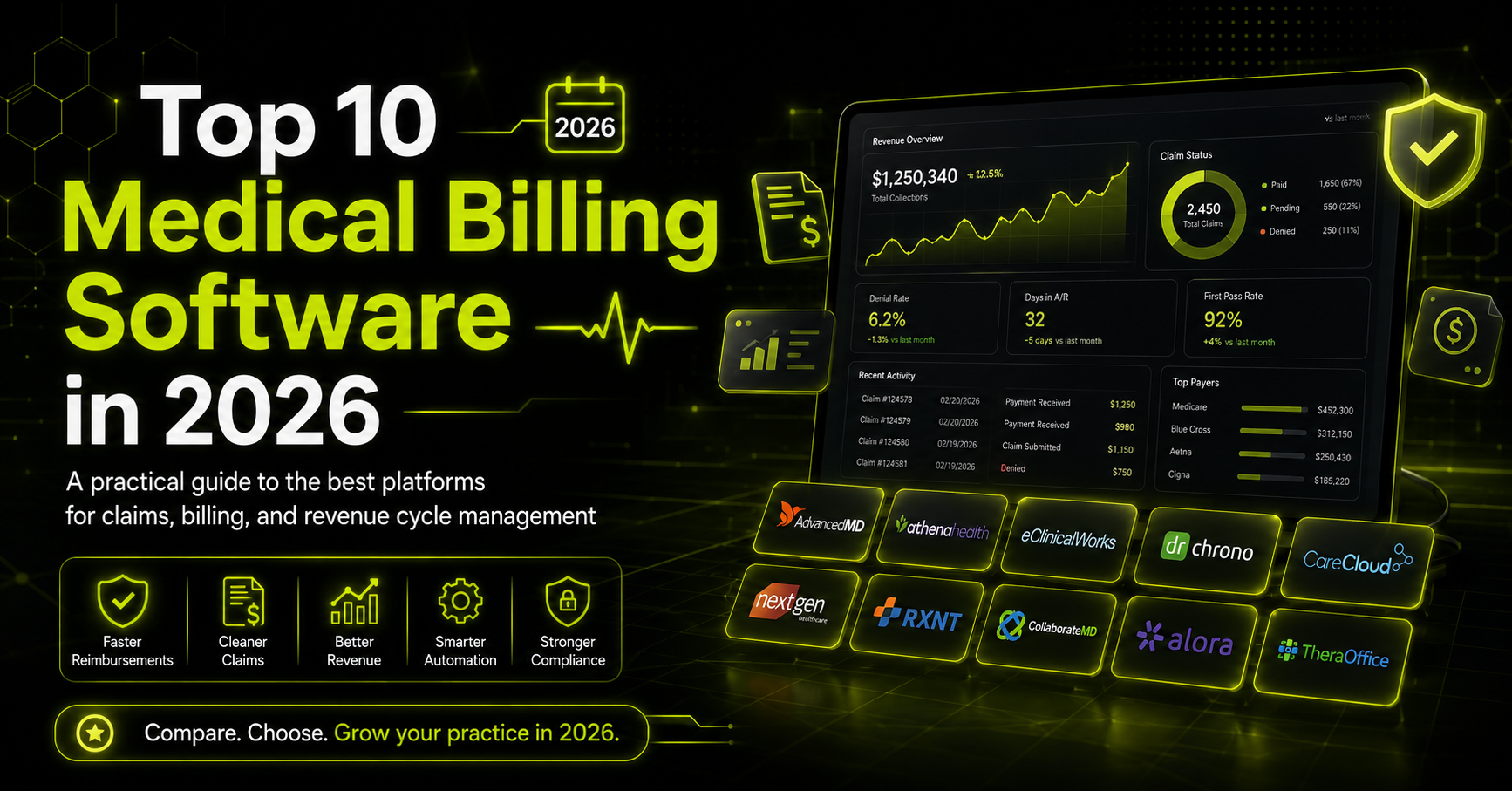
Choosing the right medical billing software can make a major difference in how efficiently a healthcare practice manages claims, payments, denials, patient billing, and revenue cycle performance. In 2026, practices need smarter tools that support automation, cleaner claims, reporting, EHR integration, and faster reimbursement.
This guide highlights the top 10 medical billing software in 2026 and explains what makes each platform useful for healthcare providers, billing companies, and growing practices. Whether you are comparing healthcare billing software for a small clinic or looking for advanced revenue cycle management software, this visual guide can help you understand what features to look for before choosing a platform.
Table of Contents
ToggleWhat Is Medical Billing Software?
Medical billing software is a digital tool that helps healthcare practices manage billing tasks such as claim creation, claim submission, eligibility verification, payment posting, denial tracking, patient billing, and financial reporting.
Instead of handling billing manually, practices can use medical billing tools to reduce errors, organize patient accounts, track unpaid claims, and improve cash flow. Many modern platforms also include automation, analytics, EHR integration, and patient payment features.
Why Medical Billing Software Matters in 2026
Medical billing software in 2026 is more important than ever because healthcare practices face growing administrative pressure, payer requirements, claim denials, and patient payment challenges.
The best medical billing software can help practices submit cleaner claims, reduce repetitive tasks, improve collections, and monitor revenue cycle performance. With the right healthcare billing software, teams can spend less time fixing billing issues and more time supporting patients and practice growth.
Top 10 Medical Billing Software in 2026
The top 10 medical billing software in 2026 includes platforms designed for different practice sizes, specialties, and billing workflows. Some solutions focus on private practices, while others support billing companies, specialty groups, multi-provider clinics, or high-volume revenue cycle operations.
These platforms are commonly compared for features such as claims management, denial management, reporting, patient payments, EHR integration, automation, eligibility checks, and revenue cycle management software capabilities.
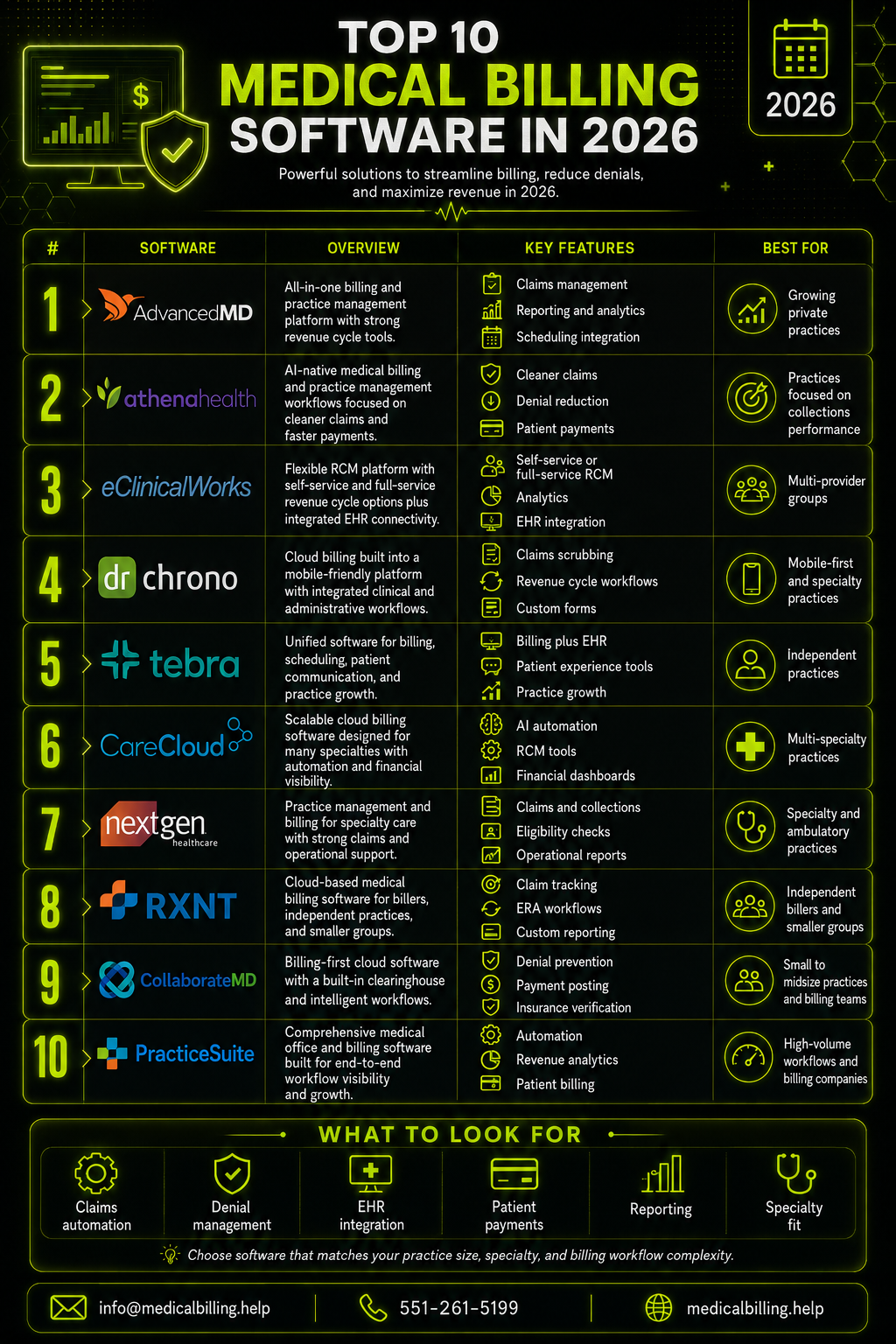
1. AdvancedMD Medical Billing Software
AdvancedMD is a popular medical billing software option for private practices that need billing, practice management, scheduling, reporting, and revenue cycle tools in one platform.
It is often considered by practices that want claims management, analytics, patient engagement tools, and scalable billing workflows. AdvancedMD can be a strong option for growing practices that need more control over their billing process.
2. athenahealth Healthcare Billing Software
athenahealth offers healthcare billing software and practice management tools designed to help practices improve collections, reduce manual work, and manage claims more efficiently.
Its billing platform is often used by practices looking for cleaner claims, denial reduction, patient payment tools, and revenue cycle support. For practices that want technology plus billing workflow support, athenahealth is a commonly recognized option.
3. eClinicalWorks Revenue Cycle Management Software
eClinicalWorks provides revenue cycle management software with billing tools, EHR connectivity, patient engagement features, and reporting options.
This platform is often considered by multi-provider groups and practices that want integrated clinical and billing workflows. Its RCM tools can help practices manage claims, track performance, and support billing operations from one connected system.
4. DrChrono Medical Billing Software
DrChrono is a cloud-based medical billing software platform that combines billing, EHR, scheduling, and mobile-friendly practice workflows.
It can be useful for specialty practices and providers that want billing tools connected with clinical documentation and administrative tasks. Features may include claims scrubbing, revenue cycle workflows, custom forms, and reporting support.
5. Tebra Billing and Practice Management Software
Tebra is a healthcare platform designed for independent practices that need billing, scheduling, patient communication, and practice growth tools.
As medical billing software, Tebra can help practices manage billing tasks while also supporting patient experience and front-office workflows. It is often compared by smaller and independent practices looking for an all-in-one system.
6. CareCloud Medical Billing Software
CareCloud offers cloud-based medical billing software for practices that need billing automation, financial dashboards, revenue cycle tools, and support for multiple specialties.
It may be a good fit for practices looking for scalable healthcare billing software with reporting and workflow visibility. CareCloud is often compared by practices that want automation and financial performance tracking.
7. NextGen Healthcare Billing Software
NextGen Healthcare provides practice management and billing tools for specialty and ambulatory practices.
Its medical billing tools can support claims, collections, eligibility checks, operational reporting, and billing workflow management. Specialty practices may consider NextGen when they need billing features connected to broader practice operations.
8. RXNT Medical Billing Tools
RXNT offers cloud-based medical billing software for independent practices, billers, and smaller groups.
Its billing features may include claim tracking, ERA workflows, reporting, and tools for managing everyday billing tasks. RXNT can be a practical option for practices or billing teams looking for a cloud-based billing solution.
9. CollaborateMD Medical Billing Software
CollaborateMD is a billing-focused platform designed to support claims, payments, denial prevention, insurance verification, and reporting.
It is often used by small to midsize practices and billing teams that need medical billing software built around claims and reimbursement workflows. Its billing-first approach can help teams manage claim activity and payment posting more efficiently.
10. PracticeSuite Revenue Cycle Management Software
PracticeSuite offers medical billing software and practice management tools for practices and billing companies.
It supports billing workflows such as automation, revenue analytics, claims management, and patient billing. PracticeSuite may be useful for high-volume billing workflows, billing companies, and practices that need visibility across the revenue cycle.
How To Choose the Best Medical Billing Software
Choosing the best medical billing software depends on your practice size, specialty, billing volume, budget, and workflow complexity.
Before selecting a platform, compare important features such as claims automation, denial management, EHR integration, eligibility verification, patient payment tools, reporting dashboards, payer connectivity, and customer support.
The right healthcare billing software should make billing easier, reduce administrative workload, and help your practice improve cash flow.
Key Features To Look For in Medical Billing Software 2026
When comparing medical billing software options, look for tools that help your practice manage the complete billing process from patient registration to final payment.
Important features include:
- Claims automation
- Denial management
- Eligibility verification
- EHR integration
- Patient billing and payment tools
- Payment posting
- Custom reporting
- Revenue cycle analytics
- Claim status tracking
- Specialty-specific billing support
These medical billing tools can help practices reduce errors, track performance, and improve reimbursement.
Find the Right Billing Software for Your Practice Growth
The best medical billing software is not the same for every practice. A small private practice may need simple claims management and patient payment tools, while a billing company or multi-specialty group may need advanced automation, analytics, and revenue cycle management software.
Before choosing a platform, review your billing challenges, compare features, and consider how each solution fits your workflow. The right software can help reduce denials, improve collections, streamline billing, and support long-term practice growth.
Need help choosing Medical Billing Software?
Compare the top billing platforms for claims, RCM, automation, reporting, and practice growth in 2026.
FAQs
What is the best medical billing software in 2026?
The best medical billing software in 2026 depends on your practice size, specialty, billing volume, and workflow needs. Popular options include AdvancedMD, athenahealth, eClinicalWorks, DrChrono, Tebra, CareCloud, NextGen Healthcare, RXNT, CollaborateMD, and PracticeSuite.
What does medical billing software do?
Medical billing software helps healthcare practices create claims, submit claims, verify insurance eligibility, post payments, manage denials, send patient bills, and track revenue cycle performance.
Why is healthcare billing software important?
Healthcare billing software is important because it helps reduce manual billing errors, improve claim accuracy, speed up reimbursements, and give practices better visibility into payments and outstanding balances.
What features should I look for in revenue cycle management software?
When choosing revenue cycle management software, look for claims automation, denial management, reporting, EHR integration, eligibility verification, patient payment tools, payment posting, and claim tracking.
Is medical billing software useful for small practices?
Yes. Medical billing software can help small practices save time, submit cleaner claims, manage patient balances, track payments, and reduce administrative workload.