
Healthcare billing can feel complex, especially if you are new to the field. Among the many terms used in medical finance, patient ledger in billing is one of the most important. While it may sound technical, the concept is simple and practical.
A patient ledger in billing is the financial record that tracks every charge, payment, and adjustment linked to a single patient. It keeps the financial side of healthcare organized and transparent. Without it, providers would struggle to manage revenue, and patients would feel confused about their balances.
In this complete guide, you will learn what patient ledger in billing means, how it works, why it matters, and how it supports strong financial management in healthcare practices.
Table of Contents
ToggleWhat Is Patient Ledger in Billing
A patient ledger in billing is a detailed account that shows all financial transactions between a healthcare provider and a patient. Every time a patient receives a service, the charge appears in the ledger. Every time insurance pays or the patient makes a payment, the ledger updates.
This record serves as a financial timeline. It shows when services occurred, how much the provider charged, how much insurance covered, and how much the patient still owes.
The ledger creates clarity. Instead of guessing or searching through multiple systems, staff can open the patient account and see the complete financial history in one place.
Why Patient Ledger in Billing Is Important in Healthcare
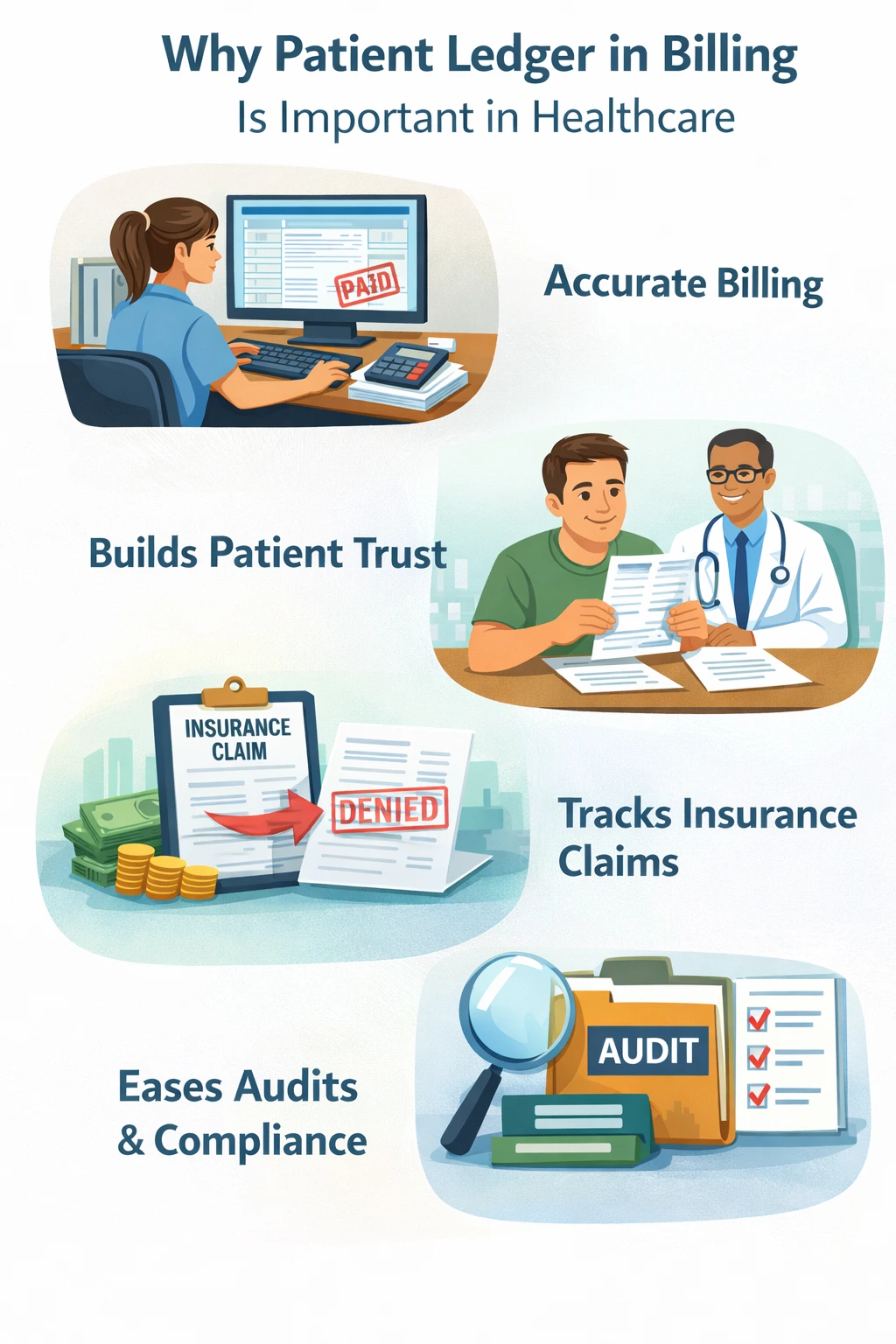
The patient ledger in billing plays a major role in the healthcare billing process. It supports both providers and patients.
For providers, it ensures accurate tracking of revenue. Healthcare practices depend on proper documentation to maintain steady cash flow. If staff fail to record payments or adjustments, revenue can suffer.
For patients, it provides transparency. Many patients review their patient account statement to understand their medical bills. When the information is clear and well organized, patients trust the provider more.
The ledger also protects healthcare facilities during audits. Accurate financial tracking shows proof of services and payments. This protects the organization from disputes and compliance issues.
How Patient Ledger in Billing Works Step by Step
To understand patient ledger in billing fully, it helps to look at the step by step process.
When a patient visits a clinic, the provider delivers services. The billing team enters the service details into the system. The ledger records the charge with the service date and amount.
Next, the clinic submits a claim to the insurance company. After reviewing the claim, the insurance company sends payment along with an explanation of benefits. The billing staff post this payment into the ledger.
If insurance does not cover the full amount, the remaining balance transfers to the patient. The system generates a statement. When the patient makes a payment, the ledger updates again.
Each visit repeats this cycle. Over time, the patient ledger in billing becomes a complete financial history of the patient’s interactions with the provider.
Key Components of a Patient Ledger
A patient ledger in billing contains several important elements.
It begins with patient identification details such as name and account number. This ensures the correct account receives the correct transactions.
It includes service entries that list dates, procedure descriptions, and charge amounts.
It records insurance transactions. These entries show billed amounts, approved amounts, and payments received.
It includes patient payments such as card payments, cash payments, or online transfers.
It also reflects adjustments. These may include insurance contractual adjustments or discounts.
Finally, it displays the current balance. This balance tells staff and patients exactly how much remains unpaid.
Difference Between Patient Ledger and Medical Billing Ledger
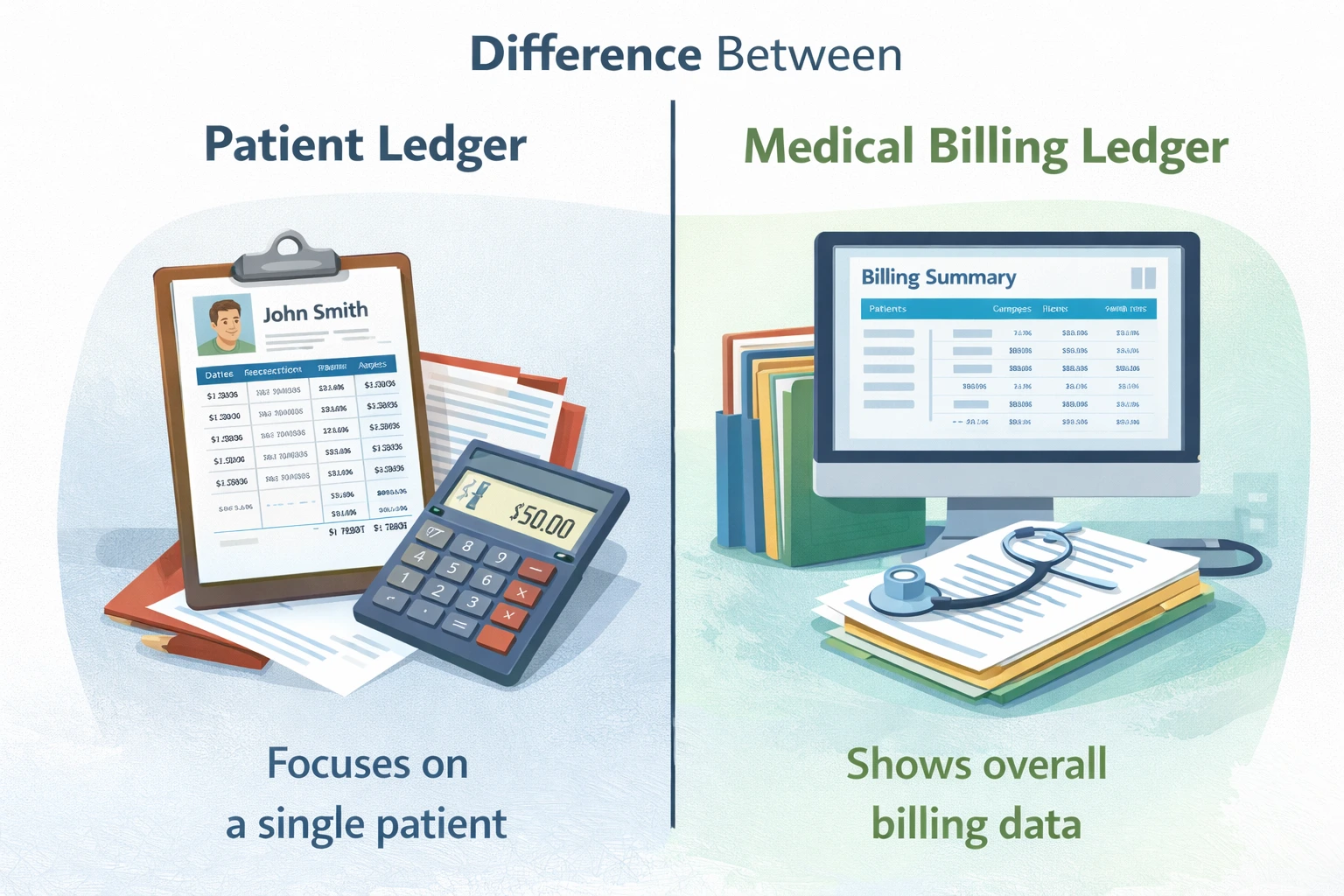
Many people confuse patient ledger in billing with a medical billing ledger. The two serve different purposes.
The patient ledger focuses on one individual account. It shows detailed financial transactions for that specific patient.
A medical billing ledger may summarize billing data across multiple accounts. It can provide a broader view of income and receivables.
Both systems connect closely with medical billing records, which document diagnosis codes, procedure codes, and treatment details. While medical billing records focus on clinical coding and documentation, the ledger focuses on financial activity.
Role of Patient Ledger in Revenue Cycle Management
Revenue cycle management refers to the full process of tracking patient revenue from appointment to final payment. The patient ledger in billing sits at the center of this cycle.
It connects front desk operations, insurance processing, and final collections. Without an accurate ledger, revenue cycle management becomes unstable.
When staff update the ledger promptly, they improve claim follow up. They can see unpaid balances and take action quickly.
Accurate patient ledger in billing management reduces delays, prevents revenue leakage, and improves overall financial performance.
Common Errors in Patient Ledger in Billing
Even with modern systems, mistakes can happen.
One common issue involves posting incorrect charge amounts. A small typing error can create a large billing problem.
Another issue arises when insurance payments are not recorded properly. If staff fail to post payments, the ledger shows inflated balances.
Duplicate entries also create confusion. Posting the same payment twice can result in inaccurate credits.
Regular account reviews and proper staff training reduce these risks. Many electronic systems now automate posting to lower the chance of human error.
Benefits of Digital Patient Ledger Systems
Technology has improved patient ledger in billing management significantly.
Modern software integrates scheduling, coding, claims submission, and payment posting into one platform. This reduces manual data entry.
Cloud based systems allow access from multiple locations. Managers can review financial reports remotely.
Automation speeds up payment posting. Insurance payments often upload directly into the ledger, saving time.
Digital systems also improve security. Protecting financial data builds trust with patients and meets compliance standards.
Healthcare providers can review official billing guidelines through the Centers for Medicare and Medicaid Services at https://www.cms.gov to ensure compliance with national standards.
How Patient Ledger Improves Patient Communication
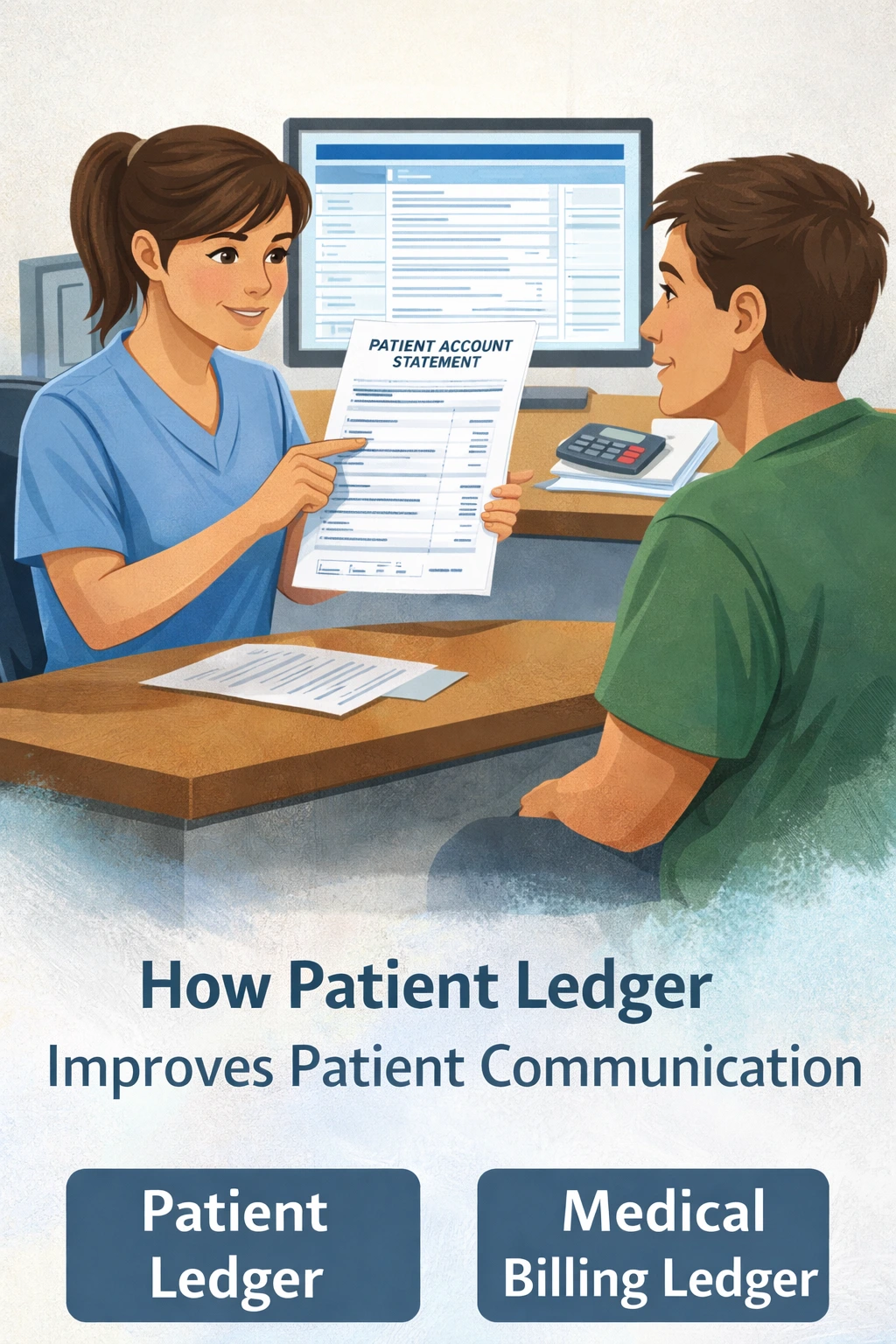
Clear communication reduces billing disputes. The patient ledger in billing supports honest conversations about money.
When patients question charges, staff can review the ledger and explain each entry. This builds transparency.
Providing an accurate patient account statement helps patients understand their financial responsibility. It also allows them to plan payments more effectively.
Patients appreciate clarity. When billing feels organized and honest, they are more likely to return for future care.
Real World Example of Patient Ledger in Billing
Imagine a patient visits a clinic for lab testing and consultation. The total charge equals three hundred dollars. The billing team enters this into the ledger.
The clinic submits the claim to insurance. The insurance company approves two hundred dollars. The billing team records the payment and posts a contractual adjustment if needed.
The remaining one hundred dollars becomes the patient’s responsibility. The patient pays fifty dollars immediately and sets up a payment plan for the rest.
Every step appears clearly in the patient ledger in billing. The final balance eventually becomes zero.
This example shows how the ledger tracks each financial movement clearly and accurately.
Best Practices for Managing Patient Ledger in Billing
Healthcare providers should follow best practices to maintain accurate ledgers.
- They should post charges and payments daily. Delays increase the risk of mistakes.
- They should review accounts weekly to identify outstanding balances.
- They should train billing staff consistently. Skilled staff improve accuracy.
- They should use reliable software that connects to medical billing records for seamless integration.
- They should maintain secure systems to protect patient data.
Following these practices strengthens financial stability and patient satisfaction.
Future Trends in Patient Ledger in Billing
The future of patient ledger in billing looks promising. Technology continues to evolve.
Artificial intelligence may soon help detect billing errors automatically.
Predictive tools may analyze payment trends and identify high risk accounts.
Patient portals now allow individuals to view their ledger online, make payments, and download statements easily.
As healthcare becomes more digital, the ledger will remain a central financial tool.
Conclusion
The patient ledger in billing is more than just a financial document. It forms the foundation of organized healthcare revenue management.
It tracks every charge, payment, and adjustment. It supports transparency, reduces errors, and strengthens the healthcare billing process.
For providers, it protects revenue and improves cash flow. For patients, it offers clarity and trust.
Understanding patient ledger in billing is essential for anyone involved in healthcare administration or medical finance. When managed properly, it keeps the financial side of healthcare smooth and reliable.
FAQ
What is patient ledger in billing in simple terms
Patient ledger in billing is a record that tracks all financial transactions between a patient and a healthcare provider.
How does patient ledger support revenue cycle management
It tracks charges and payments accurately, helping providers manage cash flow and reduce unpaid balances.
Is patient ledger part of medical billing records
It connects with medical billing records but focuses only on financial transactions rather than clinical documentation.
Can patients access their patient ledger
Yes, patients can request a patient account statement to review charges and payments.
Why is patient ledger in billing important for compliance
It provides clear documentation of transactions, which helps during audits and regulatory reviews.
Error: Contact form not found.