

Claim adjudication in medical billing is the process an insurance payer uses to review a healthcare claim and decide how it should be handled. The payer checks the patient, provider, codes, coverage, medical need, and contract rules before it approves payment, reduces the amount, requests more information, or denies the claim.
This process sits between claim submission and final payment. A practice may send a complete claim, but the payer must still compare every detail with the patient plan and its own billing rules. Understanding this review helps billing teams find problems earlier and explain payment decisions with more confidence.
Good claim results do not begin at the payer. They begin when staff collect correct patient information, verify coverage, document the visit, select accurate codes, and submit the claim on time. Each part of the revenue cycle can affect the final adjudication decision.
Table of Contents
ToggleWhat Is Claim Adjudication in Medical Billing?
Claim adjudication in medical billing means that the payer reviews a submitted claim and applies the member benefits and provider contract. The payer determines whether the service is covered, whether the codes are valid, what rate applies, and which amount belongs to the payer or the patient.
During claim adjudication in medical billing, the payer may use automated edits, manual review, or both. Simple claims often move through automated rules quickly. A claim may need manual review when information is missing, a policy needs closer review, or the payer requests clinical records.
Adjudication does not always mean payment. It means that the payer has considered the claim and reached a decision or placed it on hold for more information. The final result appears on an explanation of benefits or an electronic remittance advice.
Medical Claim Adjudication Process at a Glance
The medical claim adjudication process follows a clear path, although each payer may use different edits and timelines. The main stages help the payer confirm that the claim is complete, covered, correctly priced, and assigned to the right party.
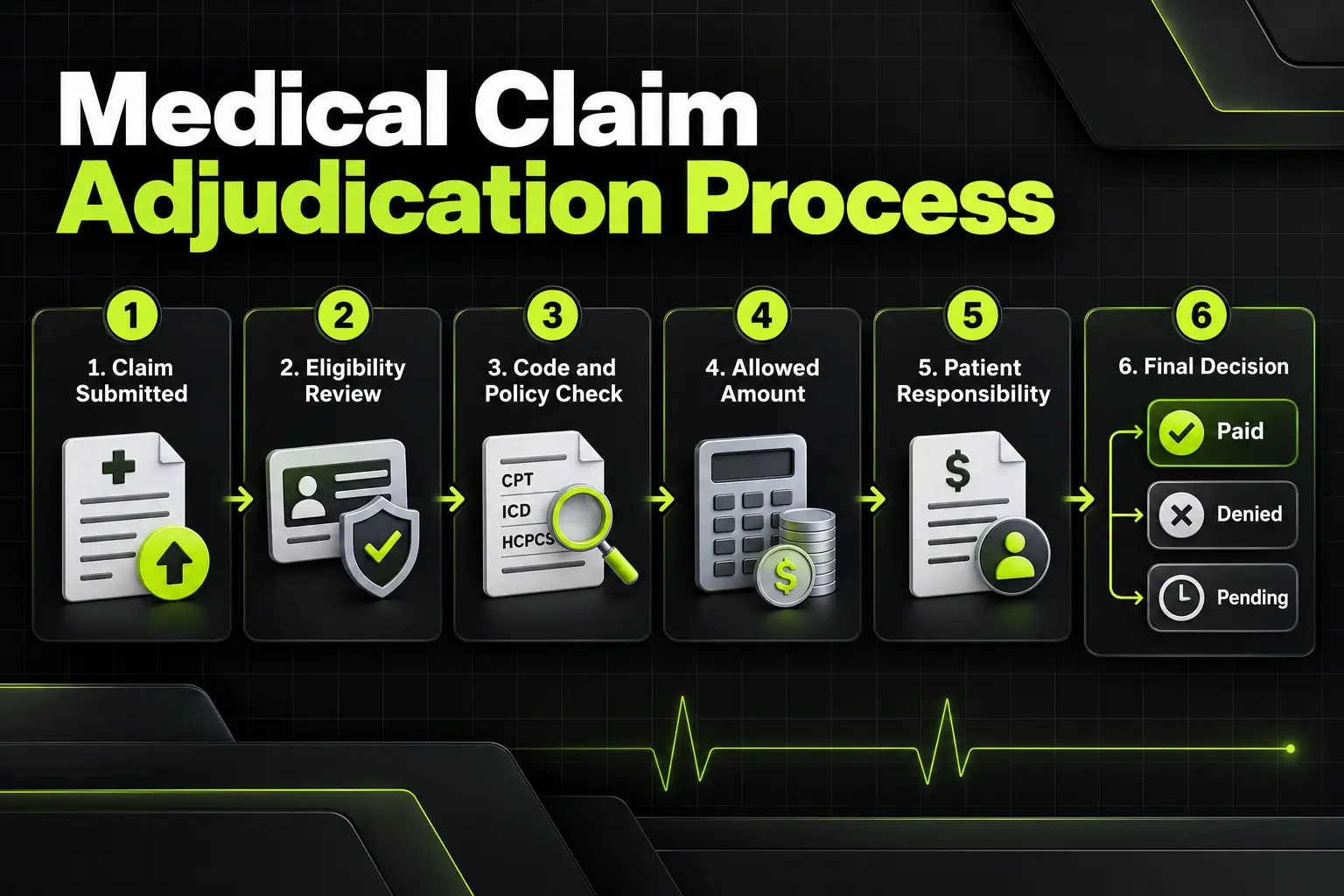
- Claim receipt and basic validation
- Eligibility and benefit review
- Code and policy checks
- Allowed amount calculation
- Patient responsibility calculation
- Payment, denial, or pending decision
A strong medical claim adjudication process depends on accurate information at every stage. One wrong field can stop the claim before payment calculation begins. Practices should therefore treat claim preparation and adjudication as connected parts of one workflow.
What Information Does a Payer Review?
During claim adjudication in medical billing, a payer reviews more than the total charge. It compares the claim with enrollment records, benefit rules, provider files, coding edits, authorization records, and contract rates. The payer may also compare the claim with other claims already received for the same patient and date.
Patient Coverage and Benefits
The payer first confirms that the patient had active coverage on the date of service. It reviews the plan, benefit limits, deductible, copay, coinsurance, exclusions, and coordination of benefits. An eligibility response can help the practice collect this information before treatment.
Coverage may change during the year, so practices should not rely only on old insurance details. Regular insurance eligibility verification reduces avoidable delays and helps staff give patients clearer cost information.
Provider Information and Network Status
The payer checks the billing provider, rendering provider, National Provider Identifier, taxonomy, location, and network status. It may also confirm that the provider was enrolled and approved to perform the billed service on the date of care.
A correct code can still fail when provider information does not match payer records. Billing teams should keep enrollment details current and confirm that the correct provider identifiers appear in the correct claim fields.
Codes, Documentation, and Medical Need
The payer reviews diagnosis codes, procedure codes, modifiers, units, place of service, and dates. These details must describe the care recorded in the medical note. The payer may apply code edits or request records when the billed service needs more support.
Documentation should explain what the provider did and why the patient needed it. Clear notes help coders select the right codes and help the payer connect the diagnosis with the service. Weak or incomplete notes can lead to a delay, reduction, or denial.
Claim Adjudication Steps Explained
The following claim adjudication steps show how a claim moves from receipt to a final payer response. The order may vary slightly, but most payers complete the same main checks.
1. Claim Receipt and Basic Validation
The payer receives the electronic or paper claim and checks whether it can enter the system. It looks for required fields, valid formats, correct identifiers, and basic data errors. A claim that fails this stage may be rejected before full adjudication.
2. Eligibility and Benefit Review
The payer confirms active coverage and reviews the member benefits for the service. It checks whether the plan covers the service, whether a referral or authorization was required, and whether the patient has reached a benefit limit.
3. Coding and Policy Review
Next, the payer checks the diagnosis, procedure, modifier, units, and place of service. It applies coding edits and coverage policies. Code combinations that do not follow payer rules may lead to a reduction, request for records, or denial.
4. Pricing and Contract Review
The payer compares the billed charge with the provider contract or fee schedule. It calculates the allowed amount and applies any contractual adjustment. An out of network claim may follow different pricing and patient balance rules.
5. Patient Responsibility Calculation
The payer applies the patient deductible, copay, and coinsurance according to the plan. It also considers previous claims that affected the patient benefit totals. The result determines how much the payer owes and how much the patient may owe.
6. Final Decision and Remittance
The payer completes claim adjudication in medical billing by issuing a decision. It may pay the claim in full, pay part of it, deny it, or hold it for more information. The remittance then explains payment and adjustment details to the provider.
Healthcare Claim Processing Outcomes
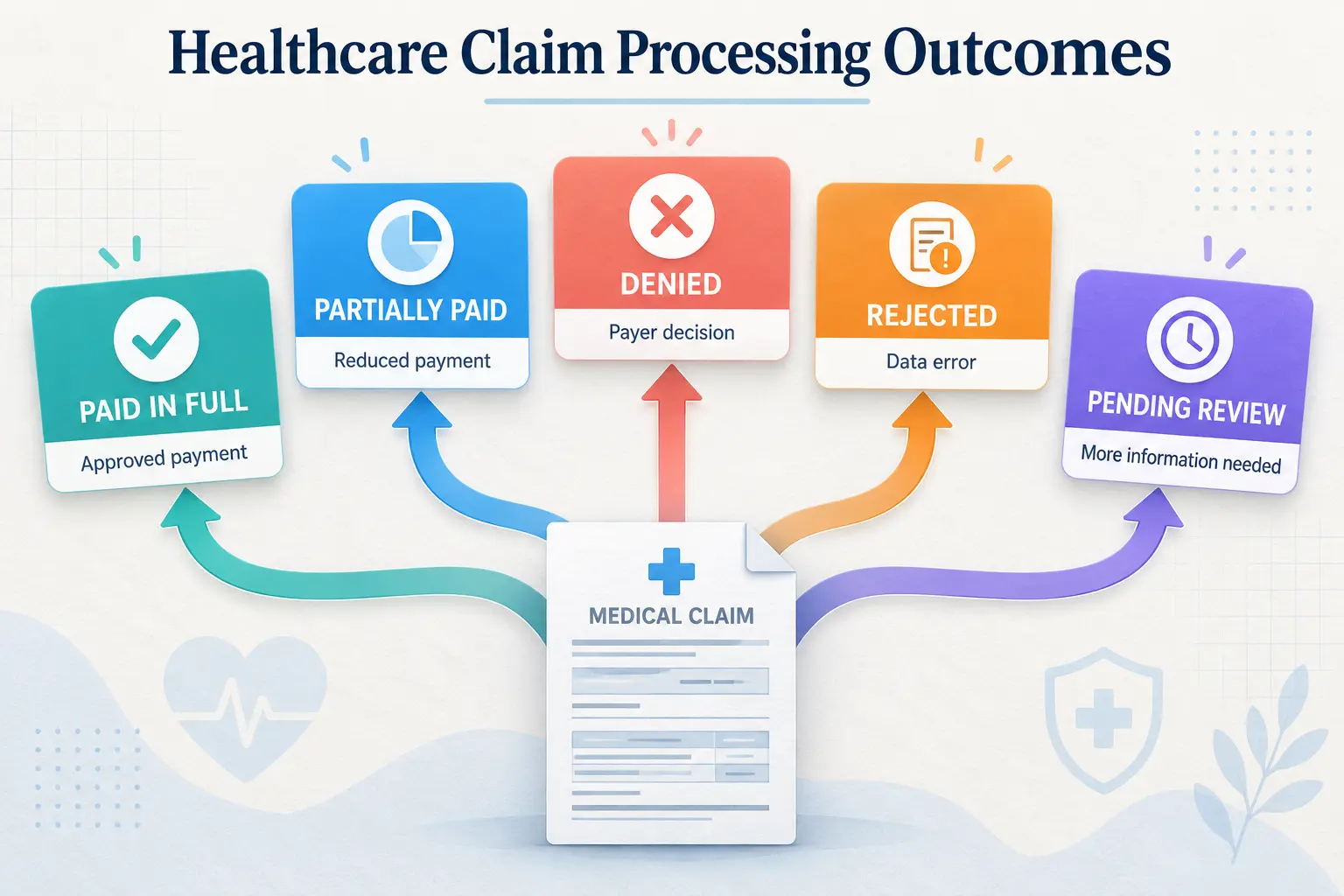
Healthcare claim processing can produce several outcomes. A paid claim met the payer requirements and received an approved payment. A partially paid claim received payment, but the payer reduced one or more service lines or assigned part of the allowed amount to the patient.
A denied claim completed payer review but did not qualify for payment under the submitted information. A rejected claim usually failed an early data or format check and did not complete full adjudication. This difference matters because a rejection often needs correction and resubmission, while a denial may need correction, reconsideration, or an appeal.
A pending claim has not reached a final result. The payer may need medical records, another payer response, authorization details, or manual review. Billing staff should read the payer message and provide exactly what the payer requests.
Reliable healthcare claim processing also depends on regular follow up. Staff should not assume that silence means progress. They should use payer portals, claim reports, and work queues to find stalled claims before filing or appeal deadlines pass.
Claim Adjudication Status and Remittance Advice
During claim adjudication in medical billing, a claim adjudication status tells the billing team where the claim stands or what decision the payer made. Common statuses include received, accepted, in process, pending information, paid, partially paid, denied, and rejected. The exact words vary by payer.
After Medicare processes a claim, it sends an electronic remittance advice or a standard paper remittance with final adjudication and payment information. The CMS guidance on payment and remittance advice explains that the remittance reports decisions and adjustment details for each claim or service line.
Billing teams should match the claim adjudication status with the remittance details before posting payment or starting follow up. Adjustment reason codes, remark codes, group codes, and patient responsibility amounts explain why the payer handled the claim in a certain way.
Accurate payment posting and reconciliation helps the practice apply payments, adjustments, and patient balances correctly. It also makes underpayments and incorrect denials easier to identify.
Common Problems That Delay Claim Adjudication
Missing patient details, inactive coverage, an incorrect payer ID, invalid codes, missing modifiers, and provider enrollment mismatches can delay claim adjudication in medical billing. Duplicate claims and claims sent after the filing limit can create additional problems.
Prior authorization errors also cause serious delays. Staff should confirm the authorization number, approved service, units, date range, and servicing provider. The final claim should match the approval unless the payer accepts a documented change.
Some claims stop because the payer needs records. The practice should respond quickly and include the requested note, order, test result, authorization, or other document. Sending unrelated pages can slow the review instead of helping it.
How to Improve Claim Adjudication Results
Practices can improve claim adjudication in medical billing by strengthening the work that happens before submission. Staff should verify insurance, confirm authorization, collect accurate demographics, review documentation, select supported codes, and scrub the claim before release.
The billing team should create payer specific rules for common services and update them when policies change. It should also track first pass acceptance, payment time, denial reasons, pending claims, and underpayments. These measures show where the workflow needs attention.
When a payer denies or reduces a claim, staff should read the full remittance message before taking action. They should correct only true errors and appeal when the original claim was accurate and supported. A structured denial management process prevents repeated mistakes and protects filing deadlines.
Clear ownership also improves results. Every pending or denied claim should have an assigned person, next action, and due date. Managers should review old claims and repeated payer issues each week instead of waiting for month end.
How Medical Billing Help Supports Better Adjudication
Medical Billing Help connects front office checks, coding review, claim submission, payment posting, and denial follow up. This connected approach helps practices find the source of a problem instead of correcting the same claim error again and again.
Our medical billing services support clean claim preparation and timely follow up. Practices that need wider support can also use our revenue cycle management services to improve the full path from patient registration to payment.
Accurate Claim Adjudication Starts With a Clean Claim
Claim adjudication in medical billing becomes easier to manage when the practice submits complete and accurate claims. Staff cannot control every payer rule, but they can control the quality of the information they send and the speed of their response when a payer asks for more.
A consistent process reduces rework, improves payment timing, and gives patients clearer balance information. Review the claim journey from registration through remittance, fix the most common weak point, and measure whether the change improves results.
Need Help With Claim Adjudication?
Our billing specialists can review claim status, remittance details, payer delays, and denial patterns to help your practice move claims toward accurate payment.
FAQs
What is claim adjudication in medical billing?
Claim adjudication is the payer review process used to decide whether a medical claim should be paid, reduced, denied, rejected, or held for more information.
What are the main claim adjudication steps?
The main steps include claim validation, eligibility review, coding and policy checks, pricing, patient responsibility calculation, and the final payment or denial decision.
What is the difference between a rejected claim and a denied claim?
A rejected claim usually fails an early data or format check and does not complete full adjudication. A denied claim reaches payer review but does not qualify for payment under the submitted information or payer rules.
How long does claim adjudication take?
The time depends on the payer, claim type, contract, and whether the payer needs manual review or more records. Clean electronic claims usually move faster than incomplete or complex claims.
How can a practice improve claim adjudication results?
A practice can verify eligibility, confirm authorization, maintain accurate provider data, improve documentation, use correct codes, scrub claims, monitor statuses, and respond quickly to payer requests.