Diabetes visits are common in primary care, internal medicine, endocrinology, and many specialty practices. Each visit can include testing, medicine changes, nutrition advice, and care for related health concerns. Good notes and correct diagnosis coding help the claim show the full reason for the care. This guide explains the ICD 10 code for diabetes type 2 in clear language, with practical billing steps for healthcare providers.
Type 2 diabetes does not have one code that fits every patient. The record may show diabetes alone, diabetes with high blood sugar, or diabetes with a documented complication. The coder must read the provider note, select the code that matches the documented condition, and avoid guessing. When the diagnosis and the claim tell the same story, the practice can reduce rework and support clean payment.
Table of Contents
ToggleUnderstanding the ICD 10 Code for Diabetes Type 2
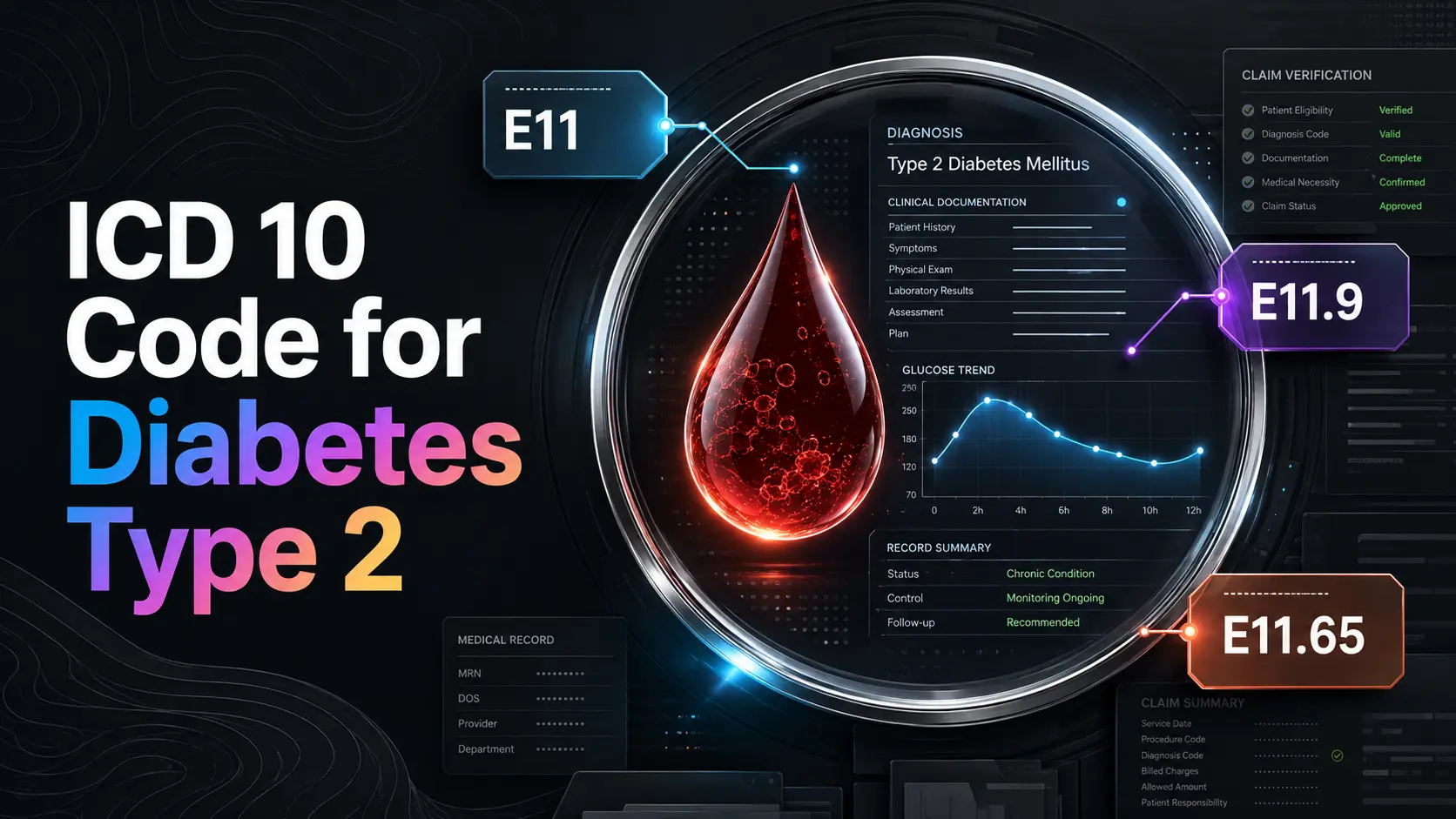
The ICD 10 code for diabetes type 2 comes from category E11. This category is used for type 2 diabetes mellitus. It includes many codes because diabetes can affect different body systems and can be treated in different ways. The code selected should reflect what the provider documented for that date of service.
When the note only states type 2 diabetes mellitus and does not document a related condition, E11.9 is often the right choice. This code means type 2 diabetes mellitus without complications. It is important to remember that a normal visit does not always mean a patient has no complication. The record must state the condition clearly. A coder should never remove a documented complication just because the visit was routine.
Accurate diagnosis coding helps payers understand why the provider ordered a test, reviewed medicine, or gave follow up instructions. It also keeps the patient record clear over time. The official CMS ICD 10 coding resources are a useful starting point for checking current code files and guidance.
Type 2 Diabetes Mellitus ICD 10 Code Basics

The phrase type 2 diabetes mellitus ICD 10 refers to the E11 code family. The main code choice depends on whether the provider documents a complication, high blood sugar, low blood sugar, or another diabetes related concern. Read the assessment carefully, then compare it with the plan and the reason for the visit. This simple review helps prevent a code that is too general or does not match the note.
For example, a provider may document type 2 diabetes mellitus, stable on current medication, with no complication noted. In that case, E11.9 may fit. If the provider documents a specific diabetes related problem, the correct code is usually more detailed. The diabetes code may also need other codes to describe a related condition when the code instructions require them.
In daily billing work, type 2 diabetes mellitus ICD 10 selection should come from the assessment, not from habit. A claim may look similar to a prior visit, but the patient condition and plan can be different today. Reviewing the current note first helps the coder avoid copying an old diagnosis that no longer reflects the care.
Practices should also review type 2 diabetes mellitus ICD 10 claims during regular quality checks. Look for patterns such as unsupported detailed codes, frequent use of an unspecified code, or notes that do not clearly link a complication to diabetes. Small coaching sessions can fix these patterns before they lead to claim delays.
Do not choose a diagnosis based only on a medicine list, a lab value, or a prior problem list. The provider needs to document the current condition. If a note is unclear, query the provider under your practice process before claim submission. Clear documentation protects the practice and gives the billing team a stronger claim.
ICD 10 Diabetes Type 2 and the E11 Code Family
ICD 10 diabetes type 2 coding starts with E11, but the final characters make a real difference. E11.9 means type 2 diabetes mellitus without complications. Other E11 codes cover documented concerns such as kidney disease, eye disease, nerve issues, circulation issues, and skin problems. The note must support the exact relationship between diabetes and the related condition.
Some E11 codes already describe both diabetes and the linked complication. These combination codes can be useful because they show the connection in one diagnosis code. Still, the provider record must clearly support that connection. If the patient has diabetes and another condition but the provider does not link them, do not assume they are related. Ask for clarification when needed.
For accurate ICD 10 diabetes type 2 reporting, do not rely on a patient problem list by itself. A problem list is helpful background, but the provider note must show what was assessed or managed during the current visit. This protects the accuracy of the claim and the accuracy of the patient record.
A helpful ICD 10 diabetes type 2 review process includes a final check before submission. Confirm that every diagnosis attached to the claim has support in the note and that every billed service has a clear reason. This check takes only a few minutes and can save much more time in corrections later.
The diagnosis selection should also support the services on the claim. A lab test, exam, or medicine management service needs a documented reason. Review payer rules before billing tests that may have coverage limits. Good coding is not only about choosing a code. It is about making sure the note, order, claim, and payer rule all agree.
Type 2 Diabetes With Hyperglycemia ICD 10 Coding
Type 2 diabetes with hyperglycemia ICD 10 is commonly coded as E11.65 when the provider documents type 2 diabetes mellitus with hyperglycemia. Hyperglycemia means high blood sugar. A high reading in the chart alone may not be enough for this code. The provider should document hyperglycemia as part of the assessment or plan.
The care plan often supports this diagnosis. It may include reviewing home glucose readings, changing medicine, discussing diet, ordering follow up testing, or giving instructions about when to seek care. These details help show why the provider addressed the high blood sugar during the visit. They also help the billing team connect the diagnosis to the work performed.
When documenting type 2 diabetes with hyperglycemia ICD 10, the provider should use clear wording in the assessment. The plan can then show the action taken, such as medicine review, testing, education, or a planned follow up. This direct connection makes coding more reliable and reduces questions during a claim review.
Teams should not use type 2 diabetes with hyperglycemia ICD 10 as a shortcut for every patient with an abnormal result. The provider decides the clinical meaning of the result. The coder then reports the documented diagnosis. This respectful division of work supports accurate claims and sound documentation.
Do not use E11.65 only because an A1C or glucose result is high. A coder should follow the provider documentation. If the provider states that the diabetes is uncontrolled, do not automatically treat that wording as hyperglycemia. Modern coding requires the actual documented condition. A short provider query can prevent an unsupported diagnosis from reaching the claim.
How to Choose the Right Diabetes ICD 10 Code
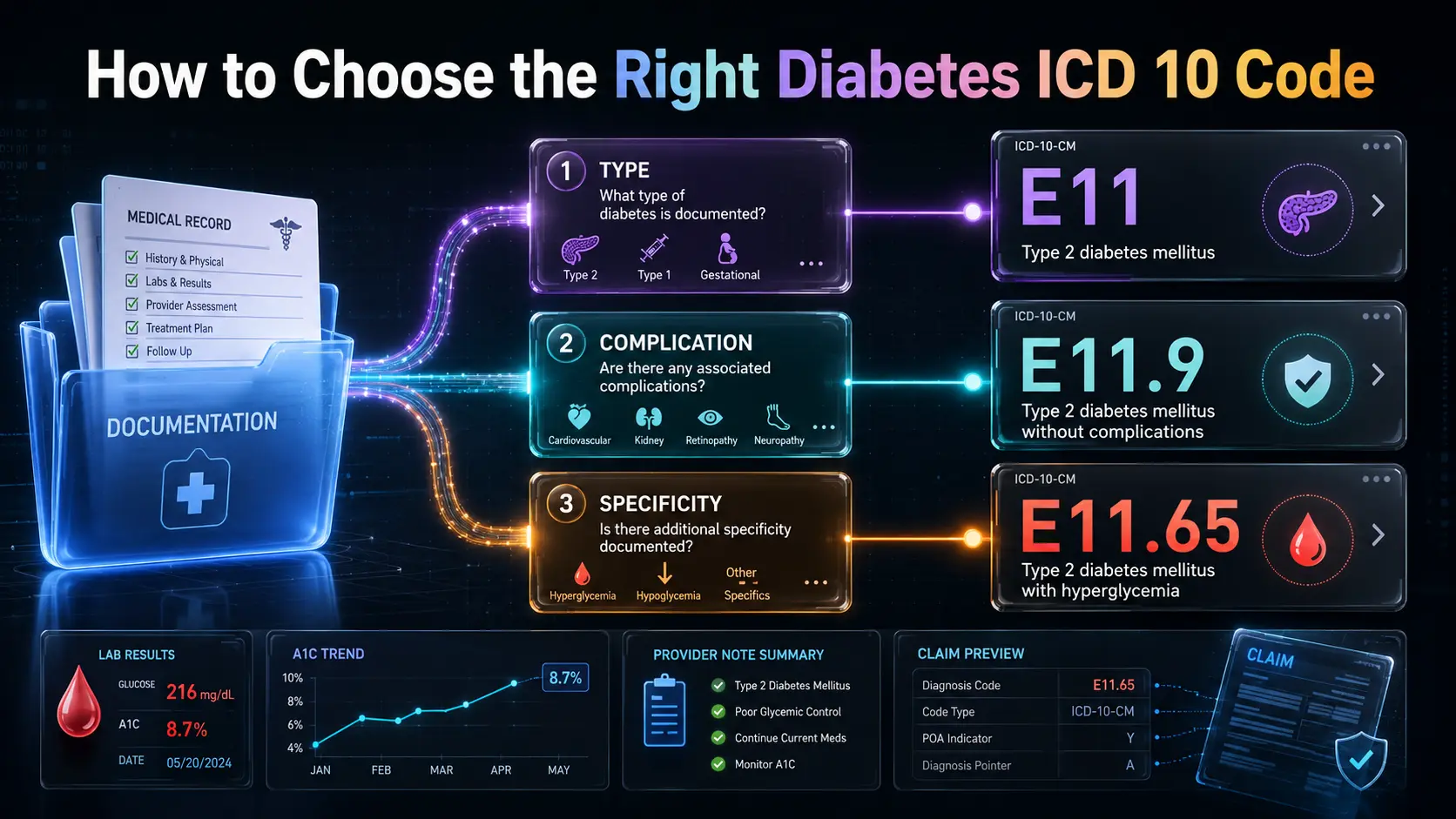
Diabetes ICD 10 coding works best when the team follows the same review order for every visit. Start with the provider assessment. Confirm the diabetes type. Then look for any documented complication or treatment issue. Check whether the plan addresses that condition. Finally, confirm that the selected code is current and meets payer requirements.
Documentation should answer simple questions. Does the patient have type 2 diabetes? Is there a documented complication? Does the provider link the condition to diabetes? Is the concern active today? Did the provider evaluate, monitor, treat, or discuss it? When these answers are clear, code selection becomes much easier.
A reliable diabetes ICD 10 workflow also includes staff education. Coding rules change, payer edits change, and new team members may interpret notes differently. Short monthly reviews of real but private examples can help staff apply the same standards. Keep a written process for provider queries so that unclear notes are handled in a professional and timely way.
It is also useful to track diabetes ICD 10 claim corrections. If the same issue appears again, such as missing documentation of a complication or a diagnosis that does not support a test, address the source of the issue. This turns a denial or rejection into a practical improvement for the entire practice.
Many denials begin when the clinical note and claim do not match. A service can be medically appropriate, yet a payer may delay it if the diagnosis code is missing, too broad, or not supported by the note. Strong medical coding services help practices review documentation, select accurate codes, and send cleaner claims.
Common Type 2 Diabetes Coding Situations
- Confirm the diabetes type in the current provider note
- Use a specific E11 code only when the note supports it
- Document hyperglycemia clearly before using E11.65
- Check payer rules before billing related tests or supplies
- Review denials and correct repeated claim issues
Diabetes without a documented complication
If the provider documents type 2 diabetes mellitus and does not document a complication, E11.9 may be appropriate. Review the full note first. A complication may appear in the assessment, plan, or provider comments even when it is not part of the chief complaint.
Diabetes and kidney disease
When the provider documents a link between type 2 diabetes and kidney disease, select the E11 code that matches the documented condition. Some claims may also need a separate code for the stage of kidney disease. Check the code notes and payer rules before submitting the claim.
Diabetes and eye care
Eye related diabetes codes depend on the documented eye condition and details in the record. The provider should document the condition clearly, including any required detail. Avoid using old information from a prior visit when the current note does not confirm that the condition is still being managed.
Diabetes and nerve problems
Neuropathy and other nerve concerns need clear provider documentation. The note should state whether the condition is related to diabetes when that relationship is known. This supports correct coding and helps the practice avoid claims that need correction later.
Documentation Tips for Diabetes Visits
Good documentation is the base of accurate billing. Providers should record the diabetes type, the current status, relevant related conditions, treatment changes, and follow up plan. A brief but clear assessment can make a major difference. It gives the coder the facts needed to choose the correct diagnosis without making assumptions.
Make sure the plan matches the diagnoses. If the provider documents hyperglycemia, the plan should show how it was addressed. If the visit includes diabetes with kidney disease, the plan should show the care or monitoring related to that concern. This does not mean every note needs to be long. It means the note should be clear and complete.
Front office staff can help before the visit by checking insurance eligibility and referral needs. Coding staff can then review the chart before submission. This team approach lowers avoidable errors. It also improves first pass results, which you can learn more about in our guide on improving first pass claim acceptance rate.
How to Bill a Diabetes Claim Correctly
Billing a diabetes claim starts before the claim is created. Confirm the patient coverage, provider network status, and any payer rules for ordered tests or supplies. Enter the correct patient details and date of service. Then connect the diagnosis codes to the services that the provider performed and documented.
Before submission, check that the diagnosis code is current and specific. Review the claim for missing modifiers, provider information, and authorization details where needed. A clean claim should reflect the record without adding diagnoses that the provider did not document. If the payer rejects or denies the claim, review the exact reason and correct only what the record supports.
Diabetes claims may include office visits, lab work, supplies, or care management services. Each payer can have different requirements. Keep a simple process for checking edits and tracking payer feedback. If your team spends too much time correcting claims, denial management services can help identify repeated issues and recover revenue from eligible claims.
Why Specific Coding Supports Revenue
Specific coding helps a claim move through the payer process with fewer questions. It supports medical need, improves reporting, and gives the practice a more accurate view of the care it provides. It also helps the provider see patterns in the patient population, such as how many patients have diabetes with a documented related condition.
Using a general code when the record clearly supports a more specific code may create avoidable review work. On the other hand, selecting a detailed code without provider support can cause compliance concerns. The best answer is always the same: code exactly what the provider documents and use the current coding guidance.
This is especially important for internal medicine billing services, where diabetes care may be addressed along with several other chronic conditions in one visit. Clear notes and accurate diagnosis coding help the claim show the full work completed by the provider.
How Medical Billing Help Supports Diabetes Coding
Medical Billing Help supports healthcare practices with claim review, coding accuracy, denial follow up, and clear reporting. Our team works with the documentation already created by your providers and helps identify missing or unclear details before they become a repeated billing problem. We focus on practical improvements that make everyday billing smoother.
For type 2 diabetes visits, the goal is not to add more codes. The goal is to select the right code, attach it to the right service, and submit a claim that matches the provider note. This approach can reduce rework, protect your revenue, and give your staff more time for patients.
Whether you need support with a few difficult diabetes claims or a full billing process, our medical billing services can help you create a more reliable path from patient visit to payment. Contact Medical Billing Help to discuss your practice needs.
Accurate Diabetes Coding Starts With Clear Documentation
The ICD 10 code for diabetes type 2 should always match the provider documentation for that visit. Start with the E11 category, confirm the diabetes type, look for documented complications, and use the most accurate code the record supports. Careful coding, clear notes, and regular claim review can help your practice submit cleaner diabetes claims and reduce payment delays.
Need Help With Diabetes Billing?
Our billing team helps healthcare practices improve coding accuracy, submit clean claims, and manage denials with clear follow up.
FAQ
What is the ICD 10 code for type 2 diabetes mellitus?
E11.9 is commonly used for type 2 diabetes mellitus without complications. Use a more specific E11 code when the provider documents a related condition or treatment issue.
How do I bill insurance for type 2 diabetes using ICD 10 codes?
Review the provider note, select the diagnosis that matches the documented condition, connect it to the related service, and check payer rules before submission.
Where can patients find a diabetes education program for type 2 diabetes management?
Patients can ask their primary care provider, health plan, local hospital, or community health center about diabetes education programs that fit their needs.
What are the latest treatment guidelines for type 2 diabetes mellitus?
Treatment guidance can change and depends on each patient needs. Providers should use current clinical guidance and make treatment decisions based on the patient record.
Where can I find a medical coding tool for type 2 diabetes ICD 10?
Use current official ICD 10 code files and coding tools approved by your practice. Review payer guidance as coverage rules can vary by plan.