
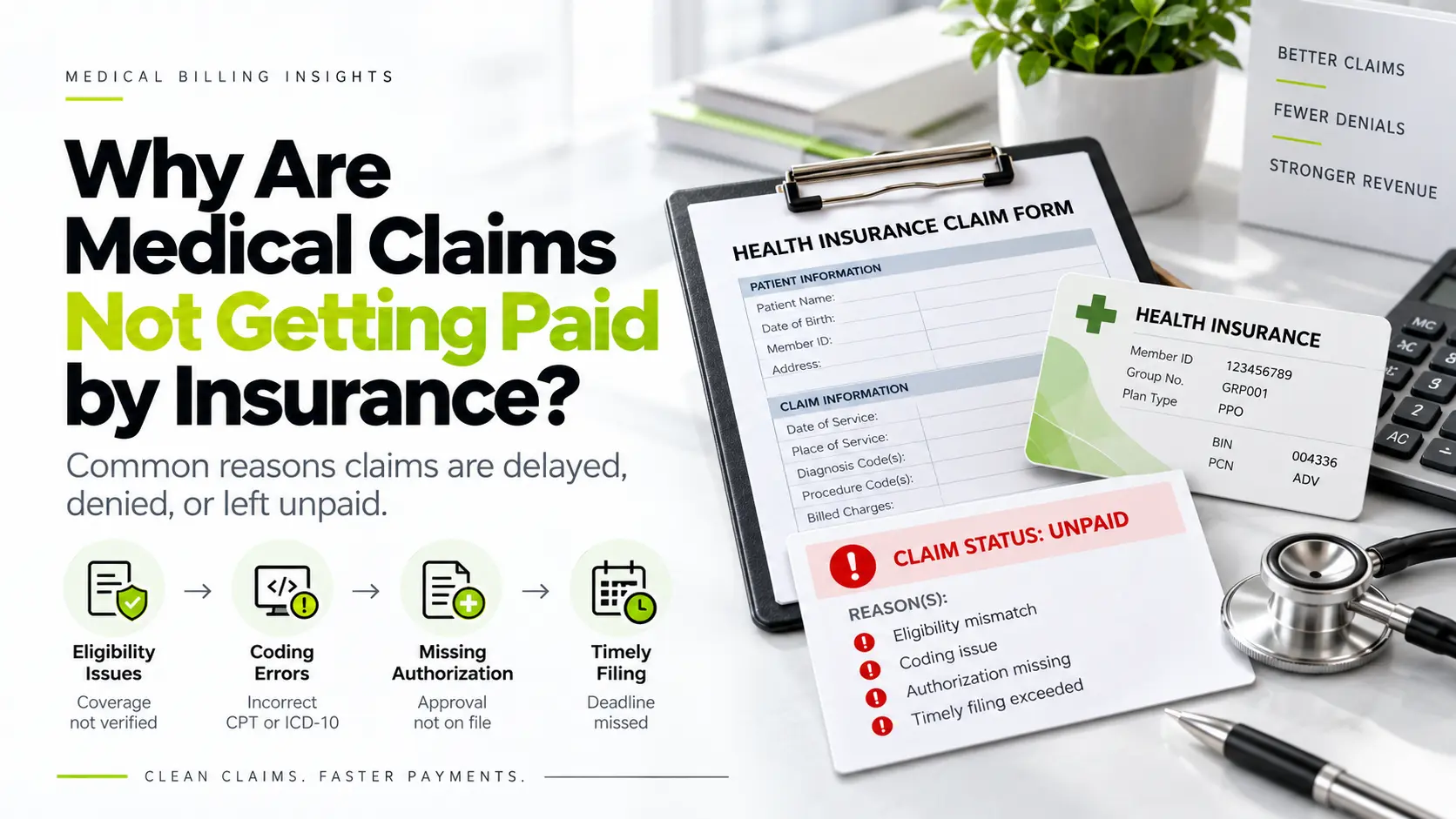
Medical claims not getting paid can leave a practice struggling to cover payroll while the billing system shows a growing insurance balance. The cause may involve missing claim information, coverage problems, an unresolved denial, or a payment that staff never posted.
Start by finding out where the claim stopped. Did the correct payer receive it? Did the insurer reject, deny, or hold it? Did it issue payment? This guide helps practice owners and billing teams investigate the problem, choose the right action, and prevent repeated delays.
Table of Contents
ToggleMedical Claims Not Getting Paid: Where to Start
An unpaid claim does not automatically mean the insurer refused to pay. The claim may never have reached the payer, or the payer may still be reviewing it.
A clearinghouse rejection generally identifies a submission problem before payer adjudication. A denial follows a payer decision on the claim. A pending status indicates unfinished processing or review.
A zero payment can also reflect an applied deductible, a contractual adjustment, or a duplicate submission. Review the complete explanation rather than the payment amount alone.
Common Insurance Claim Denials and Their Causes
Insurance claim denials often begin with inaccurate patient details or coverage information. A wrong member number, inactive plan, or incorrect payer can stop payment.
Missing authorization or referral details can create another barrier. Approval may cover a different procedure, provider, location, or service period. Compare the actual service with the authorization and payer rule. A valid authorization supports the claim but does not guarantee payment when other requirements remain unmet.
Coding and documentation errors can also cause insurance claim denials. The diagnosis, procedure, modifier, and clinical record must support one another. Our medical coding services help practices review these details. Never add an unsupported diagnosis or modifier simply to obtain payment.
Provider enrollment issues deserve a separate check. The payer may not recognize the billing provider, rendering provider, service location, or effective enrollment date. Confirm the correct identifiers and enrollment record.
Filing deadlines matter throughout the process. Initial claims, replacements, and appeals may follow different limits. Record each applicable deadline and preserve evidence of payer receipt. A denial does not automatically create a fresh filing window, and repeated submission does not extend the time allowed.
Why Delayed Insurance Payments Need Investigation
Delayed insurance payments need investigation when a claim remains unresolved beyond the payer’s expected processing period or an applicable contractual or regulatory timeframe. There is no universal payment deadline for every claim.
First confirm that the payer accepted the claim. A sent status in billing software may only show that the office exported a file. Review payer acknowledgment details and retrieve the claim number. If the payer has no record, investigate routing and acceptance rather than waiting for payment.
A pending claim may require records, an accident questionnaire, coordination of benefits information, or another review. Find the specific outstanding item, who must provide it, and the response deadline.
Coordination of benefits can delay payment when a payer believes another insurer should pay first. Confirm the order of coverage and obtain the primary response when required. Secondary submission rules vary, so do not assume that waiting for the primary payer protects every deadline.
Sometimes delayed insurance payments involve an issued payment that the office cannot locate. Check the payment date, method, recipient, and trace or check number. Reconcile deposits and remittances before asking for reissue. A missing posting entry and an unpaid insurance claim require different investigations.
How Medical Billing Follow Up Resolves Payment Problems
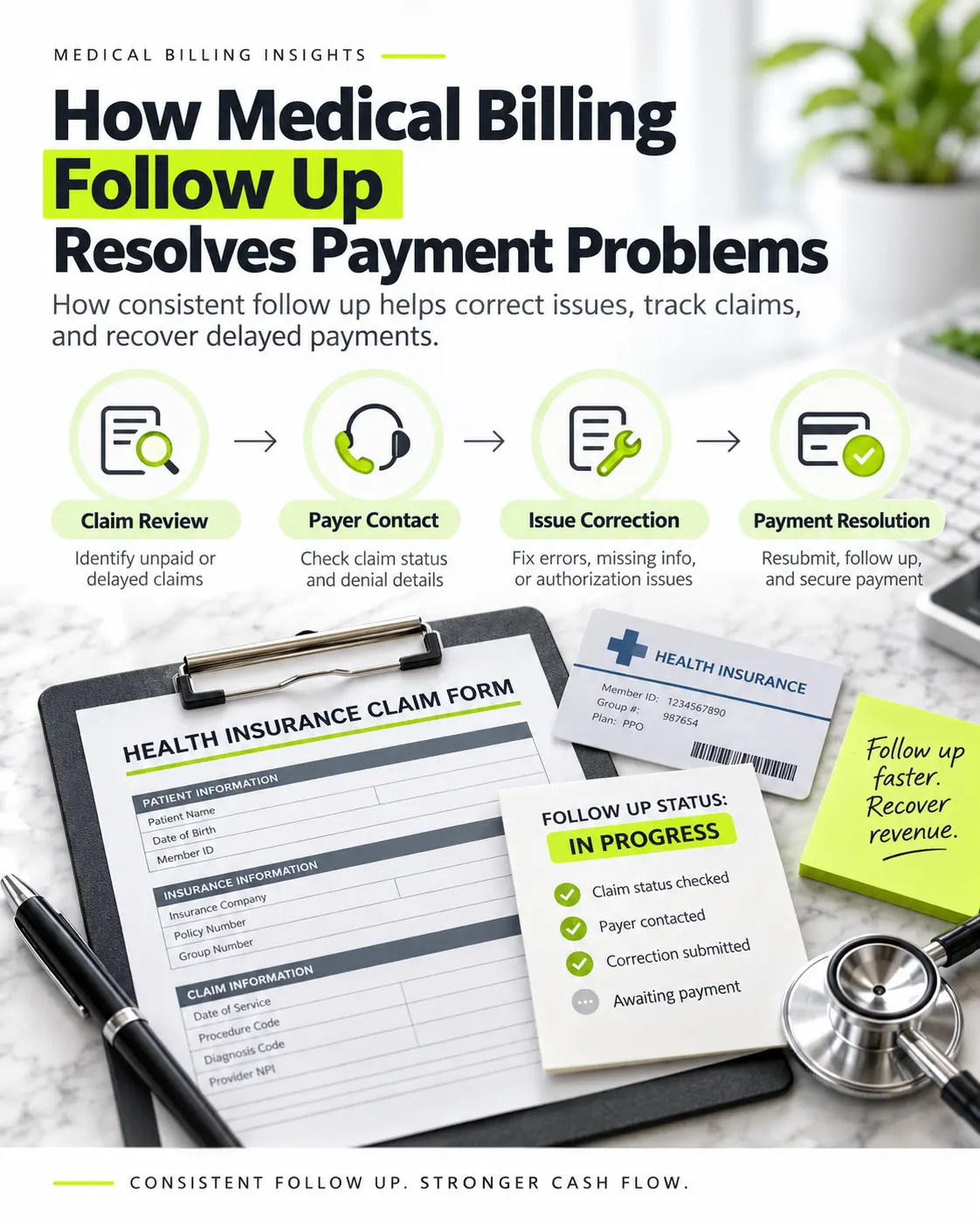
Effective medical billing follow up answers three questions: what prevents payment, what action will resolve it, and who owns that action? A note saying only that staff called the payer does not answer them. Record the status, payer reference, required documents, and next review date.
Read the remittance before calling. Claim Adjustment Reason Codes and Remittance Advice Remark Codes explain payment adjustments and related details. The official CMS payment and remittance guidance explains their role. Use the message with the claim record to determine the right response.
Ask specific questions when you contact the payer. Confirm receipt, the latest status, the reason for the hold or denial, and the permitted next step. Request a reference number.
Choose between a corrected claim and an appeal carefully. A factual claim error may need a replacement under payer instructions. A disputed coverage or payment decision may require an appeal with supporting records. Repeatedly submitting an unchanged claim can produce duplicate responses without addressing the original issue.
Assign a follow up date after every action. Confirm that the payer received the correction or documents, then review the result. Medical billing follow up works best as a documented sequence that ends with reconciled payment, a justified adjustment, or another supported outcome.
How to Review Unpaid Medical Claims Systematically
Review unpaid medical claims in a structured queue rather than calling payers randomly. Capture the service date, payer, billed amount, outstanding amount, claim status, denial reason, and deadline.
Group accounts by the problem that blocks payment. Coverage corrections, missing authorizations, coding reviews, and records requests usually require different staff.
Set priorities using deadlines, age, value, and recovery prospects. A smaller claim near an appeal deadline may need action before a larger claim still in normal processing.
Review a small sample in depth when the backlog is large. Trace each claim from registration through posting and record where it stopped. This diagnostic review can reveal whether the main problem involves claim acceptance, denial handling, payer follow up, or incomplete account reconciliation.
Keep a working record of actions and outcomes. Our denial management services support review of payer decisions and eligible recovery work. The goal is to resolve supported balances and identify repeat problems, rather than promise that every unpaid claim will produce revenue.
Your Claim Recovery Checklist
- Confirm receipt and the latest payer status
- Read the complete denial or adjustment explanation
- Check claim, correction, and appeal deadlines
- Assign an owner and a specific next action
- Reconcile the payment or supported final outcome
The payer has no record of the claim
When the payer has no record, verify the member details, payer ID, destination, and submission acknowledgment. Correct routing problems and submit through the proper channel within the applicable deadline.
The claim needs a correction
When the claim needs a correction, change only information the record supports. Follow the payer’s replacement instructions and include the original claim reference when required. Track acceptance and adjudication afterward. Sending the correction completes one action, but the account remains unresolved until staff review the result.
The payer requests clinical records
When the payer requests clinical records, confirm the exact documents, secure delivery method, and deadline. Send the relevant records with the claim reference and retain delivery evidence. Check whether the payer attached them to the correct claim before assuming that review has resumed.
The payer reports an issued payment
When the payer reports an issued payment, compare the remittance with deposits, checks, and account postings. Look for unapplied funds, incorrect account allocation, or an outdated payment address. Use payment posting and reconciliation to resolve the discrepancy before requesting another payment.
Which Unpaid Claims Should Your Team Work First?

Work claims approaching submission or appeal deadlines first, then prioritize other accounts by recoverability and age. Create a separate queue for unresolved rejections.
Pay attention to repeated problems across one payer or provider. Several unpaid claims with the same cause may indicate a registration rule, enrollment mismatch, or routing issue. Fixing that shared cause can improve the workflow more effectively than treating each account as an unrelated exception.
Protect current billing while reducing the backlog. Assign time or staff to new rejections and fresh denials so they do not become next month’s old accounts. Review queue size and unresolved tasks regularly. A recovery effort should improve ongoing operations as well as address past balances.
How to Stop the Same Payment Problems Returning
Prevention starts before submission. Verify active coverage, capture accurate patient information, and confirm authorization requirements for the planned service. Insurance eligibility verification services help practices review benefits and payer details before a registration error spreads across multiple claims.
Review recurring coding and documentation issues with the clinical team. Use actual account findings to explain what information the record lacks. Build a clear query process and allow providers to clarify documentation appropriately. Do not solve a payer edit by changing codes without clinical support.
Track more than the number of calls staff make. Review acceptance, denial causes, unresolved requests, aging, and actual payment outcomes. A busy team can still leave important accounts untouched. Clear measures show whether work resolves medical claims not getting paid or merely generates more activity.
When an Unpaid Balance Is Not an Insurance Debt
Some balances reflect patient cost sharing rather than an unpaid insurance obligation. A deductible or coinsurance amount may remain after the payer processes the claim correctly. Confirm the remittance, secondary coverage, and previous payments before sending a patient statement or continuing insurance follow up.
Other balances require contractual adjustments or documented provider responsibility. Do not transfer every denied charge to the patient. Review payer agreements, program requirements, and applicable billing protections before deciding who owes the amount. An accurate account can close with an adjustment when the facts require it.
Distinguish underpayments from zero payments. If the payer reimburses less than the expected contracted amount, compare the payment with the applicable agreement and claim details. A lower payment may reflect valid adjustments or a recoverable discrepancy. Investigate before requesting additional money from either insurance or the patient.
How Medical Billing Help Supports Claim Recovery
Medical Billing Help supports practices with claim submission, payer follow up, denial review, and payment reconciliation. Our medical billing services help teams identify where claims stop and organize the actions needed to resolve supported insurance balances.
If medical claims not getting paid have become a recurring problem, start with a focused review of unresolved accounts. Identify the main causes, approaching deadlines, and missing actions. That review gives the practice a practical basis for deciding which tasks need staff training, process changes, or outside support.
Contact our team to discuss your claim workflow and the payment issues your practice faces. Tell us which payers cause the most delays, how your team currently handles denials, and where follow up becomes difficult. We can discuss the scope of a review and the support available.
Build a Clearer Path From Claims to Payment
Resolving medical claims not getting paid starts with a clear diagnosis of the billing problem. Confirm payer receipt, understand the response, choose the correct action, and reconcile the outcome. Consistent ownership and deadline tracking help practices address recoverable balances while preventing the same problems from returning.
Medical Claims Still Not Getting Paid?
Our team helps practices investigate unpaid claims, review denials, and organize payer follow up.
FAQs
Why are medical claims not getting paid by insurance?
Common causes include submission errors, inactive coverage, missing authorization, coding issues, unanswered records requests, and unresolved denials. First confirm whether the payer received and processed the claim. The correct response depends on its actual status.
Does a rejected claim need an appeal?
Usually a rejection requires correction and resubmission rather than an appeal of an adjudicated decision. Check the rejection message and payer instructions. Confirm acceptance after resubmission and continue tracking the applicable filing deadline.
How long should a practice wait for insurance payment?
There is no single waiting period for every payer and claim. Review the relevant plan, agreement, applicable rules, and current status. Investigate overdue accounts and unanswered requests rather than relying on an arbitrary number of days.
Should I resubmit an unpaid claim immediately?
Check receipt and status first. An unchanged duplicate may add confusion when the original claim is pending. Follow the payer instructions for corrections, missing claims, or appeals and preserve the relevant submission evidence.
Can a billing company recover every unpaid claim?
No. Recovery depends on coverage, documentation, contracts, deadlines, prior actions, and the facts of each claim. A billing review should identify supported recovery opportunities and balances that require an adjustment or another appropriate resolution.