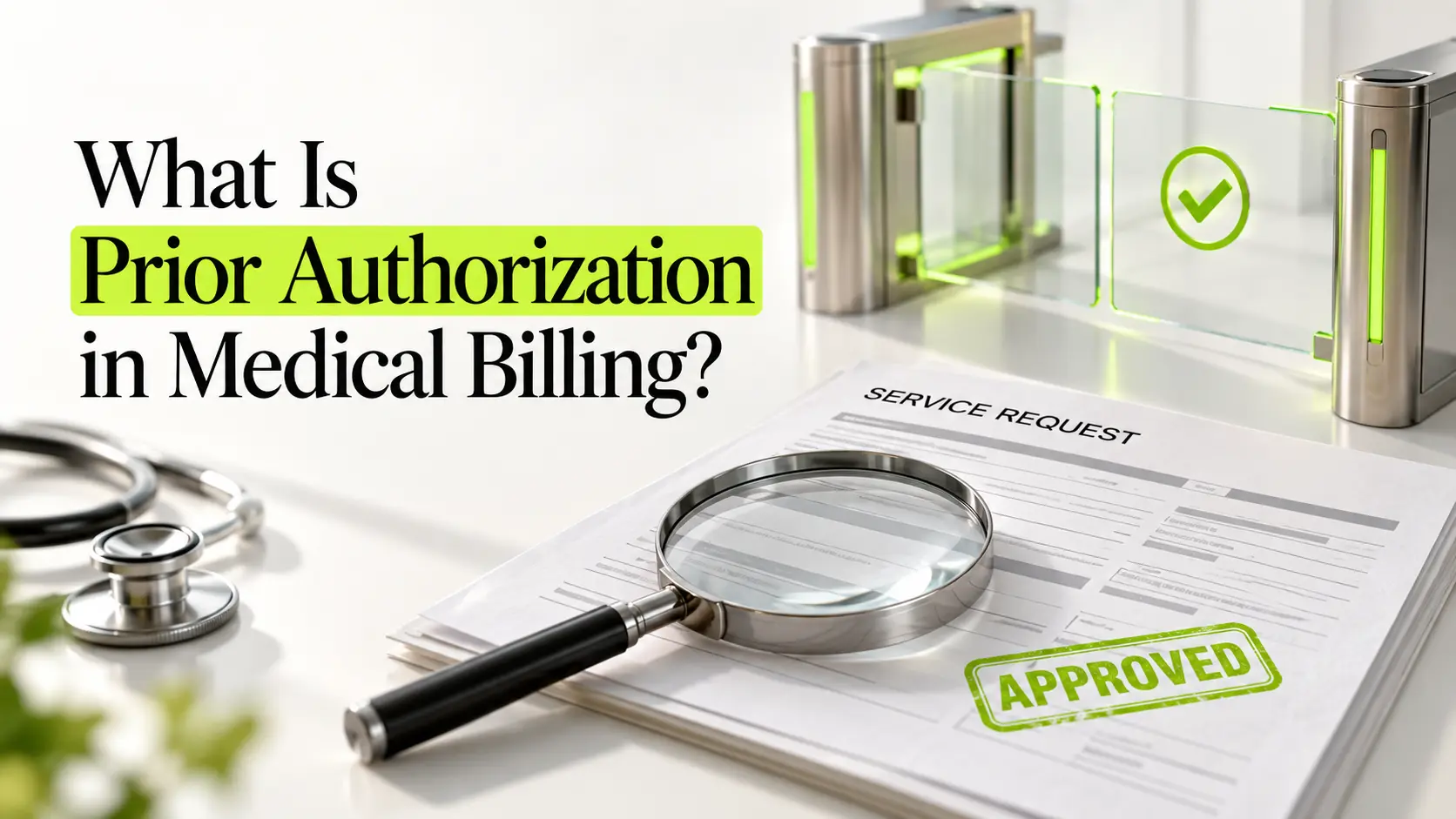
Prior authorization in medical billing is a health plan review that some services require before a provider delivers care. The practice submits the requested clinical and administrative information, and the payer decides whether the proposed service meets its criteria.
For a busy practice, authorization connects scheduling, clinical documentation, insurance verification, and claim submission. A missed requirement can disrupt appointments and create avoidable claim problems. This guide explains how the process works, which details to check, and how to manage requests without confusing approval with guaranteed payment.
Table of Contents
ToggleWhat Is Prior Authorization in Medical Billing?
Health plans may use authorization to review medical necessity and coverage conditions for particular procedures, treatments, medicines, or equipment. The requirement depends on the patient’s actual plan and the planned service. Staff should confirm the current rule instead of assuming every insurer handles the same procedure identically.
An approval may specify the provider, facility, service code, units, and effective dates. Those details determine what the decision covers.
Authorization also differs from a payment guarantee. The practice still needs accurate claim information and must meet other applicable requirements. The official HealthCare.gov preauthorization definition explains this distinction. Always read the written decision and the plan rules before explaining expected costs to a patient.
How the Prior Authorization Process Works
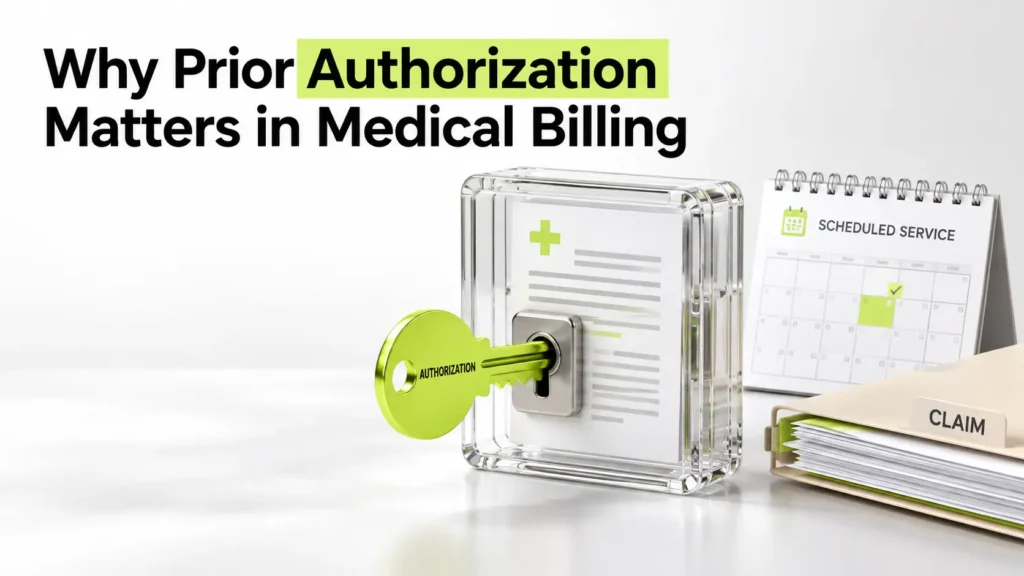
The prior authorization process starts when the provider orders a service. Scheduling or authorization staff identify the patient’s active plan, confirm the requirement, and determine where to submit the request.
Next, collect the order, relevant provider notes, diagnosis and procedure details, and any supporting records the payer requests. The clinical team supplies the medical reasoning. Administrative staff organize the submission and check completeness without changing the provider’s clinical findings or adding information the record does not support.
Submit through the payer’s accepted channel and save the confirmation. Record the submission date, request reference, planned service date, and responsible staff member. Keep the task open while the payer reviews it.
Monitor the response and answer information requests within the applicable timeframe. Confirm that the payer attached your documents to the correct request. A portal upload confirmation can prove delivery, but staff should still check whether the reviewer needs anything else before the planned appointment.
The final step in the prior authorization process is reviewing the decision and updating the workflow. Record approval conditions, communicate the outcome, and prepare the claim information. If the request remains pending, discuss scheduling implications with the clinical team rather than treating silence as permission.
Prior Authorization Requirements by Health Plan
Prior authorization requirements vary by plan, procedure, service setting, and provider network arrangement. A policy for one commercial product may not apply to another product from the same insurer.
Services that may require approval include advanced imaging, certain surgeries, therapy visits, specialty medicines, and durable medical equipment. These are examples rather than a universal list.
Medicare, Medicare Advantage, Medicaid, and commercial coverage can follow different authorization pathways. Do not assume one program’s process applies across all patients.
For example, an imaging order may require review under the patient’s current plan even when a similar order did not need approval last month. Check the actual procedure and location. A change in the ordered service may also require an updated request or another decision.
Verify prior authorization requirements early enough to address missing records or clarify the order. Use insurance eligibility verification services alongside the authorization workflow. Eligibility information supports planning, but it does not replace service specific approval or establish the final claim payment.
How to Handle a Prior Authorization Denial
A prior authorization denial means the payer did not approve the submitted request under its review. Read the complete decision to identify the reason and available next steps.
If the request lacks information, confirm what the payer needs and how staff should send it. The payer may allow a corrected request or additional documents. Follow its instructions rather than repeatedly submitting the same incomplete material.
When the provider disagrees with the clinical reasoning, review the plan’s reconsideration, clinician discussion, or appeal options. Availability and sequence vary. The provider should explain the medical basis using relevant records. Do not change the diagnosis or planned treatment solely to obtain an administrative approval.
Keep the patient informed about a prior authorization denial in simple language. Explain what the office knows, which review step it will take, and when the patient can expect an update. Avoid promising that another submission will succeed or that the patient must automatically pay the full charge.
Distinguish an authorization denial from a later claim denial. The first concerns a request before care; the second concerns submitted billing. When a claim denies, compare the approval and payer response before deciding whether to correct or dispute it. Our denial management services support review of eligible claim issues.
Medical Prior Authorization and Clinical Documentation
Medical prior authorization needs documentation that connects the patient’s condition with the proposed service. The provider should describe relevant findings, symptoms, treatment history, and the clinical reason for the request.
Send relevant records that answer the review question. A large chart does not necessarily explain why a particular procedure is necessary. Confirm that the order and notes identify the requested service clearly.
Check consistency between the documentation, diagnosis codes, procedure codes, requested units, and service setting. Our medical coding services help practices review the relationship between documented care and claim details. Accurate coding supports the request without replacing the clinician’s explanation.
Urgent requests follow the payer’s applicable criteria and review pathway. The clinical situation should support the urgency designation. Staff should confirm the required process and communicate with the treating team. Emergency care follows separate rules; a routine authorization workflow should not delay emergency treatment.
Good documentation also includes the administrative history. Retain the request, supporting records, receipt confirmation, information requests, and written decision in the appropriate account.
A Practical Prior Authorization Checklist
- Verify active coverage and the exact service requirement
- Check provider, facility, codes, dates, and requested units
- Submit the clinical support and retain confirmation
- Review the written decision and approval conditions
- Track changes and compare the final claim with the approval
Confirm the exact service and coverage
Confirm the exact service and coverage before starting the request. Match the patient, member number, provider, location, and proposed procedure with the current plan. If the payer says authorization is unnecessary, record the source, date, and reference when available.
Submit a complete request
Submit a complete request through the designated channel. Use the correct form or portal, include the required attachments, and verify that staff entered the planned dates and units accurately.
Review the written decision
Review the written decision rather than relying on a verbal summary. Confirm the approved codes or services, provider, facility, effective dates, and any limits. If the response does not match the order, contact the payer before assuming it covers the intended care. Save the clarification with the request.
Track approved dates and units
Track approved dates and units throughout the treatment period. A series of visits may use the available units before the patient finishes care. Check upcoming appointments and renewal instructions. When services change or approval expires, ask the payer what action it requires before proceeding under the old authorization.
Prior Authorization vs Referrals and Eligibility
Eligibility verification checks whether coverage is active and helps identify benefits. A referral directs or permits access to another provider under the plan’s rules. Prior authorization in medical billing addresses a service approval requirement. One of these checks does not automatically satisfy the other two.
Some plans use terms such as preauthorization, prior approval, or precertification for a similar review. Other terms may describe a different administrative step. Read the plan’s instructions instead of treating every label as interchangeable.
Patients can have active coverage and a referral while still needing authorization for a procedure. Conversely, an approval does not resolve every coverage or network issue. A reliable workflow checks each applicable requirement separately and explains the findings to scheduling and billing staff.
How Prior Authorization Affects Claim Submission
Before submitting a claim, compare the actual service with the authorization record. Verify the service dates, codes, units, provider, and location, then enter the authorization details where the payer requires them. The claim must reflect the care documented and delivered, even if it differs from the original plan.
If an approved claim denies for missing authorization, check whether the number was absent, entered incorrectly, or associated with different details. Follow the payer’s correction or dispute instructions and track the relevant deadline. A copy of the approval supports the review but does not automatically reverse the denial.
When the practice missed authorization entirely, investigate any available review process without assuming retroactive approval is possible. Follow the applicable agreement and program rules before assigning patient responsibility. The billing team should document the outcome and identify the workflow gap that caused the missed requirement.
How Medical Billing Help Supports Authorization Workflows
Also Read: Top 10 Reasons for Claim Denials and How to Improve First Pass Claim Acceptance Rate. These guides explain related claim issues that authorization alone cannot prevent.
Medical Billing Help supports practices with coverage verification, claim review, payer follow up, and denial investigation. Our medical billing services help teams connect authorization records with billing activity so unresolved details receive attention before another claim or patient statement goes out.
Clear responsibilities make that support more useful. Clinical teams explain medical necessity, administrative staff manage requests, and billers compare the claim with the approval. Each team should know who owns an unanswered payer question and when the next update is due.
Practices can start by reviewing where authorization work currently stalls. Look for missing orders, incomplete attachments, untracked decisions, or expired approvals. Those findings help determine whether the practice needs a better tracking process, staff guidance, or additional billing support.
Best Practices for Managing Authorization Requests
Assign one person or team to own each request through its final documented outcome. A shared tracker can show the patient account, planned service, payer, submission date, status, effective dates, approved units, and next action. Update the record when a decision or appointment changes.
Start requests when staff schedule the planned service and check status before the visit. Review pending tasks regularly rather than waiting for the patient to arrive. Use reminders for information requests and expiring approvals so the team can act while there is time to resolve the issue.
Monitor recurring causes of delay and denial. If the same payer repeatedly asks for the same document, update the preparation checklist. If staff overlook unit limits, make them visible in scheduling. Use actual outcomes to improve the process instead of measuring success only by the number of requests submitted.
Make Authorization Part of a Reliable Billing Process
Prior authorization in medical billing works best when the practice verifies requirements early, submits supported information, and checks the written decision carefully. Track approval conditions through claim submission and respond promptly to unresolved requests. This coordinated approach supports clearer scheduling, better patient communication, and fewer preventable billing problems.
Need Help With Prior Authorization?
Our team helps practices review authorization requirements, organize payer follow up, and connect approval details with accurate claims.
FAQs
What is prior authorization in medical billing?
It is a health plan review that some services require before care. The practice submits the requested information, and the payer issues a decision. Staff must check any approved dates, services, providers, and unit limits.
Does prior authorization guarantee payment?
No. An approval does not remove every other coverage or billing requirement. The claim must accurately reflect the service, and the practice should review eligibility, approval conditions, and applicable payer rules before explaining expected payment.
How long does the prior authorization process take?
Timing depends on the payer, service, request type, and applicable requirements. Confirm the correct review timeframe and whether more information is outstanding. Use the payer urgency pathway only when the clinical circumstances and rules support it.
What should a practice do after a prior authorization denial?
Read the complete decision, identify the reason, and follow the allowed correction, reconsideration, or appeal process. Collect relevant clinical support and track deadlines. Do not assume that every denial requires the same response.
Is a referral the same as medical prior authorization?
No. A referral concerns access to another provider under plan rules, while authorization concerns approval for a particular service. A patient may need both. Verify each applicable requirement instead of assuming one replaces the other.