Point of Care CNA in Nursing Homes refers to a system where Certified Nursing Assistants record patient care information at the time they provide care. Instead of writing notes later, CNAs enter details right away using digital tools or bedside devices.
This approach has changed how care is tracked in nursing homes. It reduces delays, improves accuracy, and helps staff stay organized throughout their shift. In today’s healthcare environment, real time documentation is no longer optional. It has become a key part of quality care.
Table of Contents
ToggleUnderstanding the Role of a CNA in Nursing Homes
Certified Nursing Assistants play a central role in patient care. They assist residents with daily tasks such as bathing, feeding, mobility, and hygiene. They also observe changes in a resident’s condition and report them to nurses.
Because CNAs spend the most time with residents, their notes are important. These notes help nurses and doctors understand what is happening with each patient. When documentation is delayed or incomplete, it can lead to confusion or missed care.
This is where point of care charting becomes valuable. It allows CNAs to capture details while they are still fresh and accurate.
What Does Point of Care Mean in Nursing Homes?
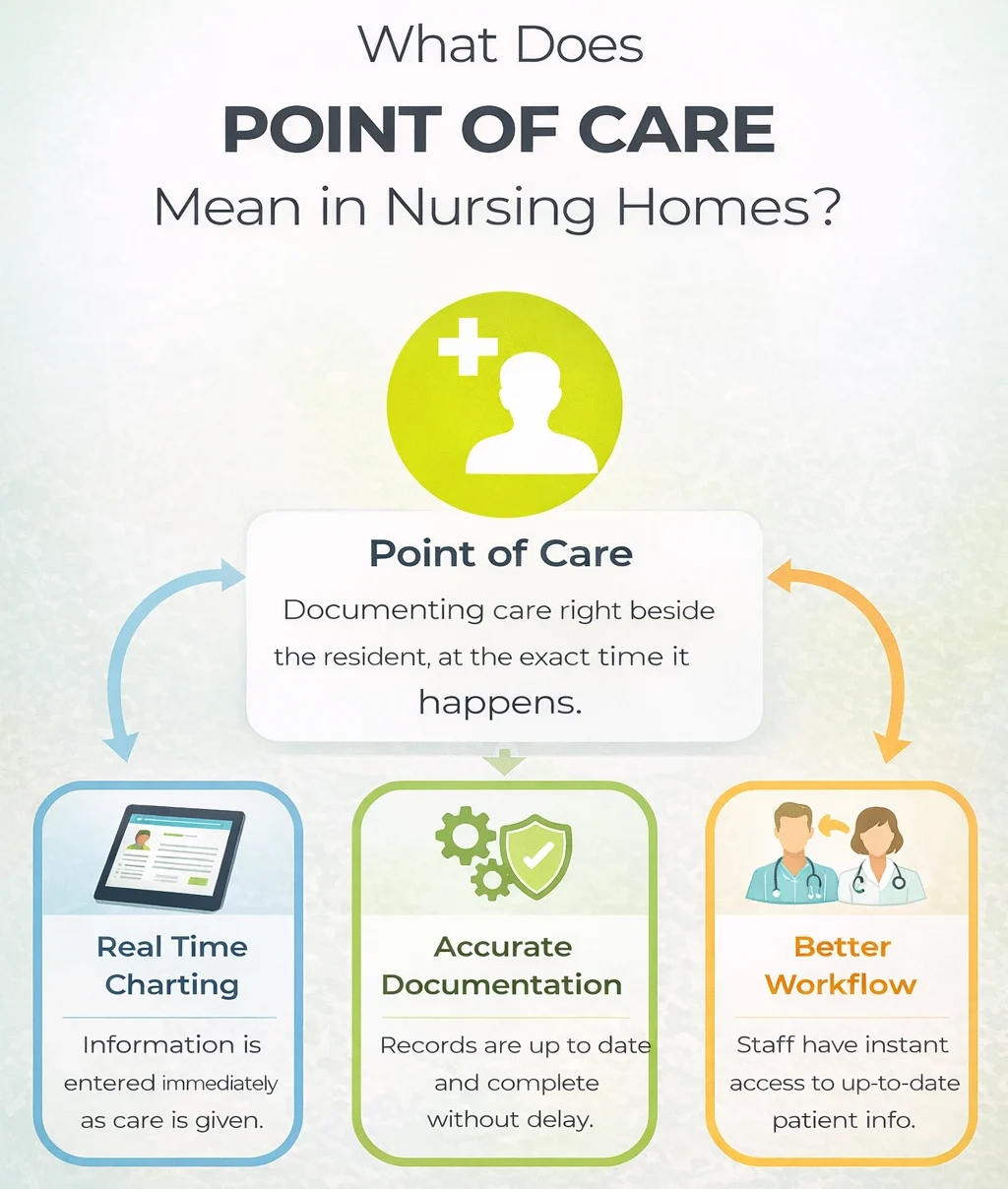
Point of care means documenting care at the exact time and place it happens. In nursing homes, this usually involves mobile devices, tablets, or computer stations placed near patient rooms.
When a CNA completes a task, they enter the information immediately. This may include vital signs, food intake, mobility assistance, or behavioral observations.
Instead of relying on memory later, the information is recorded in real time. This improves both accuracy and efficiency.
Why Point of Care CNA Is Important
Point of Care CNA in Nursing Homes is important because it supports better care and stronger documentation. Healthcare facilities rely on accurate records for treatment decisions, compliance, and billing.
When documentation is done late, details can be missed. Small errors can lead to bigger issues, especially in long term care settings.
Real time charting helps prevent these problems. It ensures that every action is recorded correctly and on time.
It also improves communication between staff. Nurses can review updates instantly and respond faster to patient needs.
How Point of Care Systems Work
Point of care systems are usually digital. CNAs use handheld devices or bedside terminals to log information. These systems are designed to be simple and quick so they do not slow down workflow.
A CNA logs into the system, selects the patient, and records the care provided. The system may include prompts to guide the process. This helps ensure that nothing is missed.
The data is then saved and shared with the rest of the care team. This creates a clear and up to date record for each resident.
Many facilities use electronic charting nursing homes systems to manage this process.
Benefits of Point of Care CNA in Nursing Homes
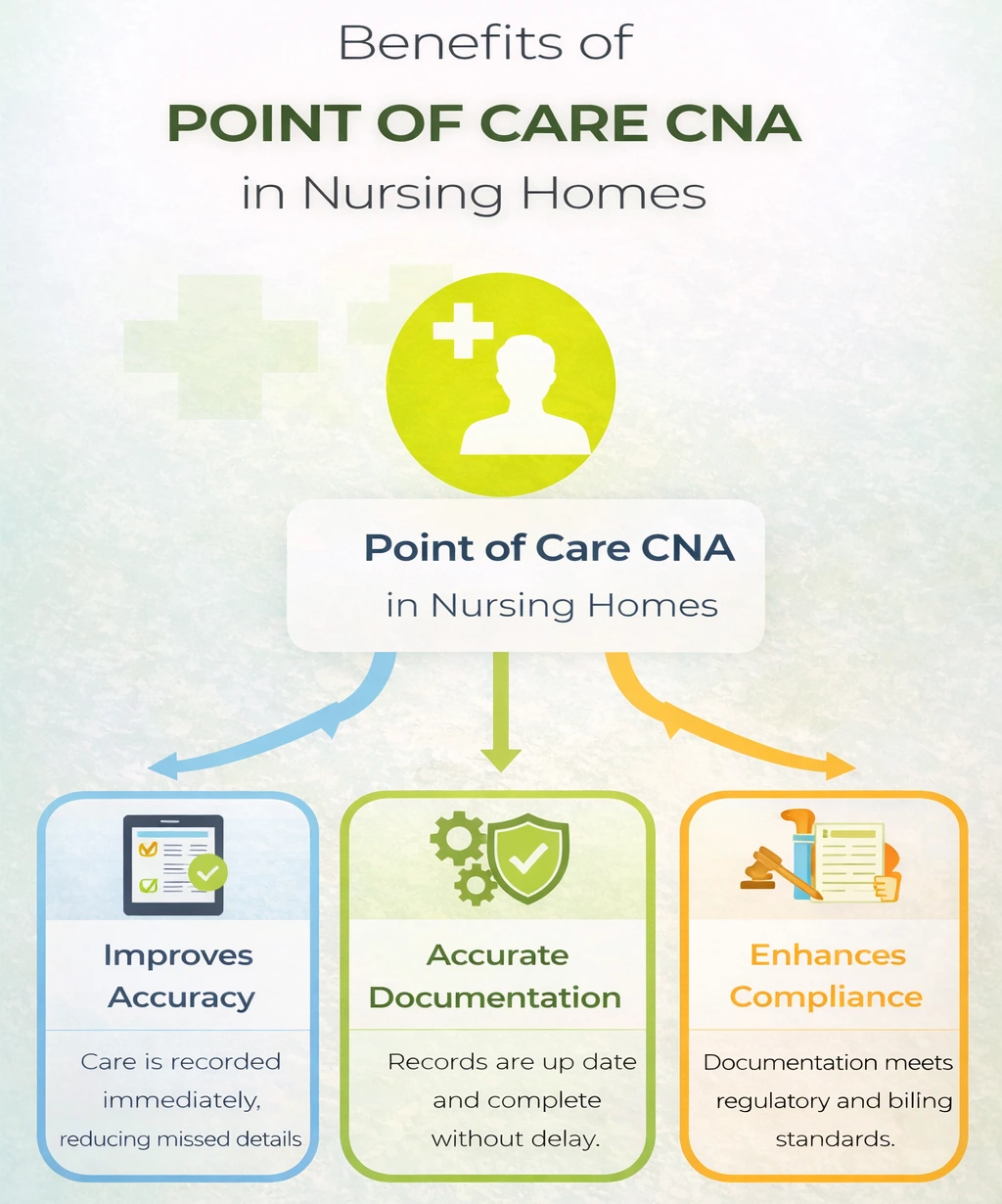
Point of Care CNA in Nursing Homes offers several benefits that improve both care quality and operational efficiency.
One major benefit is accuracy. Since information is recorded immediately, there is less chance of forgetting details.
Another benefit is time savings. CNAs do not need to spend extra time at the end of their shift trying to remember what happened during the day.
It also improves compliance. Healthcare regulations require proper documentation. Real time entries help facilities meet these standards.
Better communication is another advantage. When data is updated instantly, nurses and supervisors can make faster decisions.
Finally, it supports better billing processes. Accurate CNA documentation ensures that services are properly recorded, which helps avoid claim issues.
Challenges of Point of Care Documentation
While point of care systems offer many advantages, they also come with challenges.
Some CNAs may find it difficult to adjust to digital tools, especially if they are used to paper records. Training is important to help staff feel comfortable with new systems.
Technical issues can also occur. Devices may freeze or lose connection, which can slow down work.
Another challenge is maintaining balance. CNAs must focus on both patient care and documentation. Facilities need to ensure that technology supports care rather than distracts from it.
Point of Care and Long Term Care Documentation
In long term care settings, documentation plays a critical role. Residents often have ongoing needs that require consistent tracking.
Point of care systems help maintain detailed records over time. This allows healthcare providers to identify trends and make informed decisions.
Accurate long term care documentation also supports audits and inspections. Facilities must show that they are providing proper care and following regulations.
Real time charting makes this process smoother and more reliable.
Impact on Patient Care and Safety
Point of Care CNA in Nursing Homes directly affects patient safety. When information is recorded right away, it reduces the risk of errors.
For example, if a CNA notices a change in a resident’s condition and records it immediately, the care team can respond quickly. This can prevent complications and improve outcomes.
It also ensures continuity of care. When shifts change, the next caregiver has access to updated information.
This creates a safer and more consistent care environment.
The Role of Technology in Modern Nursing Homes
Technology has become a major part of healthcare. Nursing homes are now using digital systems to improve efficiency and care quality.
Point of care tools are one example of this shift. They replace outdated paper methods with faster and more reliable solutions.
According to the Centers for Medicare & Medicaid Services, proper documentation is essential for compliance and quality care. Digital systems help facilities meet these expectations.
As technology continues to evolve, point of care systems will become even more advanced and user friendly.
Future of Point of Care CNA in Nursing Homes
The future of Point of Care CNA in Nursing Homes looks promising. More facilities are adopting digital tools to improve workflow and accuracy.
New systems may include voice input, automation, and smarter data tracking. These features can make documentation even easier for CNAs.
Training and support will remain important. Facilities need to ensure that staff understand how to use these tools effectively.
As healthcare continues to grow, real time documentation will play a bigger role in patient care and revenue management.
Need Help Understanding Point of Care CNA in Nursing Homes?
Get clear guidance on CNA charting, real time care records, documentation, and nursing home workflow.
Conclusion
Point of Care CNA in Nursing Homes is more than just a documentation method. It is a system that improves accuracy, saves time, and supports better patient care.
By recording information in real time, CNAs can reduce errors and improve communication. This leads to better outcomes for residents and smoother operations for facilities.
As nursing homes continue to adopt digital solutions, point of care charting will remain a key part of modern healthcare.
FAQ
What is Point of Care CNA in Nursing Homes
Point of Care CNA in Nursing Homes means recording patient care information at the time it is provided using digital tools.
Why is point of care documentation important
It improves accuracy, reduces errors, and helps healthcare teams respond quickly to patient needs.
How do CNAs use point of care systems
They use tablets or computers to enter patient information immediately after providing care.
Does point of care save time for CNAs
Yes, it reduces the need for end of shift documentation and helps streamline workflow.
What type of information is recorded
CNAs record tasks such as feeding, mobility assistance, hygiene care, and observations.
Is training required for point of care systems
Yes, proper training helps CNAs use the system efficiently and confidently.
Can point of care improve patient safety
Yes, real time updates allow faster response to changes in a patient’s condition.
What are common challenges of point of care
Challenges include learning new systems and dealing with technical issues.
How does point of care help with compliance
It ensures that documentation is accurate and meets healthcare regulations.
Is point of care used in all nursing homes
Many nursing homes use it, but some still rely on traditional methods.
How does point of care affect billing
Accurate documentation helps ensure correct billing and reduces claim issues.
What is the future of point of care in healthcare
It will continue to grow with better technology, automation, and improved systems.