

Patient responsibility in medical billing is the amount a patient owes for healthcare services after the practice applies insurance decisions, required adjustments, and payments. It commonly includes a deductible, copay, or coinsurance.
A patient balance should reflect what the person actually owes, not simply what insurance left unpaid. Billing teams must review the claim response, provider agreement, coverage rules, and account history before sending a statement.
Table of Contents
ToggleUnderstanding Patient Financial Responsibility
Patient financial responsibility describes the patient’s share of a healthcare bill. Insurance may cover part of an eligible service while the patient pays the remaining permitted portion.
For an insured patient, the provider’s full charge rarely tells the whole story. The payer may recognize an allowed amount, apply a contractual adjustment, and divide the eligible cost between insurance and the patient.
Patient financial responsibility can change after claim processing. An estimate before the visit may differ from the final balance if the provider performs additional services or another claim affects the deductible.
Deductible, Copay and Coinsurance Explained
A deductible is the amount a patient pays for services subject to that deductible before the plan begins sharing those costs. Some covered services may not require the patient to meet a deductible first.
A copay is a fixed amount the patient pays for a covered service under the plan. For example, a plan might require a $25 office visit copay. The amount can vary by service or provider type.
Coinsurance is a percentage of the eligible cost the patient pays under the plan. If a covered service has a $200 allowed amount and the applicable patient coinsurance is 20%, the patient’s share is $40 after the deductible has been satisfied.
Deductible, copay and coinsurance are different forms of cost sharing, rather than three charges that always apply together. The plan determines which rules apply and in what order.
An out of pocket maximum can limit eligible cost sharing for covered services under the plan’s rules. Expenses such as premiums and some charges outside coverage generally do not count toward that maximum. Use the official CMS health insurance glossary to understand these terms, then check the patient plan.
How to Calculate Patient Responsibility in Medical Billing
To calculate patient responsibility in medical billing, start with the processed claim and the permitted allowed amount. Identify insurance payment, patient cost sharing, and provider adjustments. Then account for secondary insurance and payments the patient already made. The remaining collectible amount becomes the statement balance after the required review.
Consider a simple example. A provider charges $300, and the insurer allows $200. The agreement requires a $100 contractual adjustment. The patient has met the applicable deductible and owes 20% coinsurance, so insurance pays $160 and the patient owes $40. The contractual $100 adjustment does not become patient responsibility.
Now assume the patient still has $50 of a deductible remaining. For the same $200 allowed service, the plan applies $50 to the deductible and 20% coinsurance to the remaining $150. The patient owes $80, and insurance pays $120. This illustration assumes the plan uses that order and no other payment rules apply.
If the patient already paid $25 toward that $80 responsibility, the account balance is $55 after staff post the payment. A statement that still requests $80 would duplicate the earlier collection.
These examples illustrate one service under simplified benefits. Real claims can include multiple lines, different coverage rules, and several payment sources.
How to Review Patient Responsibility on EOB Documents
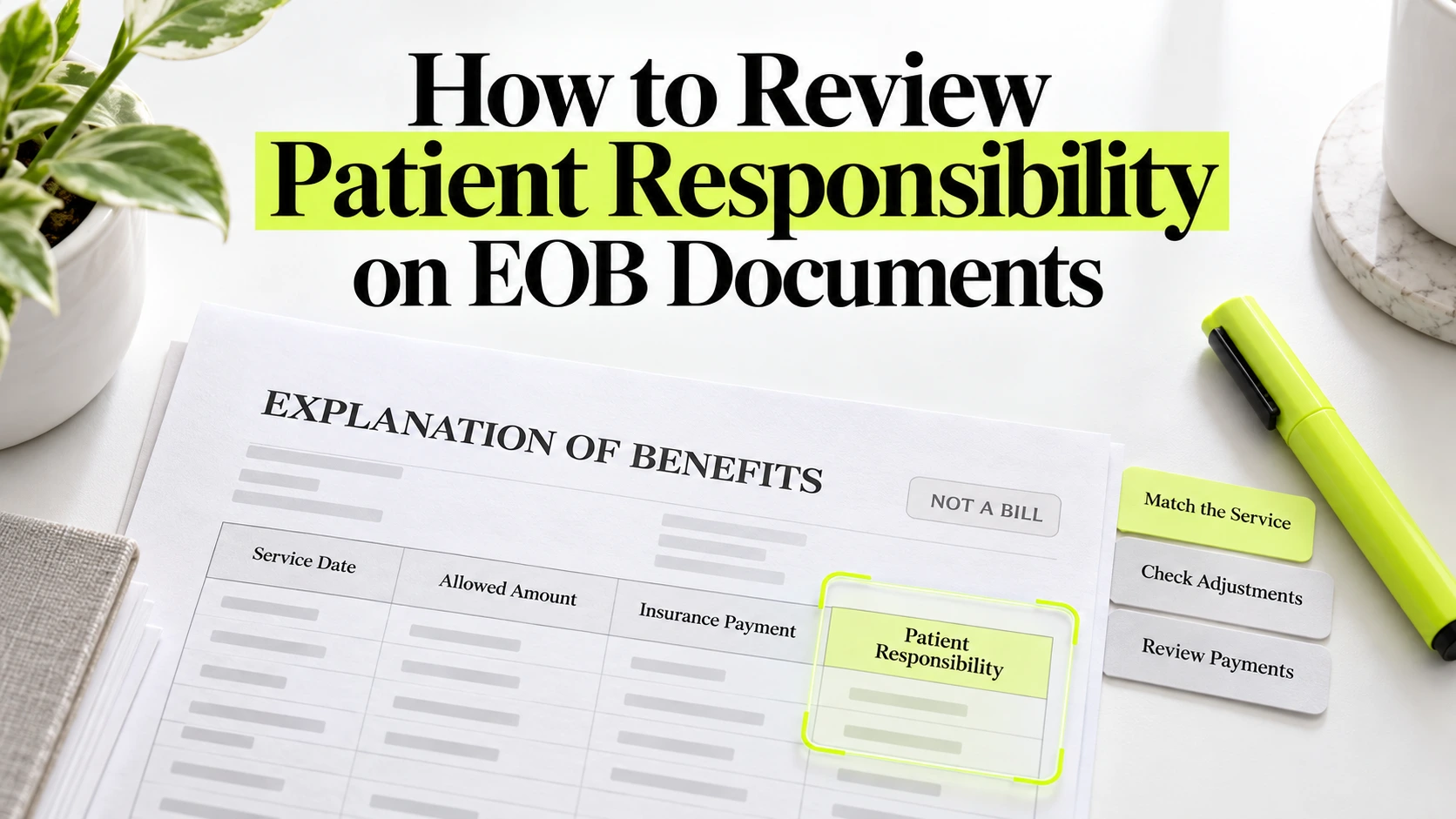
Patient responsibility on EOB documents shows the health plan’s explanation of the member’s share. An Explanation of Benefits is a claim summary rather than a request for payment from the provider.
Compare the EOB with the patient ledger. Check the service date, provider, billed amount, allowed amount, insurance payment, adjustments, and stated member responsibility. A patient who receives more than one EOB may need help identifying which document corresponds to the statement.
The practice may receive the same payment information through an electronic remittance advice. Review adjustment group codes and reasons carefully.
Do not treat every denied claim as patient responsibility on EOB review. The payer may deny a claim because the office submitted incorrect information, missed a filing deadline, or failed to follow an administrative requirement. Investigate the reason and applicable agreement before shifting the amount to the patient.
When the EOB and statement disagree, research the difference before requesting payment. The payer may have reprocessed the claim, the office may have missed a payment, or secondary insurance may still be reviewing it.
A Clear Process for Patient Balance Collection
Patient balance collection starts with accurate information and a reasonable explanation. Verify coverage before the visit, discuss known cost sharing, and give the patient a way to ask questions.
If the practice collects an estimated amount before care, explain what the estimate covers and record it as a payment toward the account. Avoid presenting uncertain amounts as final.
Send a clear statement once the account review supports the balance. Include the services, payer activity, adjustments, payments, and amount due. Provide a contact method for billing questions.
For patients who cannot pay the full amount immediately, follow the practice’s approved financial assistance and payment plan policies. Explain available options consistently and document the agreement.
Monitor patient balance collection without allowing billing mistakes to repeat. Separate accounts awaiting insurance review from verified patient balances. Pause collection activity on disputed amounts while staff investigate under practice policy.
What to Check Before Billing a Patient
- Check the active plan and applicable cost sharing
- Review primary and secondary payer responses
- Separate provider adjustments from patient balances
- Apply payments and credits to the correct encounter
- Explain the verified balance before requesting payment
Coverage and benefits
Confirm active coverage for the service date and review the correct benefit. An insurance card alone does not establish the patient’s final obligation. Check whether the service carries a deductible, copay, or coinsurance and whether network status affects coverage.
Secondary insurance
Review secondary coverage before finalizing the patient balance. A second plan may cover some or all of the amount left by the primary payer, depending on its rules. Submit the appropriate claim and reconcile its response. Do not assume secondary insurance will pay everything or bill the patient while an applicable claim remains unresolved.
Provider adjustments
Post provider adjustments separately from patient responsibility. Contractual reductions and amounts the provider must absorb should not appear as patient charges. If staff cannot explain an adjustment, they should review the remittance and agreement before releasing the statement. This check protects patients and keeps the practice’s receivables accurate.
Payments already received
Confirm copays, deposits, online payments, credits, and refunds already recorded on the account. A payment may sit on another encounter or remain unapplied. Resolve the posting issue before requesting more money.
How to Explain a Patient Statement
A useful patient statement connects the service to the balance. Staff should explain the date of care, original charge, allowed amount, insurance payment, and patient share in familiar language.
For example, staff can say that the insurer applied $50 to the remaining deductible and $30 to coinsurance, creating $80 in responsibility. If the patient paid $25 at the visit, the statement requests the remaining $55.
Listen when patients question the balance. They may have updated insurance, a payment receipt, or a corrected EOB that the office has not received. Verify the new information and document the next step.
Common Patient Billing Errors to Avoid
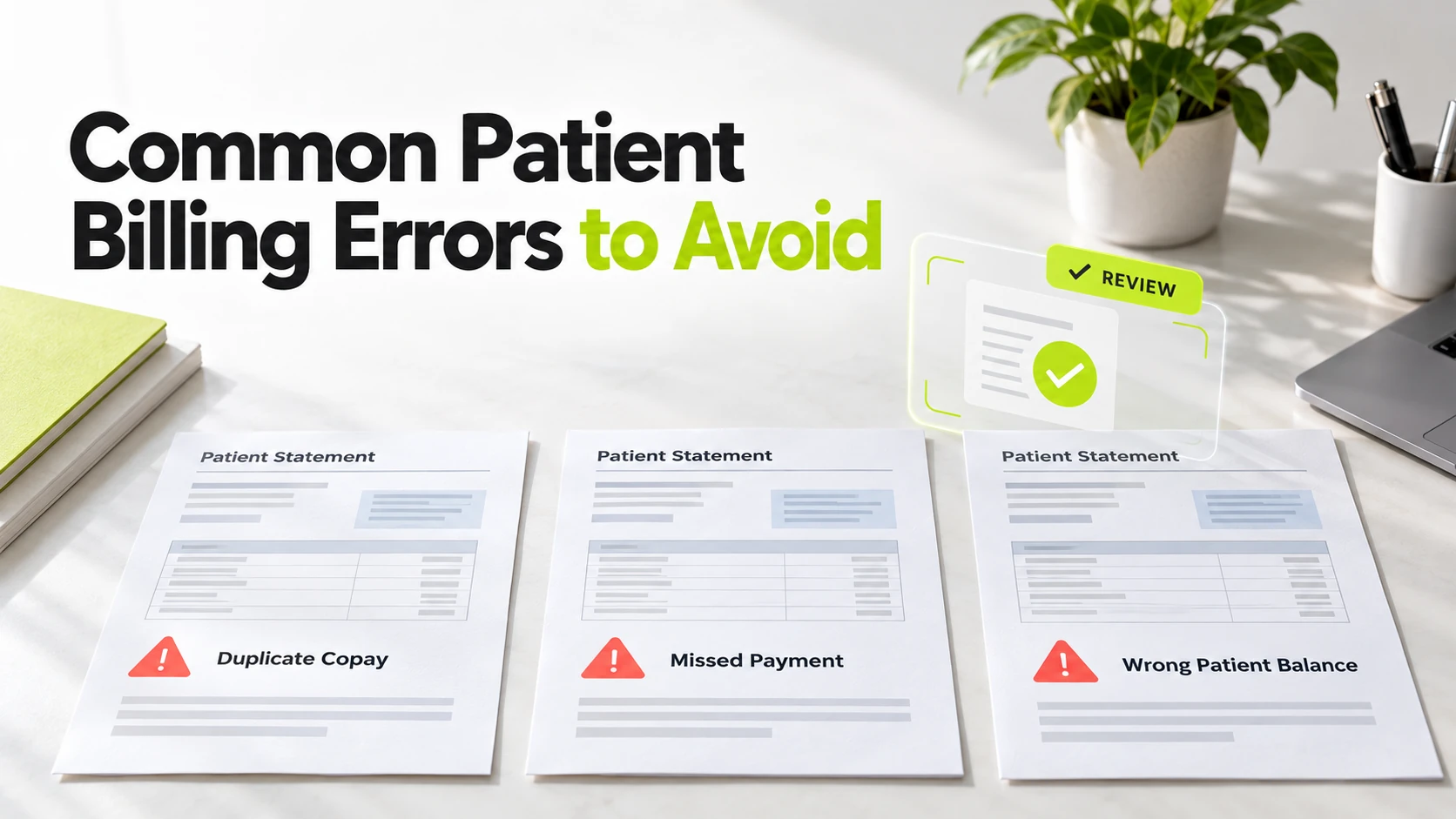
Common patient billing errors include duplicate copay collection, missed credits, incorrect plan benefits, and statements that include contractual adjustments. These errors often begin when staff work from different records.
An estimate can also become misleading when staff use an outdated deductible amount. Other claims may change the patient’s remaining benefits between verification and processing. Explain the estimate’s limitations and review the final response.
If a denial stems from inaccurate claim information, correct the claim when appropriate instead of immediately requesting patient payment. Our denial management services help practices review payer decisions and identify repeated errors. A proper review separates recoverable insurance balances from legitimate patient charges.
Patient Responsibility and Balance Billing
Balance billing involves charging a patient the difference between the provider’s charge and the plan’s allowed amount in circumstances where that charge is permitted. It differs from ordinary deductible or coinsurance collection.
Federal surprise billing protections restrict balance billing for many emergency services and certain care involving providers outside the patient’s network. State laws and program rules may offer additional protections. Do not assume that an out of network provider can always collect the entire remaining charge or that a general financial consent overrides those protections.
Services outside coverage need a separate review. Check required notices, patient agreements, payer rules, and applicable restrictions before collecting the charge. Explain potential costs before planned care when possible. A denial alone does not prove that the practice can bill the patient for a service that insurance did not pay.
How Medical Billing Help Supports Accurate Patient Billing
Medical Billing Help supports practices with claim review, payment posting, insurance follow up, and accurate account reconciliation. Our medical billing services help teams connect the payer decision with the patient ledger so statements reflect supported balances rather than unresolved claim issues.
A reliable process gives staff clear responsibilities. Front office teams confirm coverage and record collections, billers review payer responses, and payment posting staff reconcile the account.
Review your patient billing workflow regularly. Look for repeated disputes, unapplied credits, overdue insurance claims, and balances that staff cannot explain. Resolve the source of each problem and update the process. Review overpayments as part of this process. If the practice collected more than the final responsibility, confirm the credit and arrange the appropriate refund or other permitted resolution. Keep the patient informed about the review. A reliable account history should show the original payment, the final obligation, and how staff resolved any excess collection.
Making Patient Billing Clear and Accurate
Patient responsibility in medical billing should reflect the patient’s actual, permitted obligation after the practice reviews coverage, payer decisions, adjustments, and payments. Understand the benefits, reconcile the ledger, and explain the balance clearly. A careful review prevents duplicate collections and gives patients a fair, understandable path to resolving their bills.
Need Help With Patient Billing?
Our team helps healthcare practices review patient balances, reconcile payments, and resolve insurance billing issues.
FAQs
What is patient responsibility in medical billing?
It is the amount a patient owes for healthcare services after insurance decisions, permitted adjustments, and account payments. Deductibles, copays, and coinsurance commonly contribute to it. Review the plan and account before collecting the final balance.
Is an EOB the same as a patient bill?
No. The EOB explains the health plan’s claim decision. The provider sends a statement for any remaining collectible balance after reviewing insurance activity, adjustments, and previous payments. Compare both documents if the amounts differ.
Does an insurance denial mean the patient owes the full charge?
No. The provider must review the denial reason, contract, coverage rules, and applicable protections. Some denials involve provider errors or amounts the practice must adjust. Do not automatically transfer every denied balance to the patient.
Can secondary insurance reduce patient responsibility?
Yes, depending on the second plan’s benefits and coordination rules. The practice should submit the appropriate secondary claim and reconcile the response before finalizing the remaining patient balance. Secondary coverage does not guarantee full payment.
What happens if the patient paid more than the final balance?
The office should reconcile the account and handle the excess under applicable rules and its refund policy. Confirm the payment source and final claim status. Avoid retaining an unsupported credit or collecting another payment on the same balance.