Healthcare billing has changed significantly in recent years. Insurance plans now include higher deductibles and greater patient responsibility. This shift means patients pay a larger portion of their medical costs than they did in the past.
Therefore, healthcare organizations must improve how they manage billing communication and payment collection.
When billing systems are unclear or slow, patients may delay payments or avoid paying altogether. As a result, this creates financial challenges for medical practices.
A modern patient portal provides a solution to many of these billing challenges. For example, a patient portal allows patients to access their healthcare information, review medical bills, and make payments through a secure online system.
This technology simplifies the billing process while also improving patient engagement.
Healthcare organizations that use patient portal technology often experience faster payments, fewer billing disputes, and improved financial performance. By creating a transparent and convenient billing system, healthcare providers can strengthen both patient satisfaction and revenue stability.
Table of Contents
ToggleWhat Is a Patient Portal
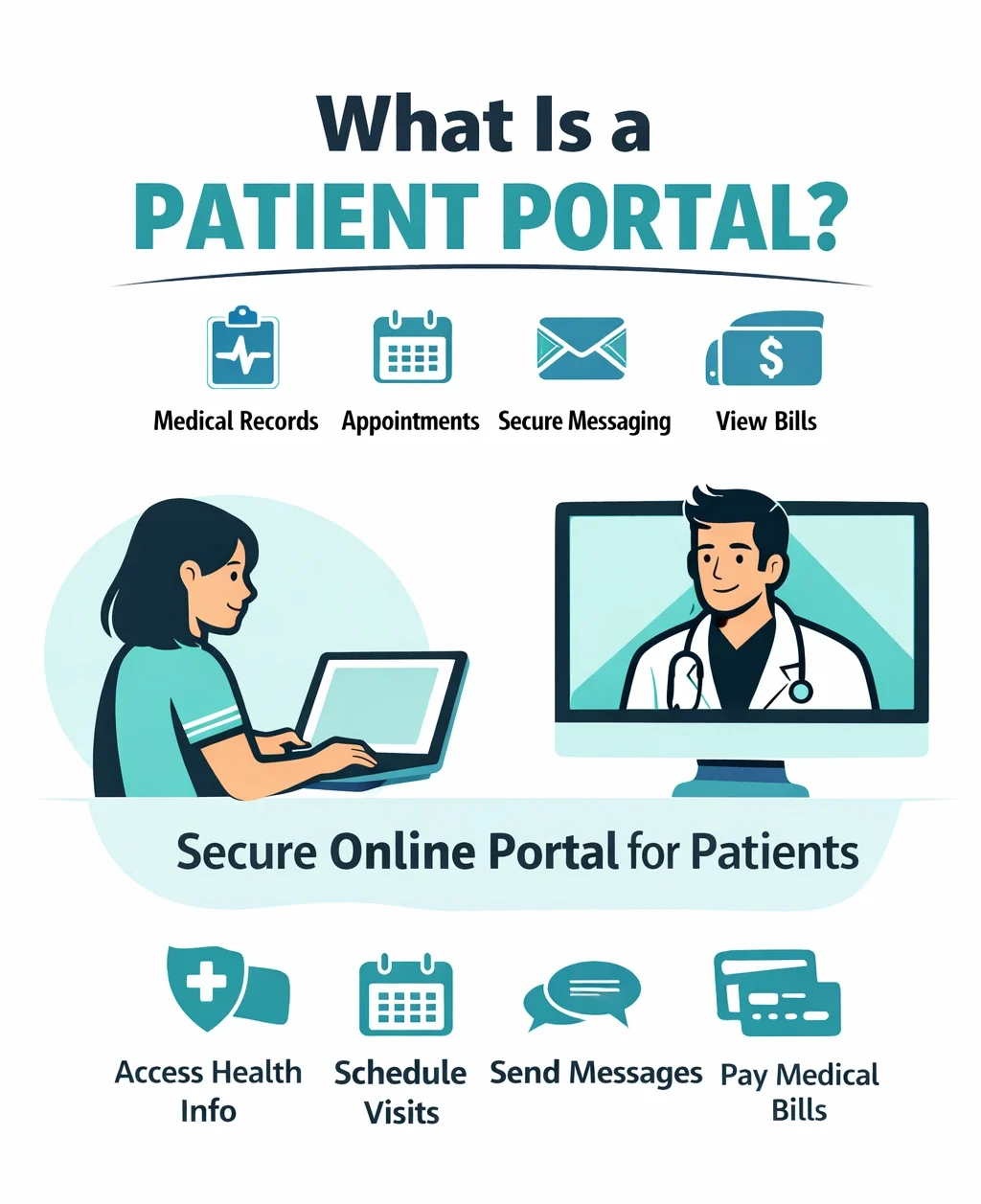
A patient portal is a secure online platform that allows patients to interact with their healthcare provider digitally. Patients can log in to view medical records, schedule appointments, send messages to providers, and manage billing information.
Most modern patient portals connect directly with electronic health record systems. This integration allows patients to access health information and billing details in one location.
Patients can also review insurance claims, check outstanding balances, and submit payments through the portal. This feature improves access to financial information and encourages patients to manage their healthcare expenses more actively.
As a result, patient portals have become a key component of healthcare technology because they improve communication between patients and medical practices.
Why Healthcare Billing Needs Digital Solutions
Healthcare billing systems have traditionally relied on paper statements and phone calls. However, while these methods still exist, they often create delays in communication.
Patients may wait several weeks to receive a billing statement in the mail. By the time the bill arrives, patients may forget about the appointment or feel confused about the charges.
Digital solutions such as a patient portal allow healthcare organizations to share billing information instantly. Patients receive notifications when a new statement becomes available.
When patients can access their bills immediately, they are more likely to review the charges and submit payments quickly.
As a result, this technology improves the efficiency of patient billing collections and reduces administrative workload for billing departments.
Improve Billing Transparency for Patients
Transparency plays a major role in healthcare billing. Many patients feel frustrated because they do not understand how medical charges are calculated.
A patient portal provides clear visibility into billing information. Patients can see the services provided, insurance adjustments, and the remaining balance they owe.
This transparency helps patients understand their financial responsibility more clearly. When patients see detailed billing information, they feel more confident about paying their bills.
In addition, improved transparency also reduces billing disputes and confusion.
When healthcare organizations provide easy access to billing details, they strengthen trust between patients and providers.
Encourage Faster Online Medical Bill Payments
Convenience strongly influences payment behavior. Patients are more likely to pay their bills when payment options are easy and accessible.
A patient portal allows patients to submit online medical bill payments through secure payment gateways. Patients can pay their balances using credit cards, debit cards, or bank transfers.
In addition, some portals also allow patients to save payment methods for faster future transactions.
This feature makes the payment process simple and efficient.
When patients can complete payments quickly from their phone or computer, healthcare organizations often experience improved patient payment collections.
Reduce Administrative Work for Healthcare Providers
Healthcare billing departments often spend a significant amount of time answering billing questions and processing manual payments.
A patient portal reduces many of these tasks by allowing patients to access information independently. Patients can log in to review statements, check payment history, and download receipts.
As a result, this self service approach reduces the number of billing inquiries and phone calls.
Healthcare providers can then focus more time on patient care instead of administrative tasks.
Improving billing efficiency benefits both staff and patients.
Strengthen Communication Between Patients and Providers
Communication is essential in healthcare billing. Patients often have questions about insurance coverage, treatment costs, or payment options.
A patient portal improves communication by offering secure messaging features. Patients can send questions directly through the portal and receive responses from the billing team.
As a result, this secure communication system helps resolve billing concerns quickly and efficiently.
Better communication encourages patients to remain engaged with the billing process and complete payments sooner.
Provide Access to Medical Financial Assistance Programs
Medical expenses can sometimes place financial strain on patients. Some individuals may struggle to pay large medical bills even when they want to meet their financial obligations.
Healthcare organizations can use a patient portal to share information about medical financial assistance programs.
For example, patients can review eligibility requirements, submit applications, and communicate with financial counselors through the portal.
Providing access to financial assistance resources helps patients understand their options and reduces anxiety about medical expenses.
This approach supports responsible billing practices while helping patients receive the support they need.
Improve Patient Engagement With Healthcare Technology
Patient engagement plays an important role in modern healthcare. When patients actively participate in managing their healthcare information, they make better decisions about their treatment and financial responsibilities.
A patient portal encourages engagement by providing a centralized platform for healthcare communication.
Patients can review test results, request prescription refills, track appointments, and manage billing details from one system.
As a result, this convenience encourages patients to log in regularly and stay informed about their healthcare activities.
Engaged patients are more likely to pay their medical bills and maintain communication with healthcare providers.
The Role of Patient Portals in Revenue Cycle Management
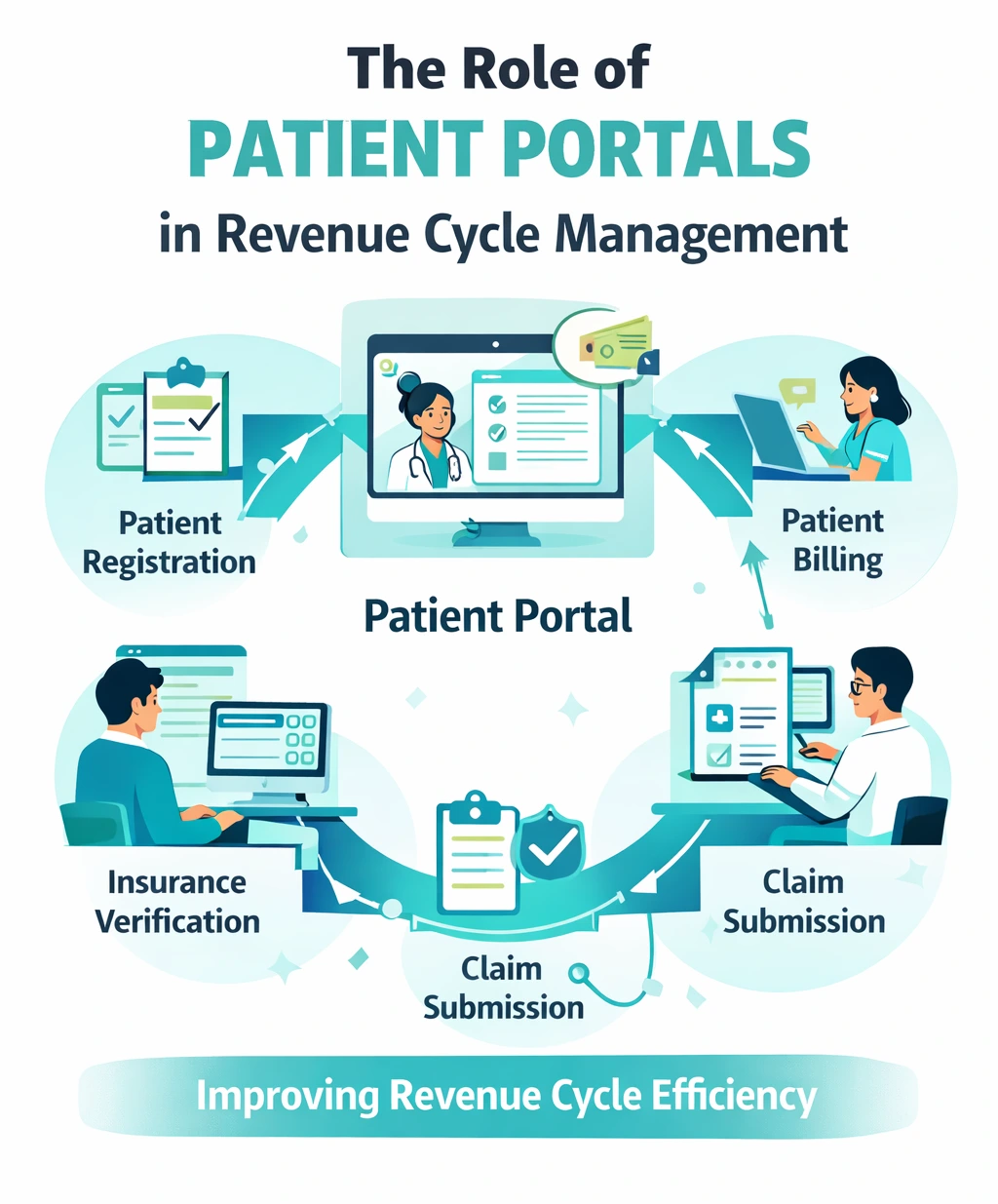
Healthcare billing is part of a larger financial process known as revenue cycle management. This cycle includes patient registration, insurance verification, medical coding, claim submission, and payment collection.
A patient portal supports several steps within this process.
Patients can review insurance claim updates, track outstanding balances, and receive notifications about new billing statements.
Healthcare organizations can also monitor account activity and identify unpaid balances more easily.
By improving transparency and communication, patient portals strengthen the overall healthcare revenue cycle.
Patient Portal Security and Data Protection
Security is a critical factor in healthcare technology. Patient portals must protect sensitive medical and financial information.
Modern portal systems use secure login procedures, encryption technology, and identity verification to protect patient data.
Patients usually create a unique username and password to access their accounts. Some systems also use two factor authentication to provide additional security.
These security measures ensure that patient information remains private and protected.
When patients trust the security of the system, they feel more comfortable using the portal to manage their healthcare information.
The Future of Patient Portal Technology
Healthcare technology continues to evolve as organizations search for better ways to improve patient care and financial communication.
Patient portals are becoming increasingly advanced with new features such as mobile access, automated reminders, and integrated billing systems.
Many healthcare organizations now offer mobile applications that connect directly with patient portal accounts. This allows patients to review medical information and pay bills directly from their smartphones.
As digital healthcare systems continue to improve, patient portals will play an even greater role in managing healthcare communication and billing.
Healthcare providers who invest in these systems will be better prepared to meet the growing demands of modern healthcare.
For additional information about healthcare technology and patient portals, you can visit the Health IT resource center https://www.healthit.gov.
How Patient Portals Improve Patient Billing Collections
Efficient billing systems are essential for maintaining financial stability in healthcare organizations.
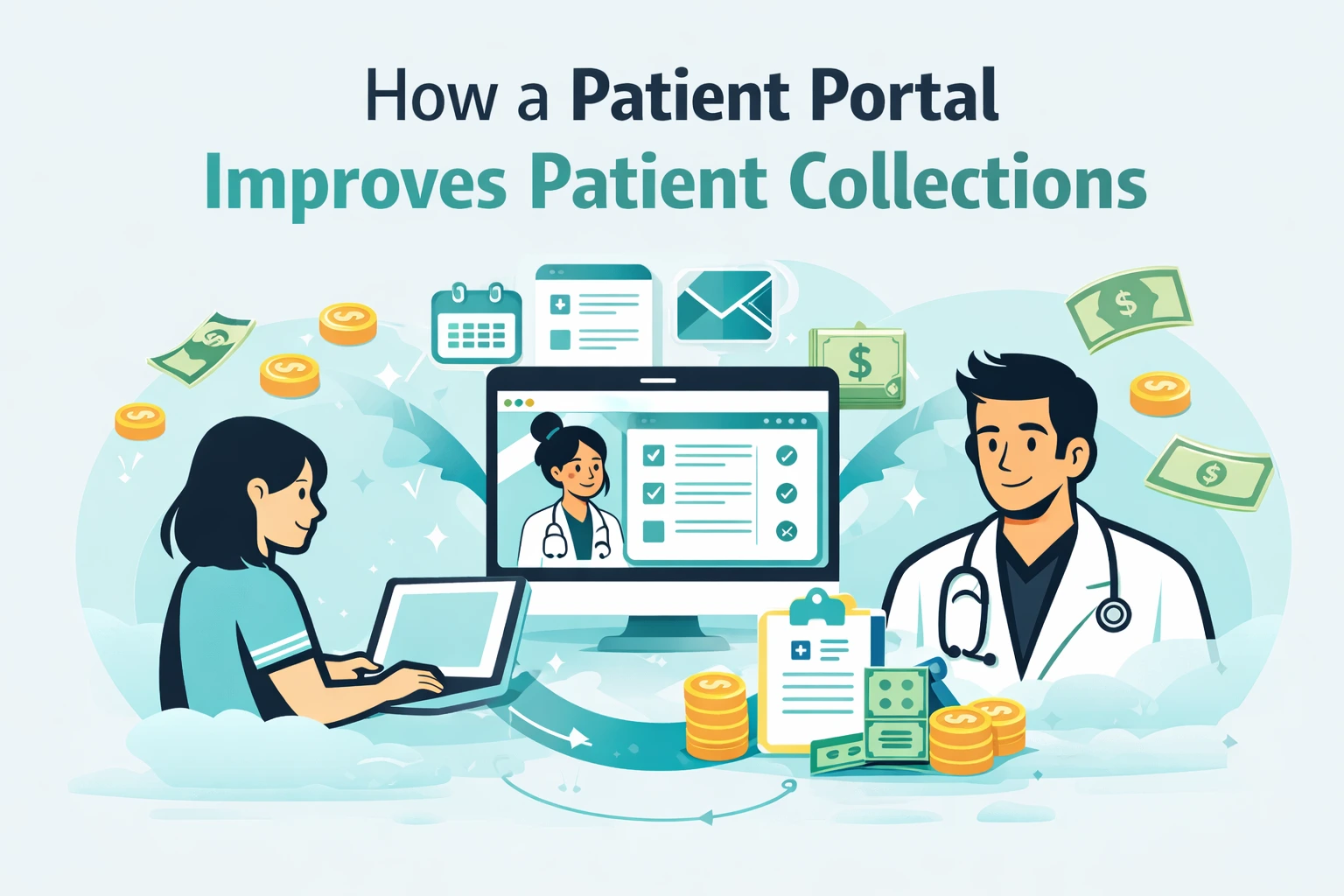
A patient portal improves patient billing collections by giving patients immediate access to their billing information and payment options.
Instead of waiting for mailed statements, patients receive notifications when new charges appear in their account.
Patients can review these charges and submit payments immediately through the portal.
This real time communication helps healthcare organizations collect payments faster while reducing administrative costs.
Creating a Better Financial Experience for Patients
Healthcare billing can often feel confusing or stressful for patients. When billing systems lack transparency, patients may feel uncertain about their financial responsibilities.
A patient portal simplifies the financial experience by providing clear billing information and convenient payment tools.
Patients gain more control over their healthcare finances and can track their payment history easily.
When patients feel informed and empowered, they are more likely to cooperate with billing procedures.
Healthcare organizations benefit from improved financial performance and stronger patient relationships.
Conclusion
Healthcare billing continues to evolve as patients assume greater responsibility for medical expenses. Traditional billing systems alone are no longer enough to support efficient payment collection.
A patient portal offers a powerful solution that improves billing transparency, communication, and convenience.
By allowing patients to access medical bills, review insurance adjustments, and make online payments, patient portals simplify the entire billing process.
Healthcare providers who adopt patient portal technology can increase patient payment collections while also improving the overall patient experience.
As healthcare continues to move toward digital solutions, patient portals will remain an essential tool for modern healthcare organizations.
FAQ
What is a patient portal
A patient portal is a secure online platform that allows patients to access medical records, schedule appointments, communicate with healthcare providers, and review or pay medical bills.
How does a patient portal improve patient billing collections
A patient portal allows patients to view billing statements, check insurance adjustments, and make payments online. This convenience encourages faster payments and improves patient billing collections.
What is the primary care visit cost without insurance
The primary care visit cost without insurance usually ranges between 100 and 300 dollars depending on the clinic location and type of service provided.
How long do you have to bill a patient for medical services
Healthcare providers typically send patient bills after insurance processes the claim. The exact timeframe may vary depending on healthcare regulations and insurance agreements.
Is there a time limit on billing for medical services
Yes, many healthcare systems follow billing timelines that require claims and patient bills to be submitted within a specific period after services are provided. The exact time limit may vary depending on state regulations and insurance policies.
Error: Contact form not found.