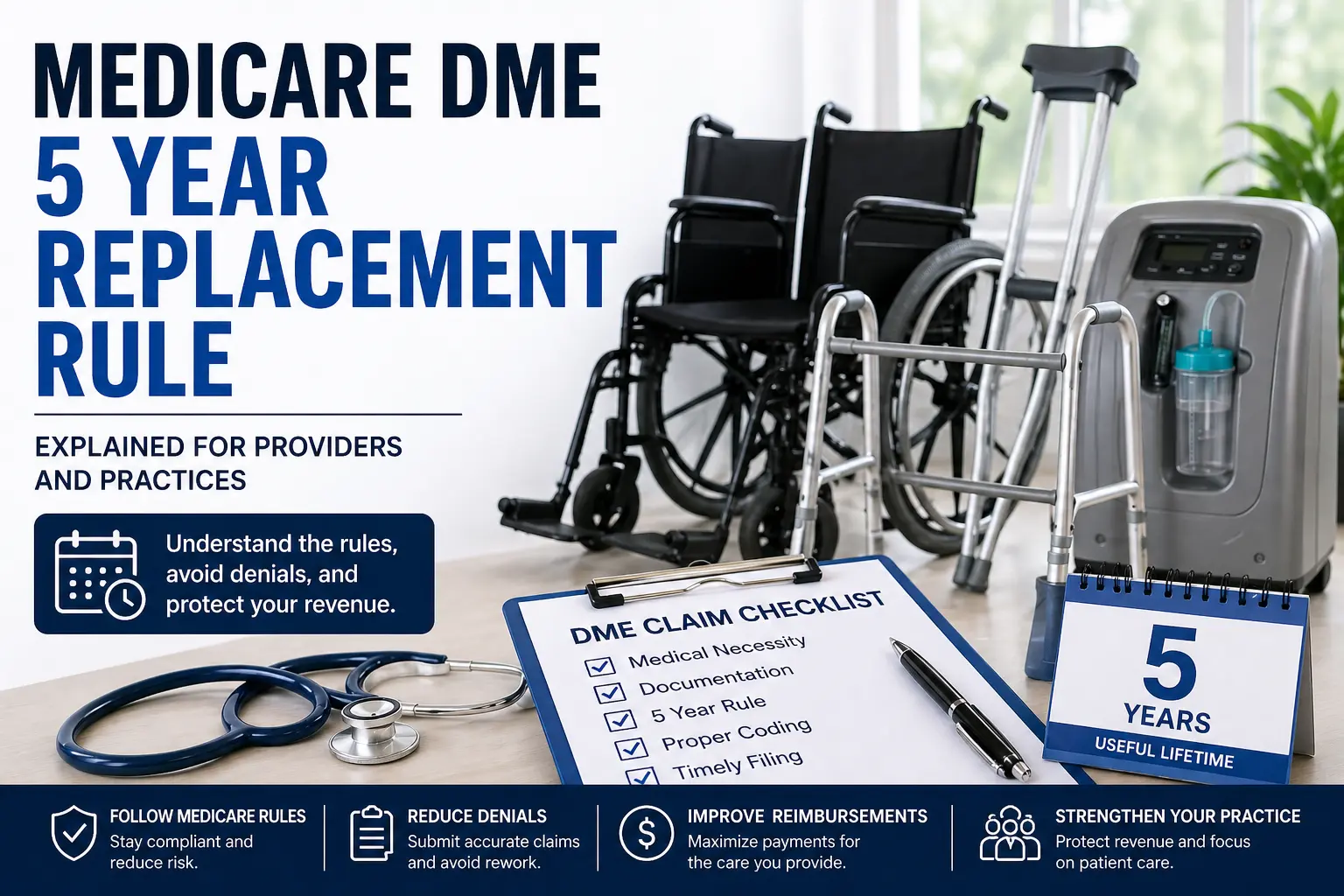
Healthcare providers rely on proper reimbursement to keep operations stable. When it comes to medicare dme, one of the most misunderstood areas is the five year replacement rule. Many practices face denials not because the care was wrong, but because the timing or documentation did not align with Medicare expectations.
This topic may seem simple at first glance. Replace equipment after five years. But the reality is more complex. Medicare does not operate on assumptions. It works on rules, documentation, and proof.
Understanding how this rule works can protect revenue, reduce delays, and improve claim success.
Table of Contents
ToggleWhat Medicare DME Means in Daily Practice
Medicare defines durable medical equipment as items that serve a medical purpose, can withstand repeated use, and are appropriate for use in the home. This includes items like wheelchairs, oxygen equipment, hospital beds, and walkers.
In daily operations, medicare dme is not just about providing equipment. It is about making sure every item meets strict criteria. The provider must show medical necessity, proper use, and compliance with Medicare guidelines.
This is where many practices struggle. The equipment may be correct, but the claim fails due to missing details or incorrect timing.
Understanding the Five Year Replacement Rule
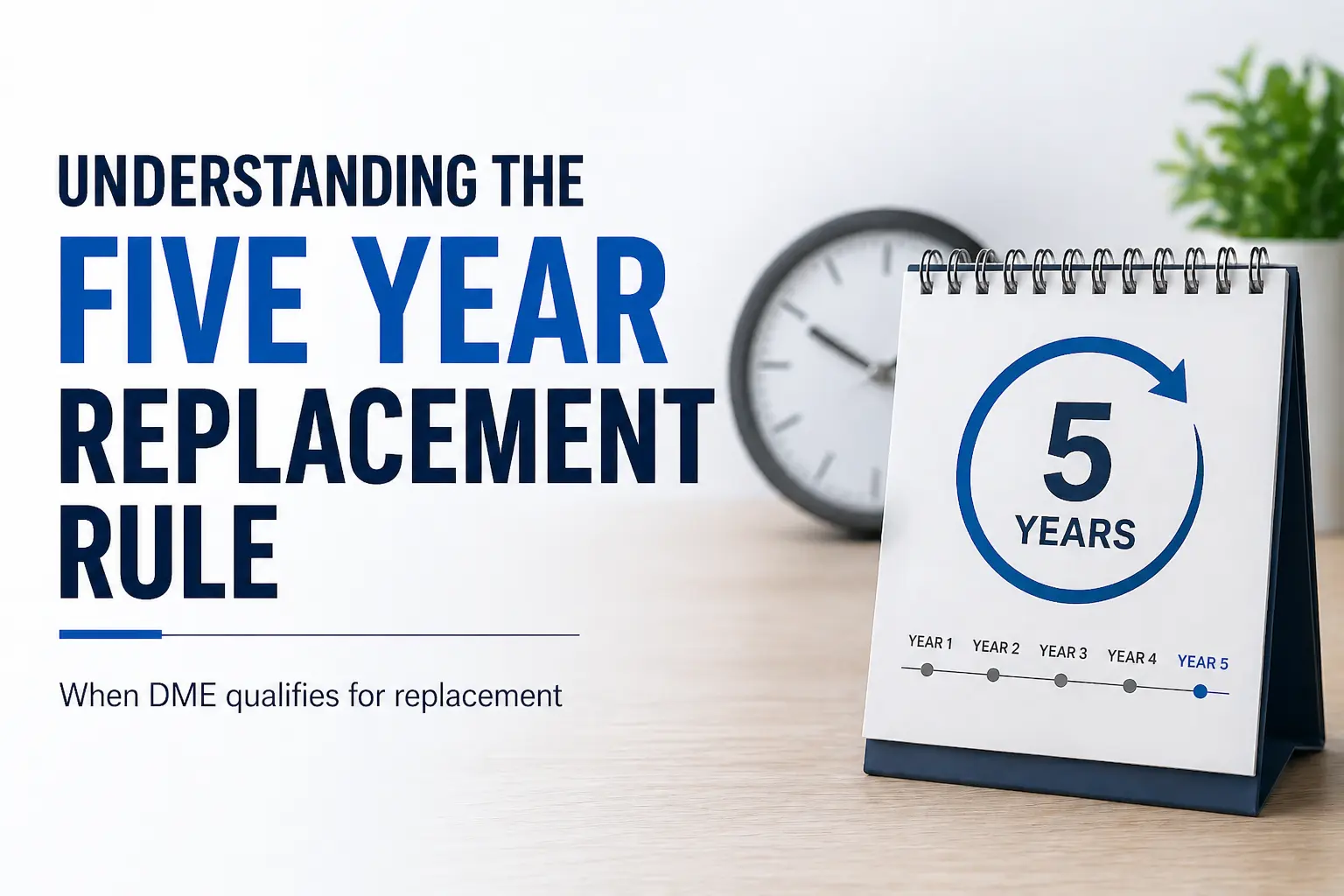
The five year replacement rule is based on the idea of useful lifetime. Medicare defines the useful lifetime of most durable medical equipment as five years. This period starts from the date the equipment is delivered to the patient.
After five years, the equipment is considered eligible for replacement. However, eligibility does not mean automatic approval. Medicare still requires proof that replacement is necessary.
The rule exists to prevent overuse of resources while ensuring patients receive functional equipment. It balances cost control with patient care.
When Equipment Can Be Replaced Before Five Years
There are situations where replacement may occur before the five year mark. These situations must be clearly documented.
If the equipment is lost, stolen, or damaged beyond repair, Medicare may allow replacement. The provider must include supporting evidence. This may include reports, patient statements, or service records.
If the equipment no longer meets the patient’s medical needs due to a change in condition, replacement may also be approved. Again, documentation plays a key role.
Without strong proof, early replacement claims often face denial.
Why Claims Get Denied
Many claims related to medicare dme replacement fail due to avoidable errors. The most common issue is lack of proper documentation. Providers may assume that prior approval or past usage is enough.
Medicare requires current documentation. The provider must show that the patient still needs the equipment and that replacement is justified.
Another issue is incorrect timing. Submitting a replacement claim too early without valid reason can trigger automatic denial.
Errors in coding and incomplete records also contribute to claim rejection. These issues highlight the importance of strong internal processes.
The Role of Documentation
Documentation is the foundation of successful medicare dme claims. It must clearly show medical necessity, patient condition, and reason for replacement.
Physician notes should reflect current needs. Old records are not enough. The documentation must connect directly to the claim being submitted.
This is where dme documentation requirements become critical. Every detail must support the claim. Even small gaps can lead to delays or denials.
Clear and accurate records protect both the provider and the patient.
How Billing Teams Can Improve Accuracy
Billing teams play a key role in managing medicare dme claims. Their work ensures that the information submitted matches Medicare standards.
Strong communication between clinical staff and billing teams improves outcomes. When both sides understand the requirements, errors decrease.
Training is also important. Many billing errors happen because staff are not fully aware of rule changes or documentation needs.
By focusing on durable medical equipment billing, practices can reduce mistakes and improve reimbursement rates.
Understanding Medicare Claims Processing
Medicare claims processing follows strict guidelines. Each claim goes through checks to ensure compliance with rules.
If the system detects missing information or incorrect timing, it may reject the claim before review. This automated process makes accuracy essential.
Providers must ensure that every claim meets requirements before submission. Waiting for feedback after denial increases workload and delays payment.
Understanding medicare claims processing helps practices stay ahead of issues.
Practical Example of the Five Year Rule
Consider a patient who received a wheelchair in January 2020. The five year period begins from that date.
In January 2025, the equipment becomes eligible for replacement. The provider can submit a claim for a new wheelchair if documentation supports the need.
If the provider submits a replacement claim in 2024 without valid reason, Medicare may deny it. Even if the equipment shows wear, the claim must meet specific criteria.
This example shows how timing and documentation work together.
Impact on Revenue Cycle
The five year replacement rule directly affects the revenue cycle. Denied claims lead to delays, rework, and lost income.
Practices that understand medicare dme rules can improve cash flow. They submit cleaner claims, face fewer denials, and receive faster payments.
Ignoring these rules creates gaps in revenue. Over time, these gaps affect the stability of the practice.
The Importance of Compliance
Compliance is not just about avoiding penalties. It is about ensuring that every claim reflects the true value of the service provided.
Medicare expects providers to follow rules consistently. Even small deviations can lead to audits or claim reviews.
By staying compliant, practices protect their reputation and financial health.
For official Medicare guidelines, you can review information directly from the Centers for Medicare and Medicaid Services at https://www.cms.gov
Preparing for Future Changes
Healthcare continues to evolve. New systems, updated codes, and policy changes are part of the process.
The five year replacement rule may remain, but how it is applied can change. Practices must stay informed and adapt quickly.
Technology can help, but it does not replace understanding. Providers must know the rules behind the systems they use.
Key Takeaways
The medicare dme five year replacement rule is not just a timeline. It is a framework that connects care, documentation, and reimbursement.
Providers who understand this rule can reduce denials and improve efficiency. They align their processes with Medicare expectations and protect their revenue.
In a system where accuracy drives payment, knowledge is not optional. It is essential.
FAQ
What is the Medicare DME five-year replacement rule
Medicare allows replacement of durable medical equipment after five years based on its useful lifetime, provided medical necessity is documented.
Can equipment be replaced before five years
Yes, but only in cases of loss, theft, damage, or change in medical condition with proper documentation.
What documentation is required for replacement
Providers must include current physician notes, proof of medical necessity, and details supporting the replacement request.
Why are Medicare DME claims denied
Claims are often denied due to missing documentation, incorrect timing, or coding errors.
Does Medicare automatically approve replacement after five years
No, Medicare still requires proof that the replacement is necessary and meets all requirements.