Every healthcare practice depends on timely reimbursements to maintain a healthy cash flow. Unfortunately, claim denials continue to be one of the biggest challenges in medical billing. Even a small mistake can delay payments, increase administrative work, and reduce revenue. Understanding the Top 10 Reasons Claims Get Denied is the first step toward improving your billing process and reducing unnecessary rework.
Many practices assume that claim denials are unavoidable, but that is not always true. Most denied claims result from preventable errors that can be identified before submission. Better documentation, accurate coding, insurance verification, and regular quality checks can significantly improve the first pass acceptance rate.
Table of Contents
ToggleWhy Medical Billing Denials Matter
Medical billing denials affect much more than a single payment. Every denied claim requires additional time for investigation, correction, and resubmission. Staff members spend valuable hours following up with insurance companies instead of focusing on higher value tasks.
High denial rates can also increase accounts receivable days, reduce cash flow, and create frustration for both providers and patients. That is why every practice should monitor denial trends and address recurring issues before they become larger financial problems.
Common Claim Denial Reasons
There are many claim denial reasons, but a few appear more often than others. These include:
- Incorrect patient demographics
- Missing or expired insurance information
- Late claim submission
- Missing prior authorization
- Incorrect diagnosis or procedure codes
- Invalid modifiers
- Duplicate claims
- Incomplete documentation
- Non covered services
- Eligibility issues
The infographic below highlights these common reasons and explains how each one impacts claim reimbursement.
How to Reduce Claim Denials
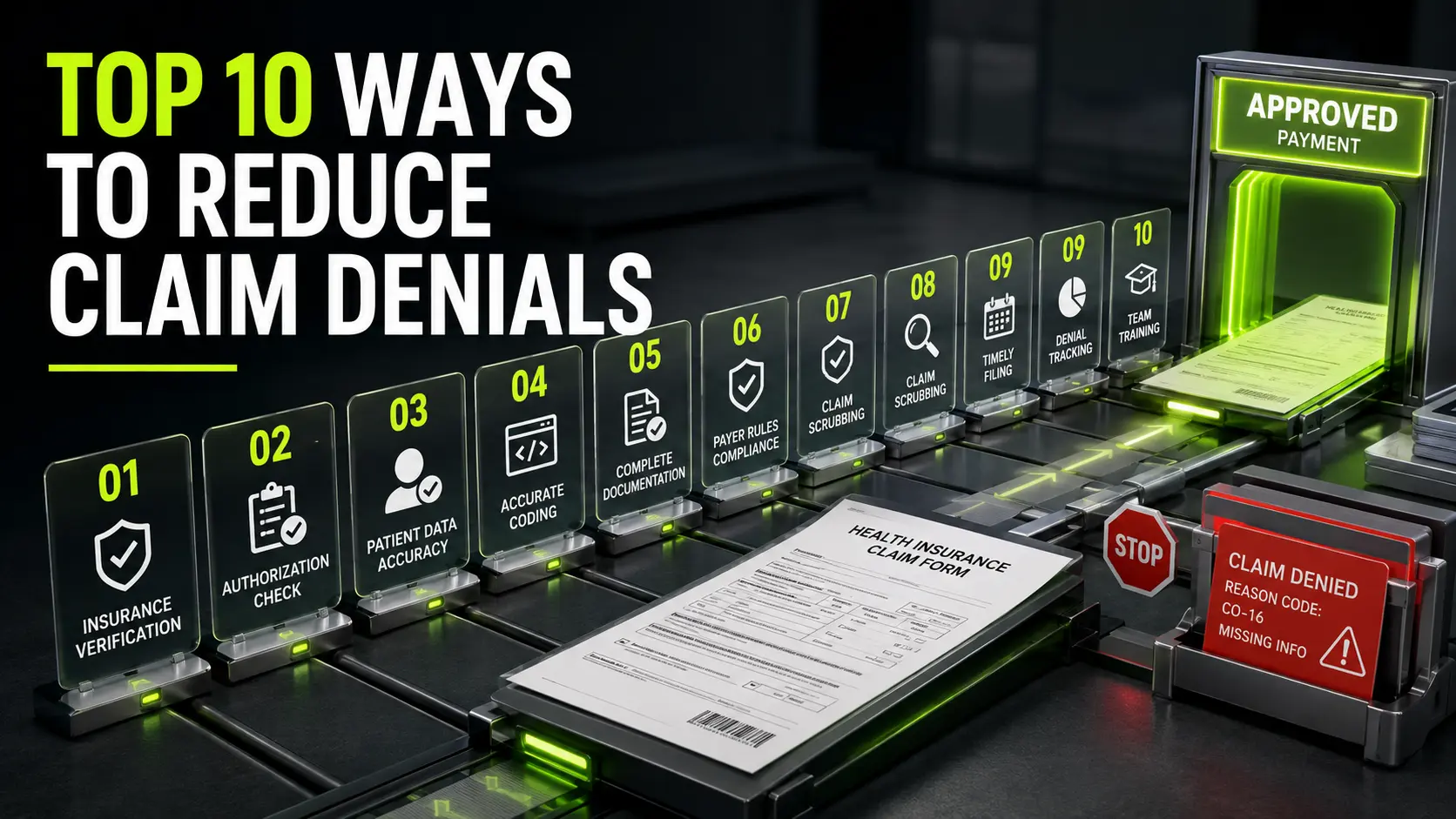
Practices can reduce claim denials by creating a standardized billing workflow. Verifying patient eligibility before every visit is one of the simplest ways to prevent unnecessary rejections. Staff should also confirm demographic information, obtain required authorizations, and review documentation before claims are submitted.
Coding accuracy also plays an important role. Using the correct CPT, ICD, and HCPCS codes, along with the proper modifiers, helps ensure claims meet payer requirements. Regular coding audits and staff training can reduce errors and improve claim acceptance rates.
Technology also supports better billing performance. Practice management software, claim scrubbing tools, and electronic eligibility verification help identify mistakes before claims reach the payer.
Strengthening the Healthcare Revenue Cycle
An efficient healthcare revenue cycle depends on more than simply submitting claims. It requires continuous monitoring, reporting, and process improvement. Practices should review denial reports every month to identify patterns and determine which issues occur most frequently.
Tracking key performance indicators such as first pass claim acceptance rate, denial rate, average reimbursement time, and accounts receivable days provides valuable insight into billing performance. These metrics help practices make informed decisions that improve operational efficiency and financial stability.
Healthcare providers should also review the CMS Claims Processing Manuals for official billing guidelines and claim submission requirements.
Learn From the Infographic
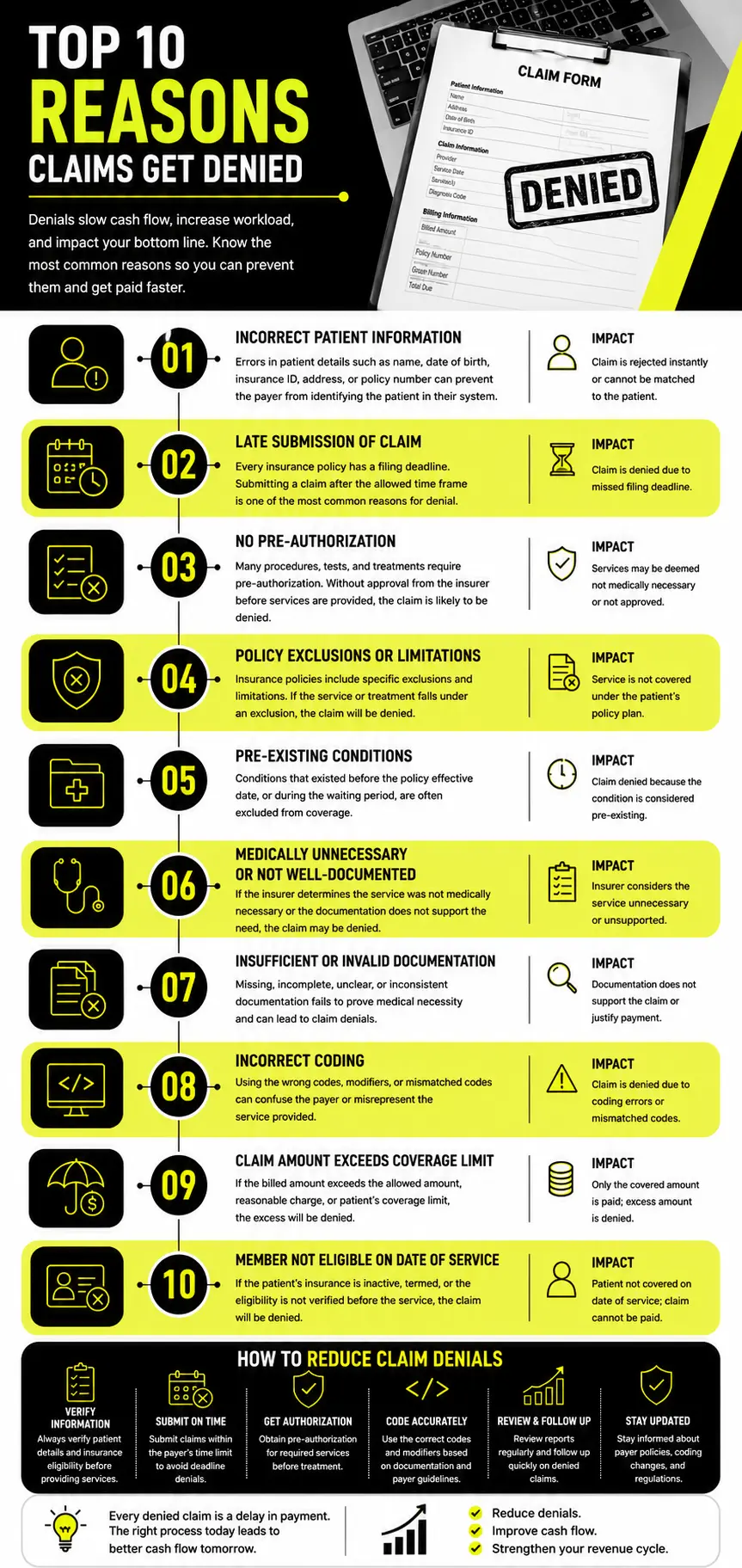
Our infographic provides a quick visual guide to the Top 10 Reasons Claims Get Denied. Whether you manage a small physician practice or a large healthcare organization, understanding these denial triggers can help your team improve billing accuracy and increase reimbursement.
Use this resource as a reference during staff training, internal audits, and workflow reviews. Small improvements made today can prevent costly billing mistakes tomorrow.
Preventing Claim Denials Starts Here
Reducing denials starts with understanding why they happen. By recognizing common claim denial reasons, improving documentation, strengthening coding accuracy, and reviewing your billing processes regularly, practices can reduce medical billing denials and build a more efficient healthcare revenue cycle.
Take a few minutes to review the infographic below and see whether your practice is making any of these common billing mistakes. Preventing even a few denials each month can make a noticeable difference in revenue, productivity, and patient satisfaction.
Claims Getting Denied Too Often?
Reduce denials with accurate coding, eligibility verification, clean claim submission, payer follow up, and proactive revenue cycle management.
FAQ
What are the top reasons claims get denied?
The Top 10 Reasons Claims Get Denied include incorrect patient information, late claim submission, missing prior authorization, coding errors, insufficient documentation, duplicate claims, non covered services, eligibility issues, policy limitations, and claim filing mistakes.
How can healthcare practices reduce claim denials?
Practices can reduce claim denials by verifying patient eligibility, checking insurance coverage, obtaining prior authorizations, using accurate medical codes, reviewing documentation, and submitting claims within payer deadlines.
Why are medical billing denials a major concern?
Medical billing denials delay reimbursement, increase administrative work, raise operational costs, and negatively affect cash flow. Managing denials efficiently helps improve revenue and practice performance.
What are the most common claim denial reasons?
Common claim denial reasons include incorrect patient demographics, invalid diagnosis or procedure codes, missing modifiers, incomplete documentation, expired insurance coverage, and filing claims after the submission deadline.
How does reducing claim denials improve the healthcare revenue cycle?
Reducing denials improves the healthcare revenue cycle by increasing first pass claim acceptance, shortening payment times, lowering rework, and improving overall financial performance for healthcare providers.
Can technology help reduce medical billing denials?
Yes. Modern billing software, claim scrubbing tools, eligibility verification systems, and automated reporting can identify errors before claims are submitted, helping practices reduce medical billing denials and improve reimbursement rates.